News
2nd Wetland Walk draws a Croatan crowd
Education, Environmental, Events, Neuse River Watershed, Wetlands
Posted on April 2nd, 2026
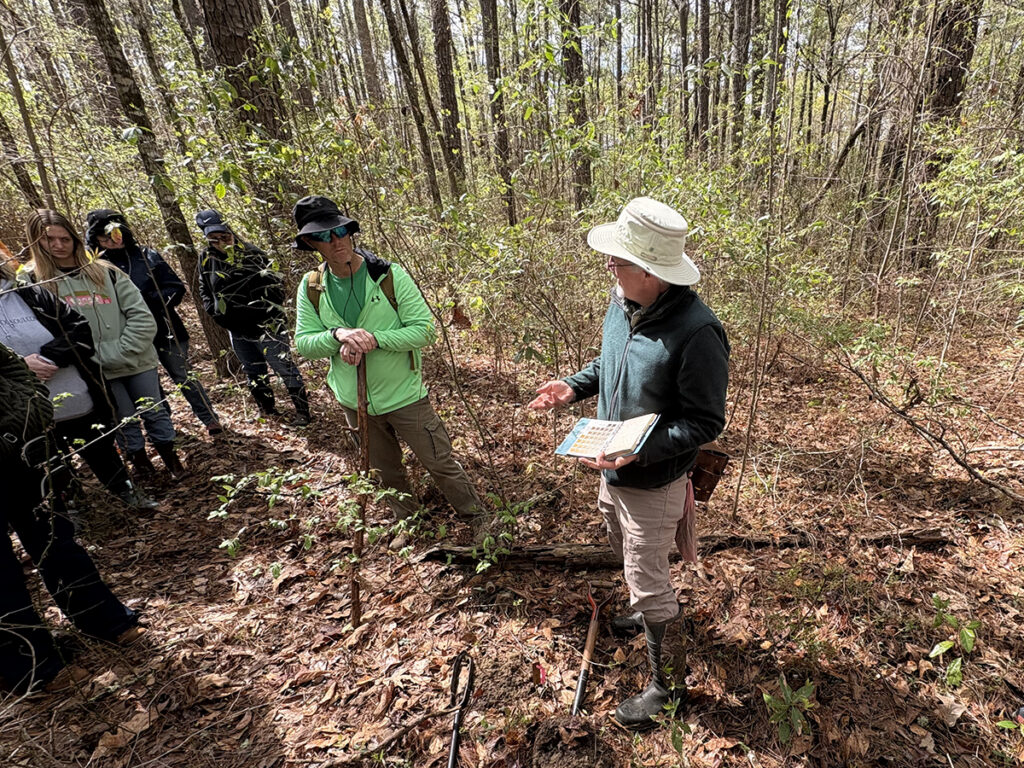
Wetlands expert David Lekson teaches wetland walkers the ways wetlands are identified by scientists.
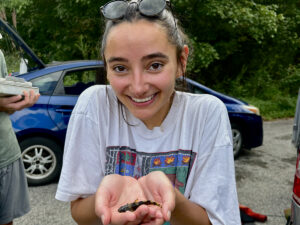
Neuse Riverkeeper Samantha Krop and wetlands expert David Lekson led a crowd of people into the woods last week to explore the wetlands of Croatan National Forest.
“It was another beautiful, amazing and well-attended event,” Samantha said. “People came from all over, as far away as Raleigh and Holly Springs. It was very successful and a reminder that getting people outside is the best way to grow appreciation for the places we work to protect.”

Wetland Walk participants gathered at Brice’s Grocery, then carpooled and caravanned over to the national forest just east of New Bern.
The special event started with an introduction to wetlands: why wetlands matter, what makes the Croatan so special, about species that live in the forest and the many different types of wetlands that can be found there.
“We talked about federal regulatory landscape, and the new threats wetlands are facing and how the state of North Carolina is not protecting its wetlands by following the federal definition of what makes a wetland,” Samantha said.
Last year, the definition of Waters of the United States which determines which waterbodies get protection under federal law was rewritten, limiting wetland inclusion to only wetlands with continuous surface connection to relatively permanent or navigable waters. An estimated 900,000 acres of wetlands in eastern North Carolina were excluded from protection.
“The scientific definition of wetlands is a broad category and is a very nuanced account of hydrology, soils and plant species, but now we’re working with a legal definition that doesn’t take any of those things into account,” Samantha said. “The legal definition only takes into account a small percentage of wetlands as legally protectable.”

How scientists determine wetlands was David’s forte on the walk.
“We looked at topography and dug holes and analyzed the soil color, texture and smell. He pointed out different types of plants, like rushes, that require water all the time; others that live in wetlands but can also live in drier areas,” Samantha said. “It was really amazing to spend some time at what would be called an ‘isolated wetland,’ according to the legal definition and just kind of ‘oohing’ and ‘ahhing’ at its glory.”
After the walk, the group gathered at the Brices Creek boat ramp for a picnic lunch.

“It was a great group, and there was a lot of interest in volunteering for our future events,” Samantha said.
Like the work your Riverkeeper is doing to educate folks about the importance of wetlands? Donate today to support her work!
Related News
Flyover reveals Brices Creek sediment pollution sources
September 17th 2026
Low oxygen levels cause of New Bern fish kills
September 17th 2026
Inaugural Spruce up the Neuse a huge success
September 17th 2026
Boat day doubles as algal bloom surveillance
September 17th 2026
Controversial dock expansion prompts Riverkeeper response
September 10th 2026
Riverkeeping team investigates Brices Creek pollution
September 10th 2026
Parts of upper Tar watershed still in exceptional drought
September 10th 2026
Court affirms State must protect resources
September 10th 2026