
News
Wayne County biogas facility pollution nets NOV, again
CAFOs, Environmental, Neuse River Watershed, Sound Rivers, Water Quality
Posted on January 29th, 2026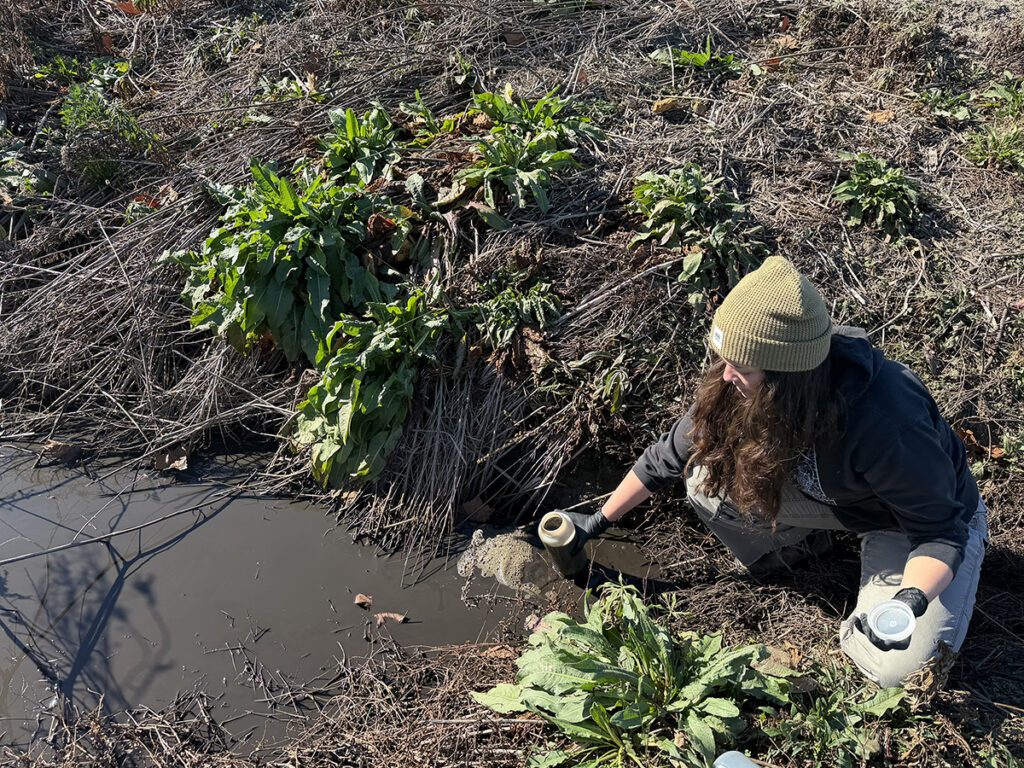
Sound Rivers Water Quality Specialist Taylor Register takes a sample from a ditch on land adjacent to BIOX Renewables, LLC.
An industrial animal facility in Wayne County and site of a massive hog-waste spill in 2022 is once again the site of environmental pollution, this time under new ownership.
Earlier this month, an anonymous report to Sound Rivers alleged that the new owners of BIOX Renewables, LLC, previously White Oak Farm swine biogas facility, are pumping the contents of the covered waste lagoon — a mixture of swine waste, dead hogs and expired factory meat — into adjacent agricultural fields and forest. Neuse Riverkeeper Samantha Krop and Water Quality Specialist Taylor Register headed out to investigate.
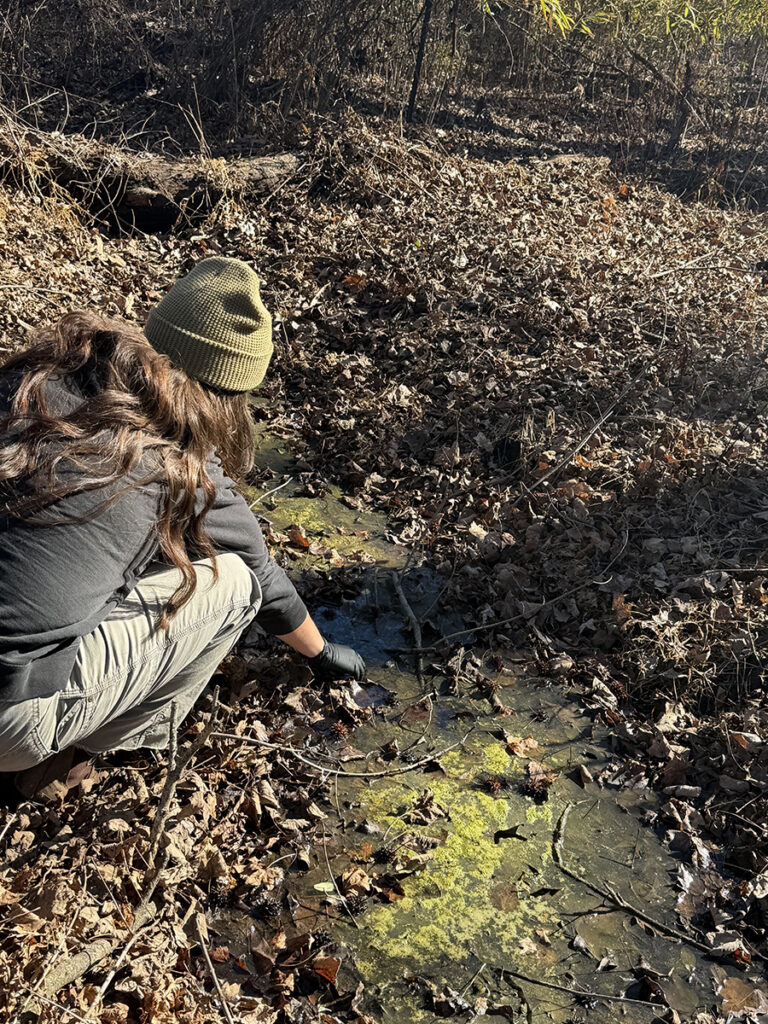
“From our observations, there appeared to be puddles of sitting hog waste — very black, foul water — sitting in a ditch adjacent to the covered biogas lagoon,” Samantha said. “This ditch also connects to Nahunta Swamp.”

The North Carolina Department of Environmental Quality launched its own investigation, which this week resulted in a notice of violation to BIOX. The seven separate violations listed in the NOV included: failure to prevent wastewater from entering ditches that drain to Nahunta Swamp; failure to maintain treatment and irrigation systems in accordance with approved waste management plan; failure to secure a licensed operator to maintain the waste management system; and failure to conduct necessary inspections of the site and systems.
“The puddles of waste that Taylor and I witnessed were apparently due to two issues: illegal application of waste onto adjacent fields, which are not owned by BIOX; and holes in the biogas lagoon cover that resulted in stormwater and waste mixing, so the stormwater removal systems intended to only remove clean water from atop the cover were actually pumping out waste onto adjacent lands,” Samantha said.

According to Samantha, BIOX’s NOV will likely be followed with a civil penalty from NCDEQ’s Division of Water Resources.
The facility first came to Sound Rivers’ attention in August of 2022. Investigation by Sound Rivers’ Riverkeeping team revealed extremely high and harmful levels of nitrogen, fecal coliform and E. coli bacteria in Nahunta Swamp’s surface water and downstream of the facility. After Sound Rivers shared these results with NCDEQ, the agency launched its own investigation that culminated in NCDEQ requiring closure of the existing covered lagoon.
Since, the property has changed ownership, and BIOX is now responsible for overseeing the closure.
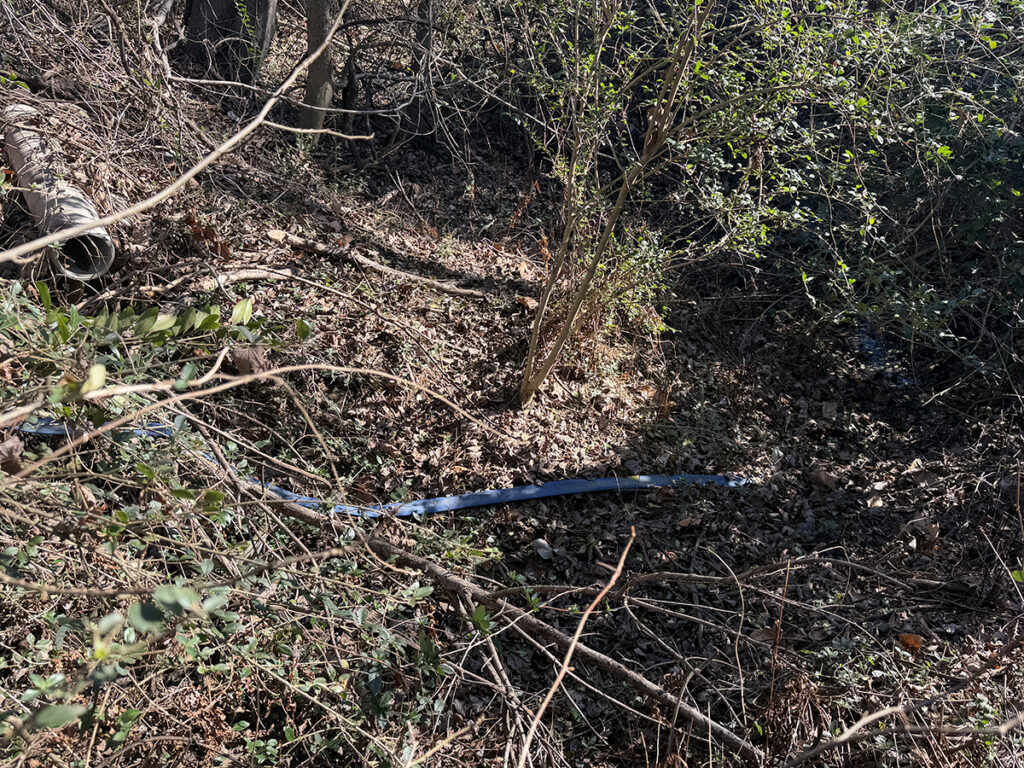
“Today, new ownership at the facility does not seem to be learning from lessons of the past,” Samantha said. “Instead of properly managing their waste and following through with the required closure of this polluting lagoon, the new owners have chosen a path of negligence and mismanagement that will only further harm Nahunta swamp, Contentnea Creek and the Neuse River downstream.”
She pointed out that it was only because someone reported BIOX’s actions that an investigation was launched.
“We rely on reports like this, and we’re grateful for the person who called to let us know this was happening,” Samantha said. “We’re also glad to see DEQ continuing to require cleanup of this site — we just wish the process would move faster. But we will continue to monitor and sample this site until we are aware of a resolution.”
Like the work your Riverkeeper is doing to protect your waterways? We do! Donate today to keep the pollution investigations going!
Read NCDEQ’s notice of violation.
Related News

Wayne County biogas facility pollution nets NOV, again
January 29th 2026

One man, 75 tons of trash
January 29th 2026

Riverkeeper calls out loophole in Durham environmental protections
January 29th 2026

New, innovative stormwater project doing its job
January 29th 2026

Program director talks resiliency in Bath
January 29th 2026
Walnut Creek trash trap install ‘a breeze’
January 22nd 2026
Riverkeeper: southeast Durham watershed improvement plan lacking key data
January 22nd 2026
Specialist kicks off grant field work with Slocum Creek sampling
January 22nd 2026
