
News
Water Watch expands with next-level data collection
Environmental, Neuse River Watershed, Sound Rivers, Tar-Pamlico Watershed, Water Watch
Posted on August 27th, 2026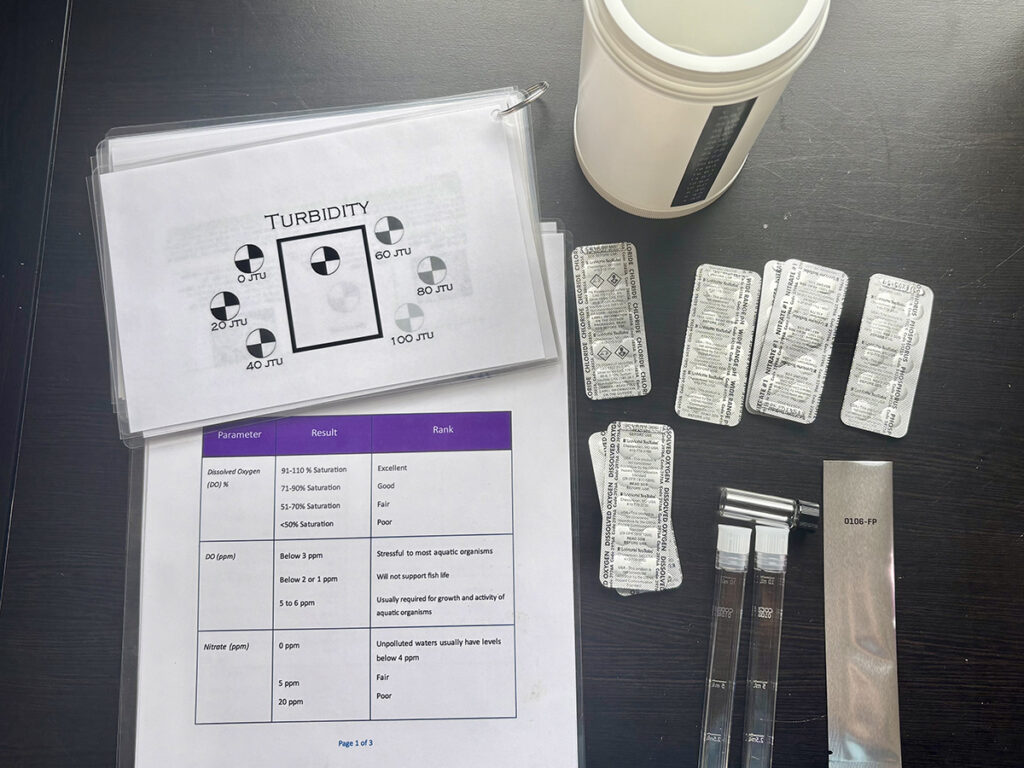
The Tier 2 test kit now being used by a pilot group of Water Watchers.
The Riverkeeping team has launched an advanced version of Water Watch. Now Water Watchers are lining up to expand their data-collection skills.
Unveiled in April 2024, the program enlists the help of volunteers to keep eyes on waterways across the Neuse and Tar-Pamlico watersheds and report back to the Riverkeeping team with basic, qualitative water-quality observations — no equipment involved. Since, trainings held from Oriental to Durham have created a team of 55 Water Watchers monitoring 111 locations.
“We sort of marketed this program as being super-accessible to where anyone who was trained would be able to identify issues,” said Water Quality Specialist Taylor Seijo. “However, one bit of feedback that we kept hearing over and over was that, surprisingly, our Water Watchers wanted to do even more. This is where the idea for Tier 2 came from, which is essentially the ‘next level’ of being a Water Watcher.”
Tier 2 involves collecting quantitative water-quality data in addition to qualitative data with the help of testing kits. Thanks to a Sound Rivers collaboration with East Carolina University’s Community Water Network, Water Watchers are now being outfitted with kits that include reagent tablets and vials that measure parameters such as dissolved oxygen, pH, chloride, nitrates and phosphorus.
“The idea is that volunteers will go out and collect their Tier 1 qualitative observations, and then also these Tier 2 measurements on a monthly or bimonthly basis,” Taylor said. “Their data will be entered and published on our dashboard the same way as before, so we’re going to have a ton of really comprehensive data for different sites available soon, which I’m really excited about.”
Taylor and Pamlico-Tar Riverkeeper Katey Zimmerman are currently training a pilot group of volunteers on the Tier 2 protocol.
“The idea here is to train a handful of people, have them go out and do their first round of sampling, then come back to us with any feedback,” Taylor said. “We’re hoping to get a better idea of training format, accessibility of testing kits and just general questions and concerns before we roll this out to our 100-plus volunteers.”
Two volunteers were trained last week and another two are scheduled for next week.
“We’re right on track to get this out to the rest of our Water Watchers by fall,” Taylor said.
Find out more about how you can become a Water Watcher here!
Like the Water Watch program? We love it! Donate today to support eyes on your waterways!
Related News

2026 Oyster Roast Ticket Sales
September 2nd 2026
OYSTER ROAST 2026: Everything you need to know!
September 2nd 2026
Speak Up Against the EPA's Disastrous Rollback of Wetland Protections
September 30th 2026
Swim Guide Survey
September 30th 2026
Specialist, Riverkeeper return to Slocum Creek
September 30th 2026
"No Water, No Beer"
September 30th 2026
Riverkeeper, specialist investigate Bridgeton fish kill
September 24th 2026
Cummins, Sound Rivers partner in schools’ cleanup
September 24th 2026
Scouting group goes on environmental adventure
September 24th 2026
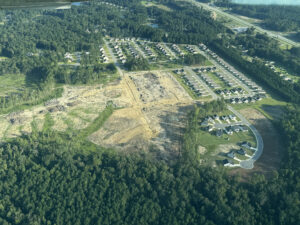
Flyover reveals Brices Creek sediment pollution sources
September 17th 2026