
News
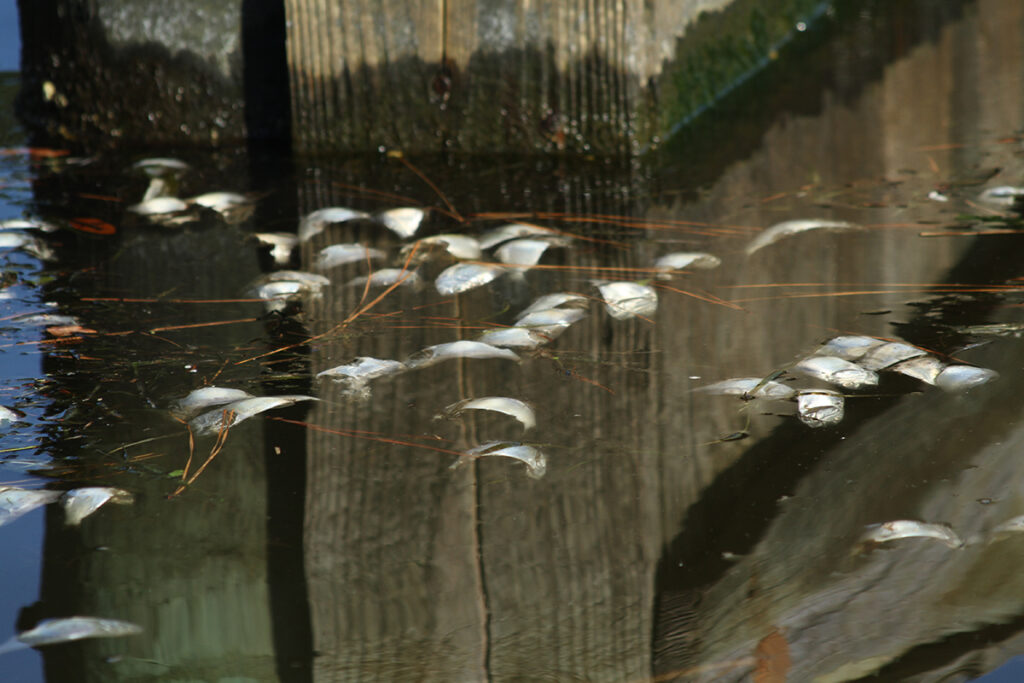
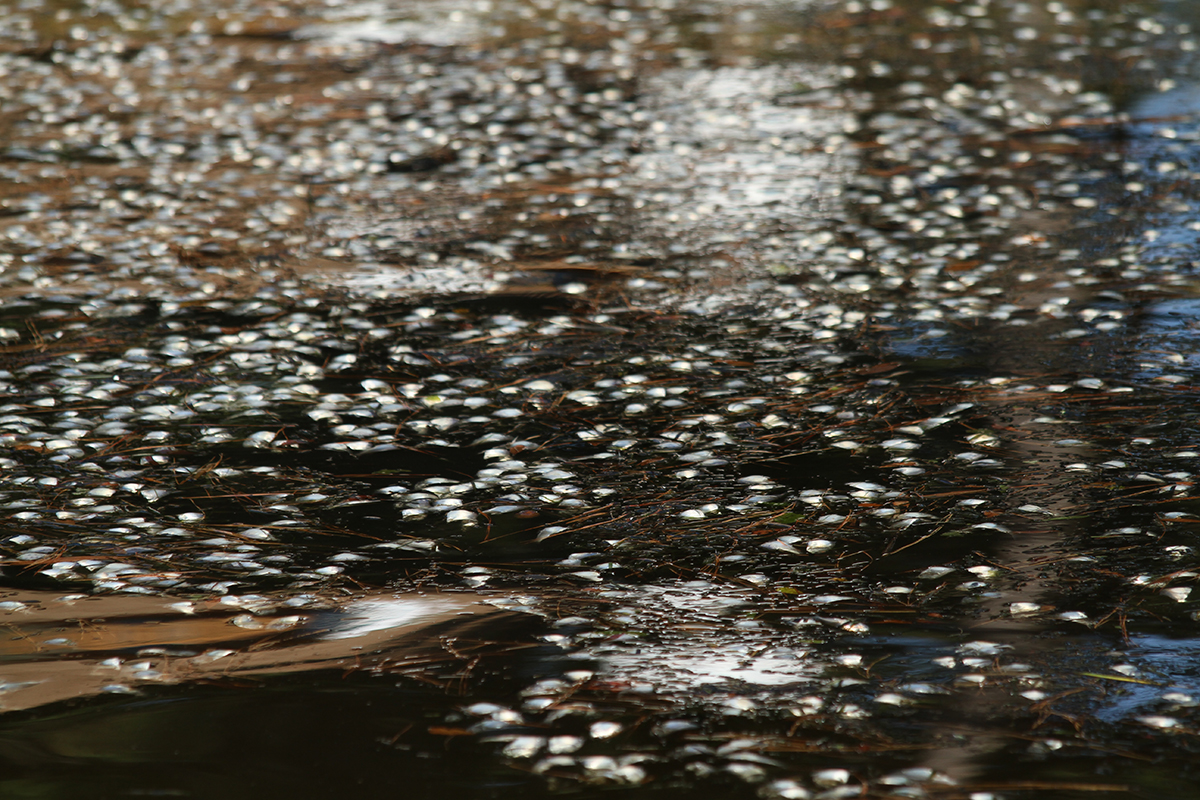
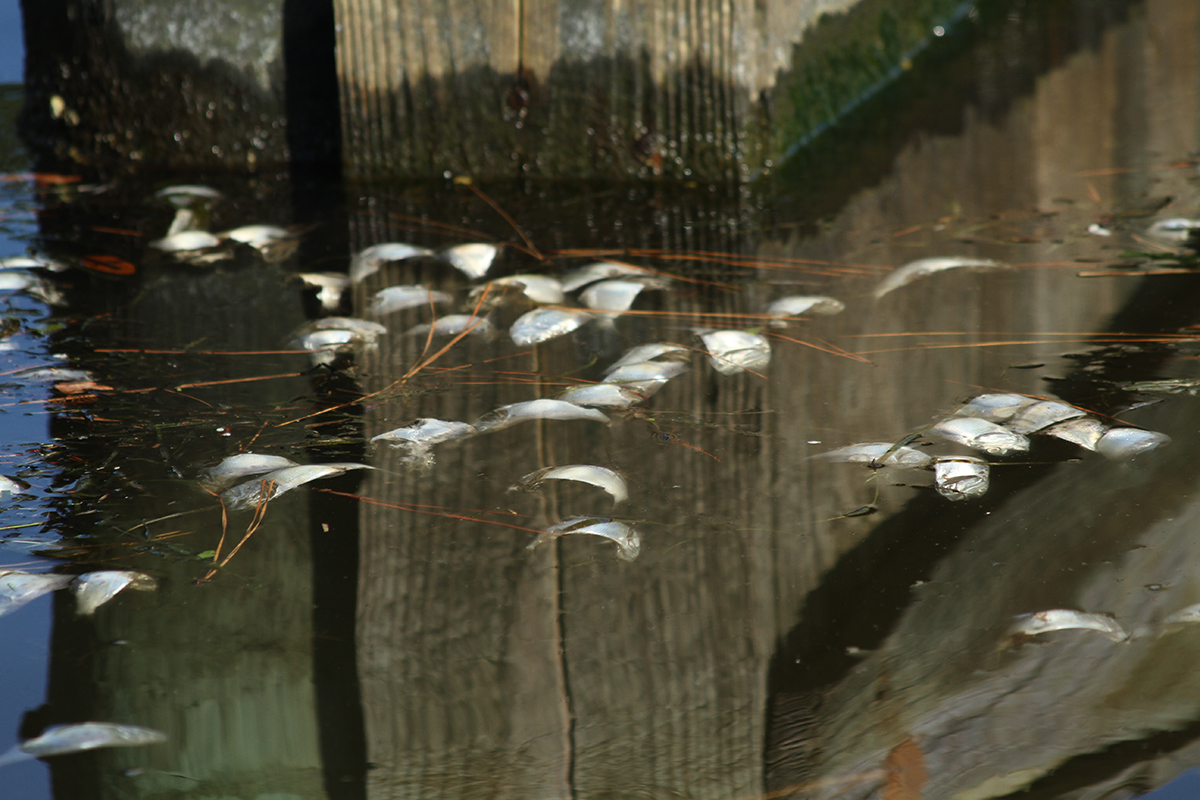
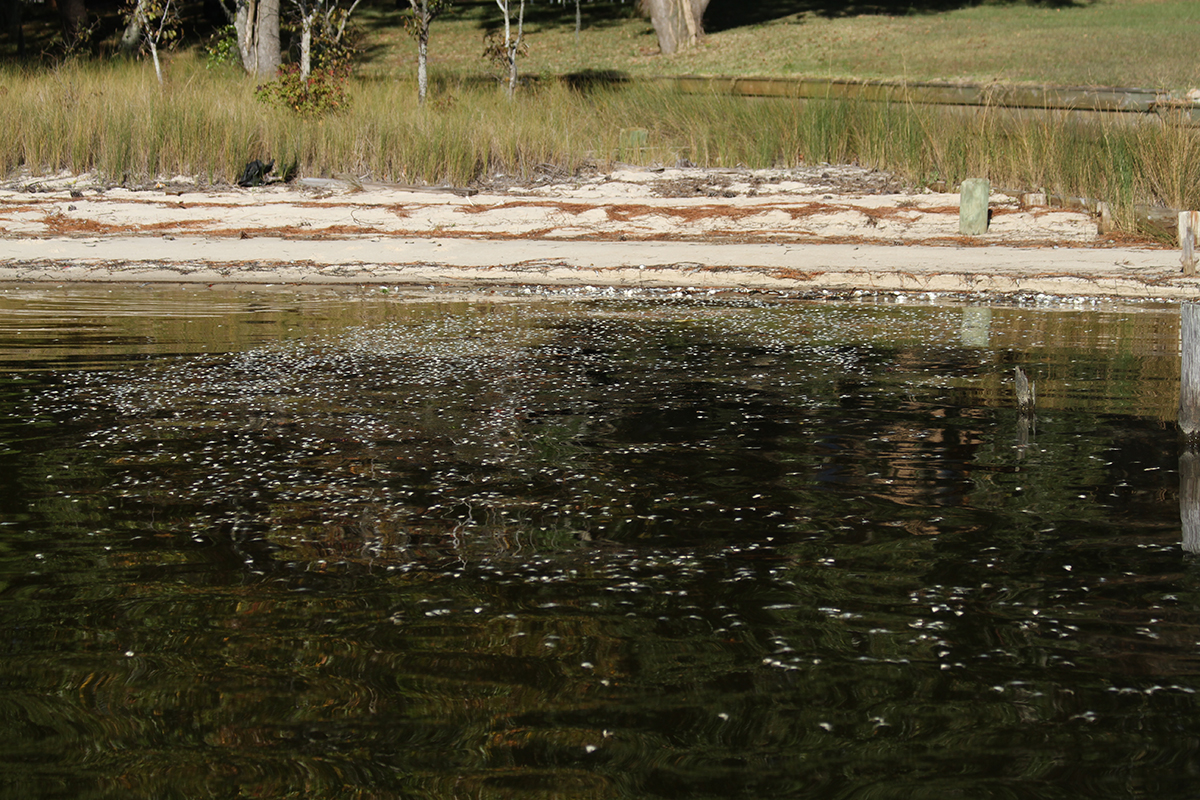
Last week, reports of a major fish kill, from Broad Creek to Blounts Bay, were called in by several people. North Carolina Department of Environmental Quality got out on the water Tuesday, and by Wednesday, they had discovered bottom waters were pretty dead (no oxygen), expecially below two meters in Blounts Bay. They also saw signs of algal bloom activity, which can cause fish kills. Testing to find out what type of algae is in progress.
According to Sound Rivers’ Executive Director Heather Deck, this summer’s rainfall has led to the influx of nutrients causing, yet again, more blooms and dead water. On the Pamlico on Wednesday, thousands of dead and dying menhaden could be seen from Blounts Bay to Bath, as the wind has pushed the decaying fish to the east.
Related News
Flyover reveals Brices Creek sediment pollution sources
September 17th 2026
Low oxygen levels cause of New Bern fish kills
September 17th 2026
Inaugural Spruce up the Neuse a huge success
September 17th 2026
Boat day doubles as algal bloom surveillance
September 17th 2026
Controversial dock expansion prompts Riverkeeper response
September 10th 2026
Riverkeeping team investigates Brices Creek pollution
September 10th 2026
Parts of upper Tar watershed still in exceptional drought
September 10th 2026
Court affirms State must protect resources
September 10th 2026