News
Tip leads to pollution problem on Otter Creek tributary
Environmental, Neuse River Watershed, Sound Rivers, Water Quality
Posted on March 27th, 2025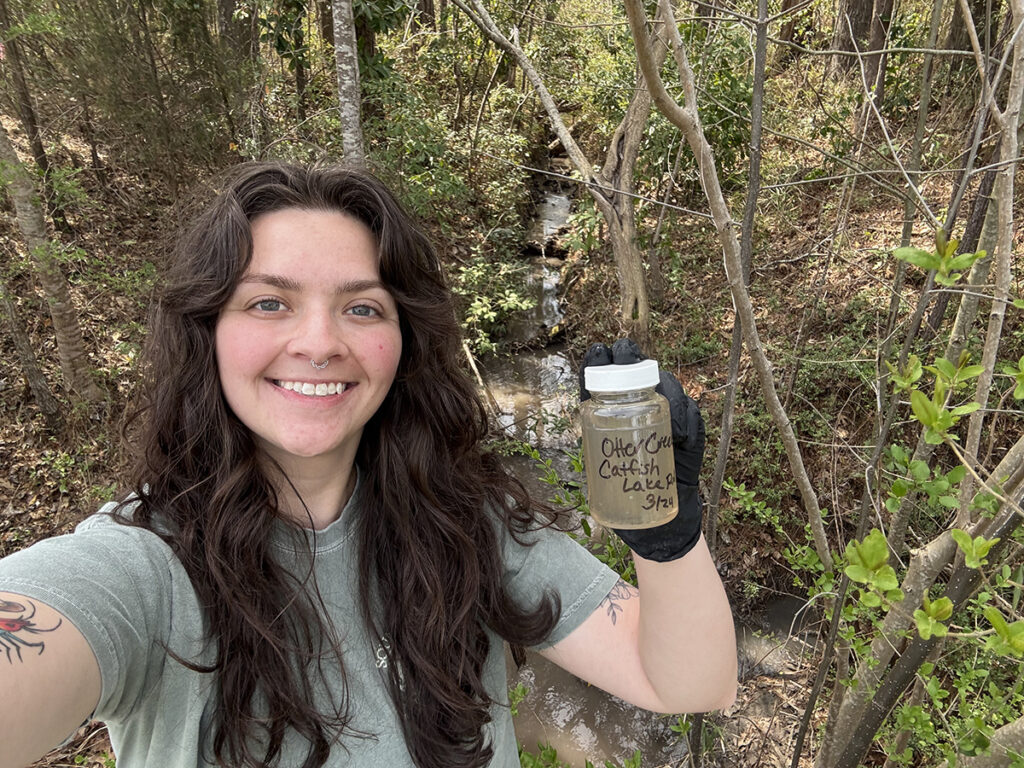
Water Quality Specialist Taylor Register holds aloft a sample of sediment-laden water from an Otter Creek tributary.
A call to the Sound Rivers hotline about a potential sewage spill led to another kind of pollution problem in New Bern: sediment.
“Over the weekend, we received a call from someone saying that one of the tributaries of the Otter Creek was flowing with thick, dark gray water, and it had been going on for a few days and was not improving,” said Sound Rivers Water Quality Specialist Taylor Register. “All the other tributaries that fed into the main stem of Otter Creek were flowing clear as usual, but this was the only branch that ran underneath N.C. Highway 70, so he was worried that there may have been a leak from a sewer line from road construction in that area.”
On Monday, Taylor went out to investigate.
“When I got out to Otter Creek, I immediately found exactly what was reported to us, which was one singular branch full of muddy-looking, gray water,” she said. “There was no odor, and it really didn’t look like any sewage spill I had seen before, but I collected several samples anyway and drove around the area to see if I could find anything that was concerning.”
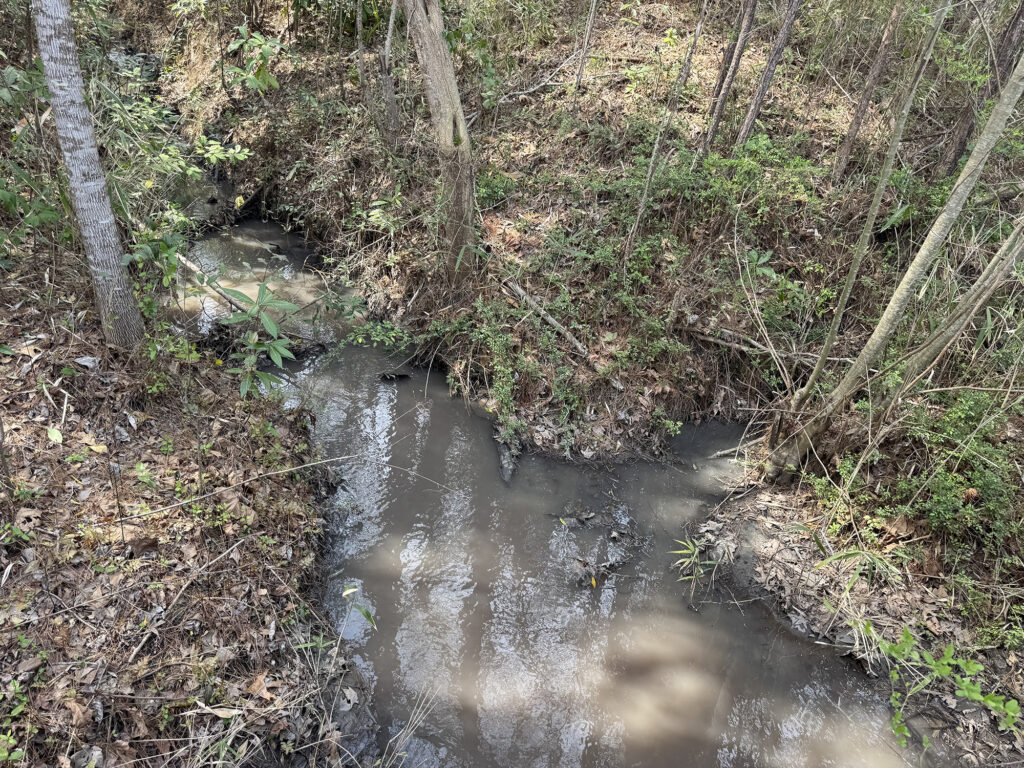
Following the headwaters across the highway, what she found was a massive land-clearing site with disturbed soil — soil the exact same color as the water running in the creek.
“Sure enough, our bacteria samples came back completely clean, but turbidity was two times over the state standard, so that confirmed that we are definitely dealing with a sediment runoff issue rather than sewage,” Taylor said.
Sediment pollution is the single largest of source of pollution by volume in the state of North Carolina, and can potentially smother aquatic species. Taylor reported the issues to the North Carolina Department of Environmental Quality and the Division of Energy, Mineral and Land Resources, both of which regulate aspects of sediment pollution: NCDEQ in the water and DEMLR, sediment and erosion control requirements for development. Both agencies plan to visit the site.
“Our caller was thrilled to hear that there wasn’t sewage running through the creek in his neighborhood, and hopefully we’re on the right track to addressing this issue and returning Otter Creek back to its usual non-muddy state,” Taylor said.
Like the work your Riverkeeping team is doing? So do we! Donate today to fund more investigations!
Related News

OYSTER ROAST 2026: Everything you need to know!
September 2nd 2026
Vote!
October 15th 2026
Industrial park threatens nearly 30 acres of wetlands
October 15th 2026
Riverkeeper gives recap of Neuse fish kill
October 15th 2026
NC Land and Water Fund comes through with two new grants
October 15th 2026
Staff, Cummins volunteers return for rain garden rehab
October 15th 2026
Photo of the Week: Sampling Run
October 15th 2026
Pamlico-Tar Riverkeeper visit Cypress Landing
October 15th 2026

CONSTRUCTION ALERT: A head’s up for Neuse paddlers in Wake County
October 15th 2026