News
By Chris Moore, ECU, Dept. of Biology
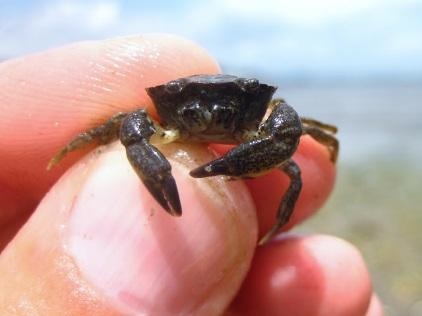
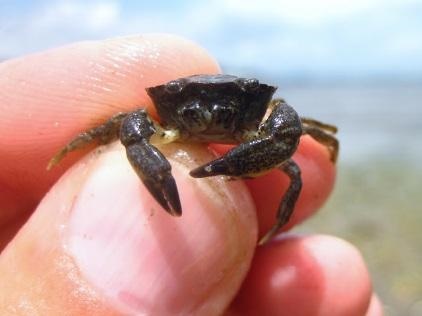
Over the past ~60 years, native mud crabs in estuaries along the US east coast have been greatly impacted by an invasive parasite; a highly modified barnacle, specifically adapted to infect certain species of crabs.
The parasite, Loxothylacus panopaei (“Loxo” for short), is native to the Gulf of Mexico and southeast Florida but was absent from much of the Atlantic until it was transported with Gulf of Mexico oysters to the Chesapeake Bay in the 1960s, where it then spread up and down the coast. This “body- snatching” parasite seeks out and penetrates its crab host, hijacking its internal physiology, extracting resources, and changing its behavior. Male crabs become “feminized” and protect and groom the parasite’s larval sac just as female crabs do for their own broods. Most significantly, the parasite eliminates reproductive abilities for both male and female crabs. Essentially, these crab “zombies” serve as a vessel for the barnacle’s reproduction but can no longer reproduce themselves, which is a serious consequence for these ecologically-important native crab populations and the communities in which they reside.
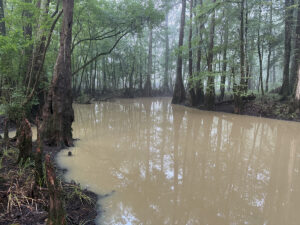
Because this parasitic barnacle is a recent invasion to the southeastern USA, including North Carolina, many questions remain about the impact to estuarine communities. Researchers and students in the lab of Dr. April Blakeslee, Associate Professor of Biology at ECU, intend to determine if crabs have a refuge from infection when occupying low- salinity waters that are less beneficial to the parasite. They will do so by sampling for mud crabs and the parasite along a salinity gradient in the Pamlico and Neuse Rivers, and they need your help!
Related News

2026 Oyster Roast Ticket Sales
September 2nd 2026
OYSTER ROAST 2026: Everything you need to know!
September 2nd 2026
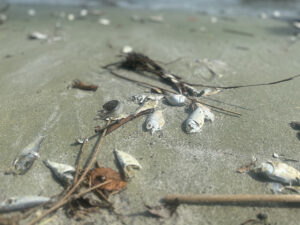
Riverkeeper, specialist investigate Bridgeton fish kill
September 24th 2026
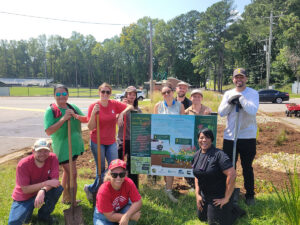
Cummins, Sound Rivers partner in schools’ cleanup
September 24th 2026

Scouting group goes on environmental adventure
September 24th 2026
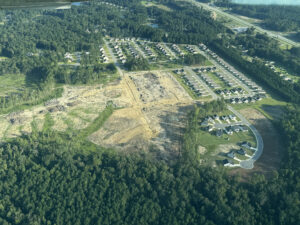
Flyover reveals Brices Creek sediment pollution sources
September 17th 2026
Low oxygen levels cause of New Bern fish kills
September 17th 2026
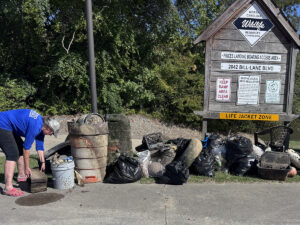
Inaugural Spruce up the Neuse a huge success
September 17th 2026
Boat day doubles as algal bloom surveillance
September 17th 2026
Controversial dock expansion prompts Riverkeeper response
September 10th 2026