News
Specialist scouts CAFO sampling sites
CAFOs, Environmental, Neuse River Watershed, Sound Rivers, Water Quality
Posted on February 27th, 2025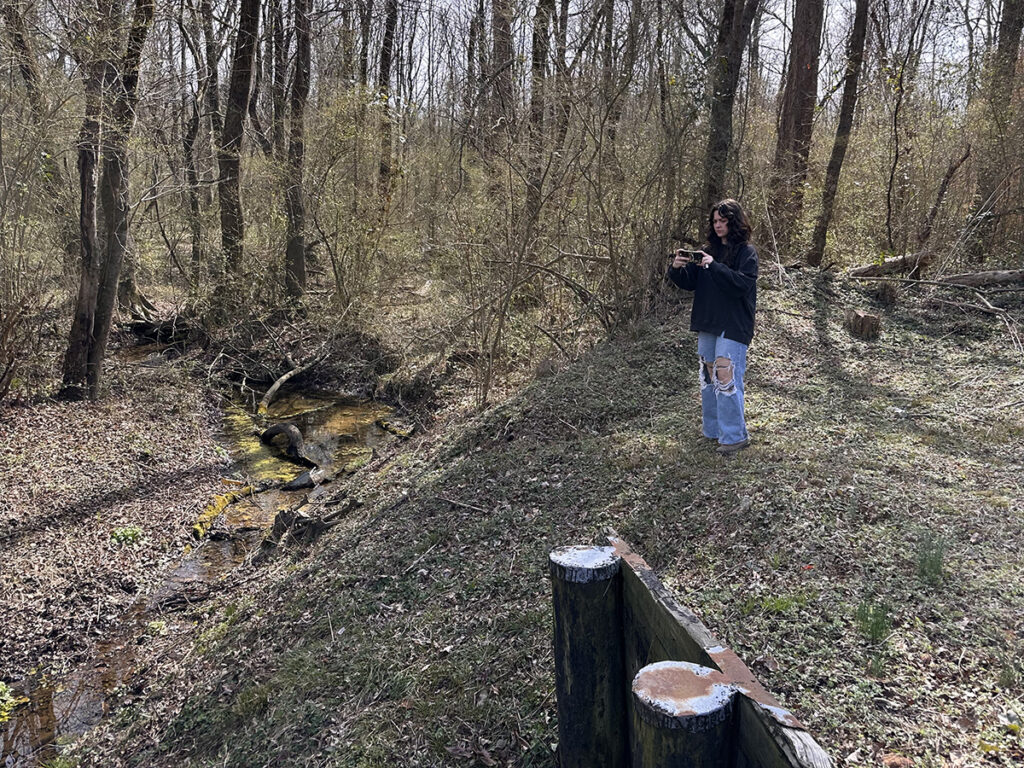
Water Quality Specialist Taylor Register takes a photo of a potential CAFO monitoring site.
Water Quality Specialist Taylor Register was in the field this week, on the lookout for a specific kind of site to collect water samples.
“Something that we’ve ran into in the past is that when spills or issues around CAFOs pop up, our biggest barrier to responding quickly is accessibility to sampling sites,” Taylor said.
CAFOs are concentrated animal feeding operations, which supply the meat, dairy and egg industries. Hog and poultry facilities predominate in the Neuse and Tar-Pamlico watersheds; several are located in floodplains and have a history of flooding.
“This was a bit of proactive work on our end, identifying sites that we may have problems with in the future, and taking notes on the best course of action for each facility if we ever need to sample,” Taylor said.

Getting out in the field and seeing the lay of the land gave her a better understanding of easily reached sites.
“You can only tell but so much from just looking at satellite photos, so it’s really good thing I went out because some sites we thought would be good kayaking spots were essentially overgrown ditches, and other sites that weren’t even on our radar turned out to be the best ones in the area,” Taylor said.
She said the purpose of the scouting trip is to lay the groundwork for a streamlined response to a spill or flooding.
Like the work your Riverkeeping team is doing to protect the Neuse and Tar-Pamlico? Donate today to support their work!
Related News
Flyover reveals Brices Creek sediment pollution sources
September 17th 2026
Low oxygen levels cause of New Bern fish kills
September 17th 2026
Inaugural Spruce up the Neuse a huge success
September 17th 2026
Boat day doubles as algal bloom surveillance
September 17th 2026
Controversial dock expansion prompts Riverkeeper response
September 10th 2026
Riverkeeping team investigates Brices Creek pollution
September 10th 2026
Parts of upper Tar watershed still in exceptional drought
September 10th 2026
Court affirms State must protect resources
September 10th 2026