
News
Specialist kicks off grant field work with Slocum Creek sampling
Environmental, Neuse River Watershed, Sound Rivers, Water Quality
Posted on January 22nd, 2026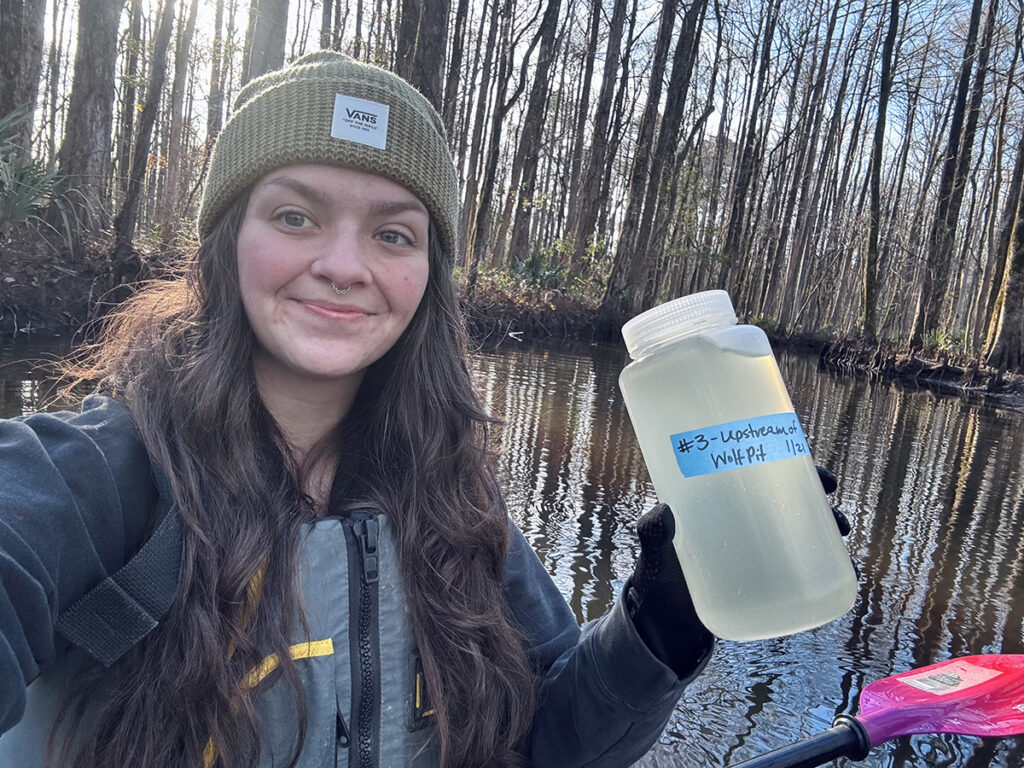
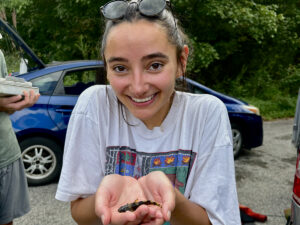
Water Quality Specialist Taylor Register with a sample she collected this week from Slocum Creek.
Water Quality Specialist Taylor Register embarked on a yearlong project that will paint a better picture of Slocum Creek pollution.
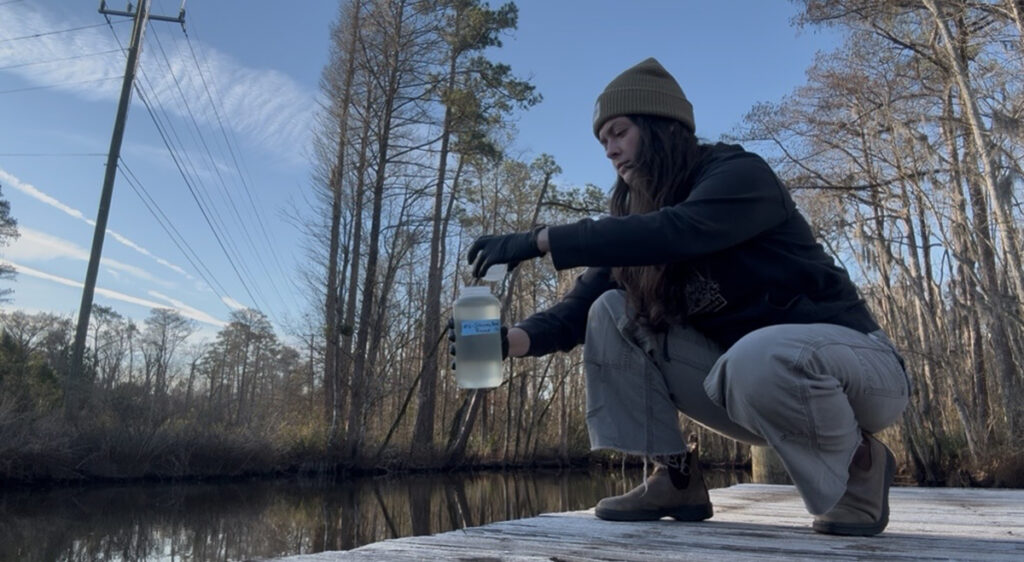
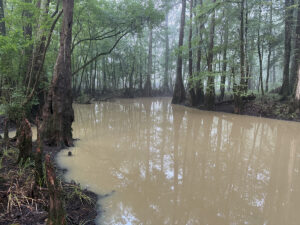
Courtesy of a North Carolina Land and Water Fund grant, and in partnership with the University of North Carolina Institute of Marine Sciences, Taylor will be conducting monthly sampling from six sites along the creek, starting way upstream near the Greenfield Heights Mobile Home Park, down to the end of the southwest prong before it converges with the main channel of Slocum Creek.
“We’ll be looking at entero bacteria levels, physical and chemical parameters with our YSI meter, nutrients and HF183, which is the DNA marker for human fecal contamination,” Taylor said.
The project is a continuation of a 2-year investigation into Slocum Creek’s pollution — where it was coming from and why. Last year, Sound Rivers narrowed down the source to two locations just outside the City of Havelock: a home with a faulty septic system in a neighborhood off the Slocum Creek tributary, Wolf Pit Branch, and the Greenfield Heights Mobile Home Park, which also had malfunctioning septic issues. Both the Craven County and the North Carolina Department of Environmental Quality are now working to get issues at both sites resolved.
Taylor said working the Institute of Marine Sciences is mutually beneficial.
“The nutrient and DNA portion of our sampling is being analyzed by staff and students at the Institute of Marine Sciences. So, after I’m done in the field, I drop those samples off in Morehead City where they’ll be processed, and we get the results back in a couple weeks. As part of the grant, UNC has committed to processing those samples for us, which is a huge help. It’s less time I have to spend transporting samples, and we’re all benefitting in the process since we’re sharing our data with them to review, and vice versa,” she said. “UNC is doing similar work out in Slocum Creek, so we actually selected our sample sites to have an even split of duplicate sites and brand-new ones, and are sampling on alternate weeks to make sure there’s no gaps or weather events are missed. The result of all this will be a ton of year-round data, which we are really excited about being able to share at the end of this project.”
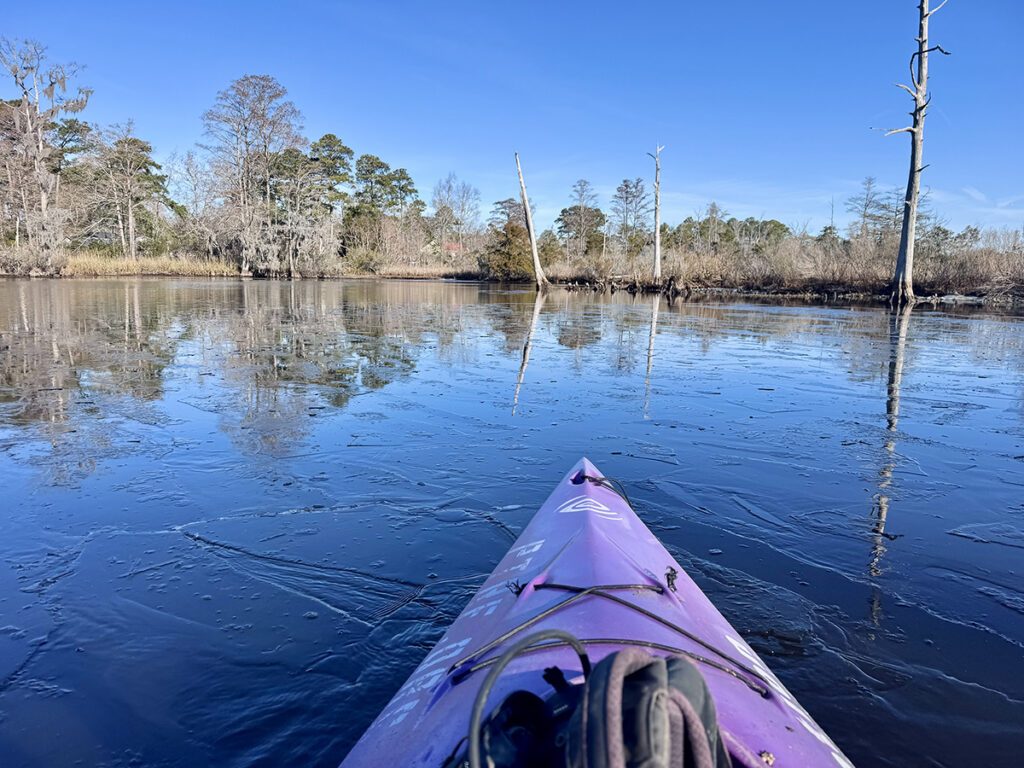
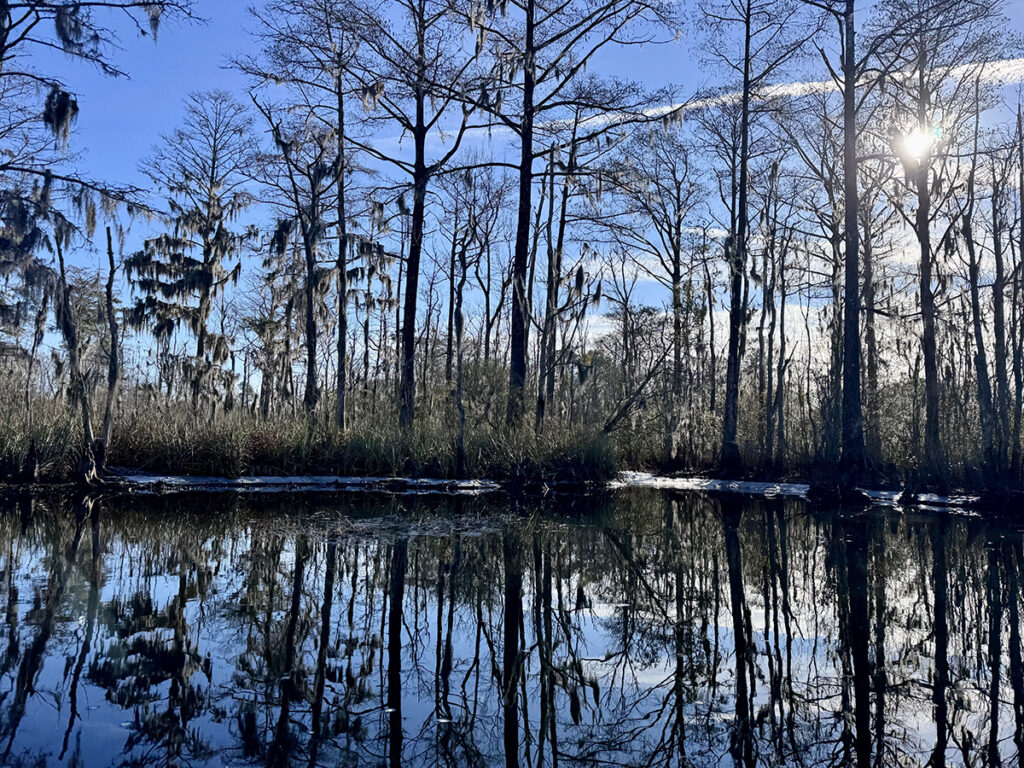
Taylor first sampling foray led to an unexpected kayaking adventure on the creek: “I started early in the morning to make sure all samples were dropped off before the lab cutoff time. Since it was my first time doing this particular sampling run, it was really important to budget for more time in case I had to make any changes. And it was a good thing I did, because some of my access points were much trickier to actually get to than I expected, so I ended up having to kayak to four of the six sites. But it was an absolutely beautiful day to be on the water — it was quiet, and I got to explore a part of the creek I’ve never actually seen before, which made my day. The only downside was that it was COLD! The banks were completely frozen over, and I had to paddle through some thick sheets of ice, which was a first. But overall, a 10/10 field day. I’m really looking forward to having a reason to be out there on a regular basis!”
Like the work your Riverkeeping team is doing to stop the pollution of Slocum Creek? We love it! Donate today to support their work on Slocum Creek!
Related News
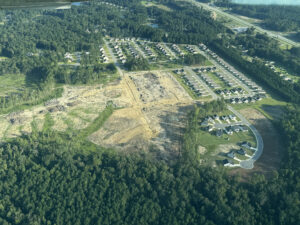
Flyover reveals Brices Creek sediment pollution sources
September 17th 2026

Low oxygen levels cause of New Bern fish kills
September 17th 2026
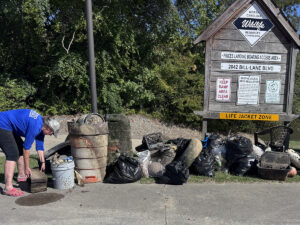
Inaugural Spruce up the Neuse a huge success
September 17th 2026
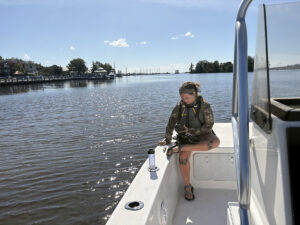
Boat day doubles as algal bloom surveillance
September 17th 2026
Controversial dock expansion prompts Riverkeeper response
September 10th 2026
Riverkeeping team investigates Brices Creek pollution
September 10th 2026
Parts of upper Tar watershed still in exceptional drought
September 10th 2026
Court affirms State must protect resources
September 10th 2026