News
Specialist investigates Otter Creek sediment pollution tip
Environmental, Neuse River Watershed, Sound Rivers, Water Quality
Posted on July 9th, 2026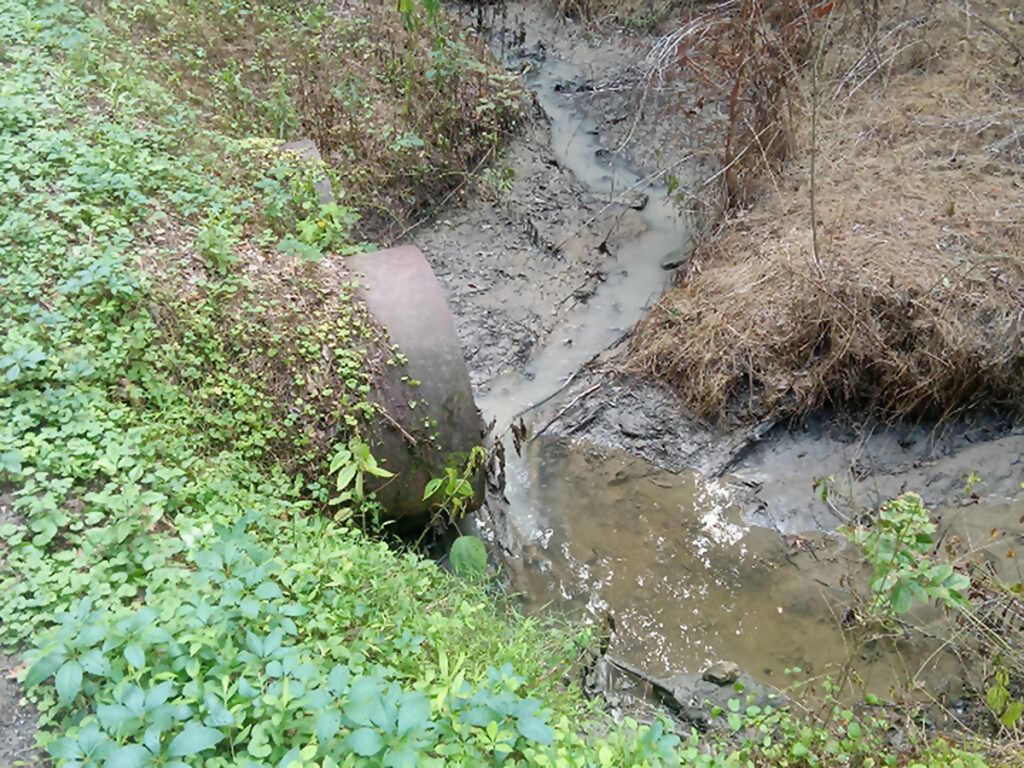
A turbid tributary of Otter Creek, which is a tributary of the lower Neuse.
Water Quality Specialist Taylor Register Seijo headed into the field last week, after a hotline tip alerted Sound Rivers to a sediment pollution problem.
What she found was a tributary of Otter Creek — one of several that make up a creek system that flows from the edge of Croatan National Forest to N.C. Highway 70 into the lower Neuse River — that was unusually murky.
“Just from looking at the creek, you could immediately tell there was definitely some sort of sediment input that had happened, the water was extremely turbid and you could even see a pretty visible line separating the turbid water from what the creek normally looks like,” Taylor said.
While Sound Rivers typically reaches out to North Carolina Department of Environmental Quality’s Division of Water Resources or Division of Energy, Mineral and Land Resources, the creek’s proximity to the N.C. 70 construction project led her to NCDOT’s Roadside Environmental Unit.
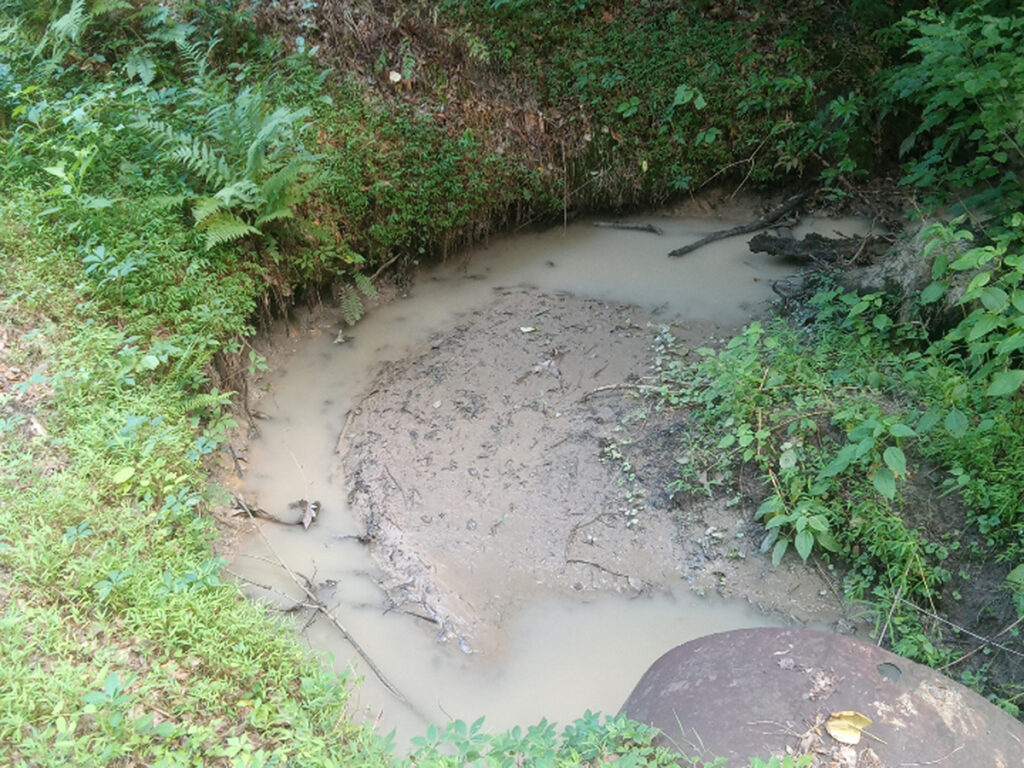
“I have to say, their team responded and conducted a site visit pretty much immediately after we reported, so I was really appreciative of them treating this issue with urgency,” Taylor said. “From their site visit, they determined that the color of the sediment in the stream was more consistent with the natural soil makeup of the surrounding area, rather than the sediment type of their ‘borrow material’ for the construction project. Their team also inspected all of the erosion control devices where water leaves the project site and found them to be in place and functioning as they should.”
Instead, the team believes the sources was a non-state-maintained rock road running parallel to Otter Creek.
“It appeared to have partially washed out after last weekend’s rain event,” Taylor said. “The inspectors noted signs of erosion along this road, as well as sediment color that was consistent with that of the creek.”
The NCDOT team has been in contact with the owner to work towards next steps in resolving the issue.
“On our end, we are continuing to monitor both the creek and project area, pre- and post-rain, and are following up with DWR and DEMLR in case impacts to this creek persist,” Taylor said. “We’re really glad when people reach out to us about issues like this, because working towards a solution is definitely a better option than letting a problem get worse. The health of every tributary has an impact on the health of our rivers.”
Like Sound Rivers’ investigations and the results they achieve? We love them! Donate today to support clean water!
Related News

OYSTER ROAST 2026: Everything you need to know!
September 2nd 2026

Vote!
October 15th 2026
Industrial park threatens nearly 30 acres of wetlands
October 15th 2026
Riverkeeper gives recap of Neuse fish kill
October 15th 2026
NC Land and Water Fund comes through with two new grants
October 15th 2026
Staff, Cummins volunteers return for rain garden rehab
October 15th 2026
Photo of the Week: Sampling Run
October 15th 2026
Pamlico-Tar Riverkeeper visit Cypress Landing
October 15th 2026

CONSTRUCTION ALERT: A head’s up for Neuse paddlers in Wake County
October 15th 2026