News
Specialist completes 8th round of Slocum sampling
Environmental, Neuse River Watershed, Sound Rivers, Water Quality
Posted on August 27th, 2026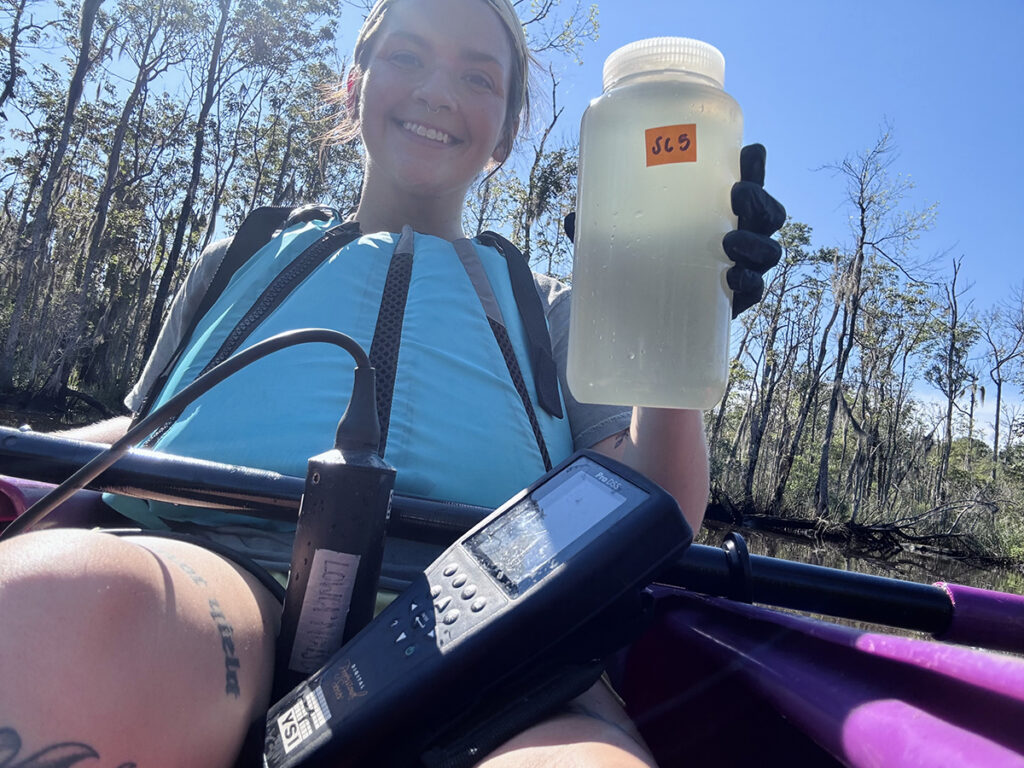
Water Quality Specialist Taylor Seijo holds a water sample collected on her eighth Slocum Creek sampling run.
Water Quality Specialist Taylor Seijo is now three-quarters of the way through a yearlong Slocum Creek sampling project.
Taylor took to her kayak again this week to collect water samples from six sites on the Slocum Creek, all in an effort to track down the source of ongoing pollution in the Havelock creek. Courtesy of North Carolina Land and Water Fund grant, Sound Rivers partnered with the University of North Carolina’s Institute of Marine Sciences to create and implement the sampling protocol.
The data collected will be used to identify locations that could be behind elevated levels of bacteria in the creek — Havelock’s only tributary to the Neuse River and popular recreational site.
Taylor said she’s anticipating better sampling conditions in the coming months.
“I’m definitely looking forward to my remaining rounds since this summer has been almost miserably hot,” she laughed.
Unlike previous trips, she only ran into one alligator.
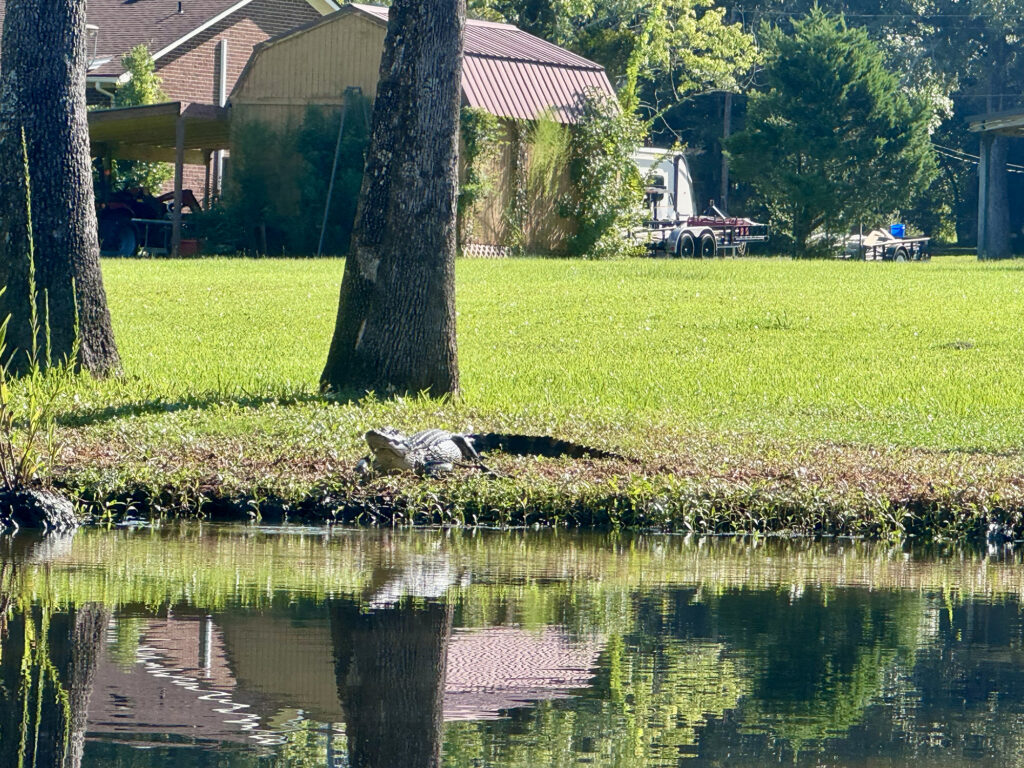
“I saw one lone alligator this time, who was sunning themself on a bank near one of my downstream sites,” Taylor said. “August is the end of nesting season here in North Carolina, so a lot of alligators are going to be close to or on the banks to guard their nests.”
Taylor pointed out a fun fact: alligator nests are built by the female into a large mound of leaves and debris, which looks really similar to a compost pile. That organic matter decomposes over the summer and produces heat in the process, which is what incubates the eggs until they hatch.
She said the hatchlings should be making an appearance any time now.
“They’ll travel with their mom after hatching, so maybe on the next sampling round I’ll get lucky and see some baby alligators from a distance,” she said.
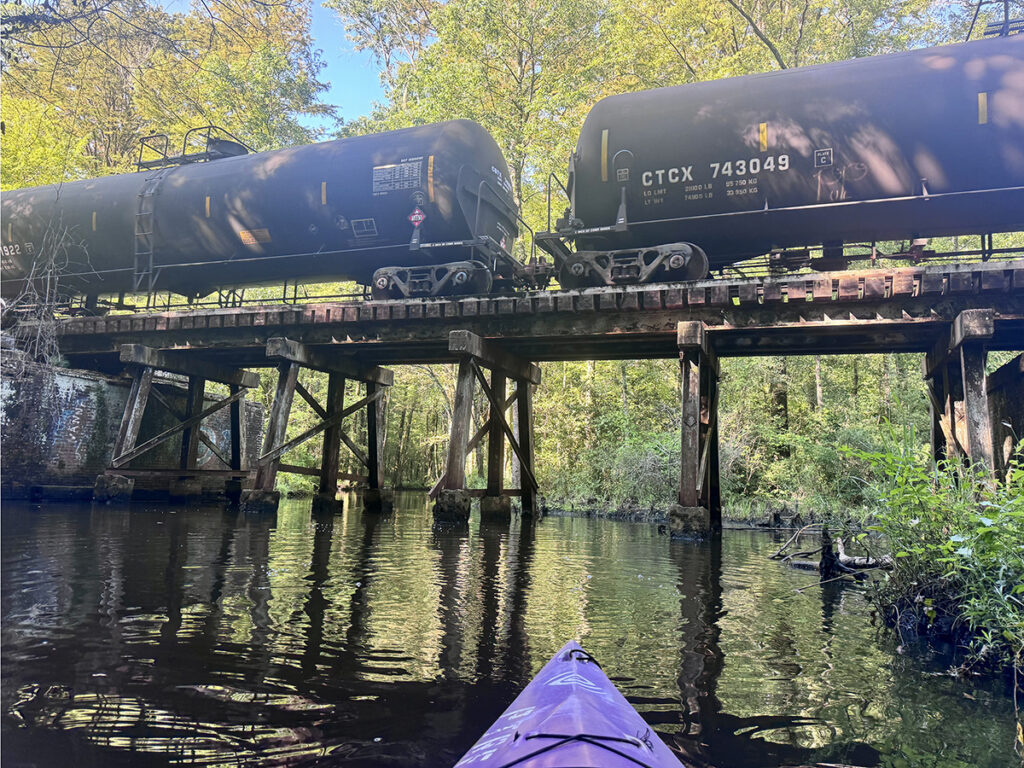
Taylor also had another first-time Slocum Creek experience that was a bit startling: “One of my sample sites is directly underneath the railroad trestle that crosses over the creek. I’ve sampled this same spot dozens of times by now, but this was the first time I’ve actually been there at the same time when a train was passing through. The whole trestle started shaking before the train was even close. My dad actually works on that track that runs through Havelock. I sent him a picture from the water, and he immediately recognized where it was!”
Like the work your Riverkeeping team is doing to help resolve pollution issues (and have some cool wildlife encounters)? We do, too! Donate today to support Taylor’s adventures in the field!
Related News

OYSTER ROAST 2026: Everything you need to know!
September 2nd 2026

Annual Auction goes live Oct. 30!
October 22nd 2026
Sound Rivers assists in hosting first-of-its-kind Water Summit
October 22nd 2026
Riverkeeper weighs in on Raleigh land-use planning
October 22nd 2026
Water Watch, Fall 2026 quarterly meeting
October 22nd 2026
Blounts Creek Update
October 22nd 2026

Vote!
October 15th 2026
Industrial park threatens nearly 30 acres of wetlands
October 15th 2026
Riverkeeper gives recap of Neuse fish kill
October 15th 2026