News
Sound Rivers gets close up of cyanobacteria
Algal Blooms, Education, Environmental, Neuse River Watershed, Sound Rivers, Tar-Pamlico Watershed, Water Quality
Posted on July 18th, 2024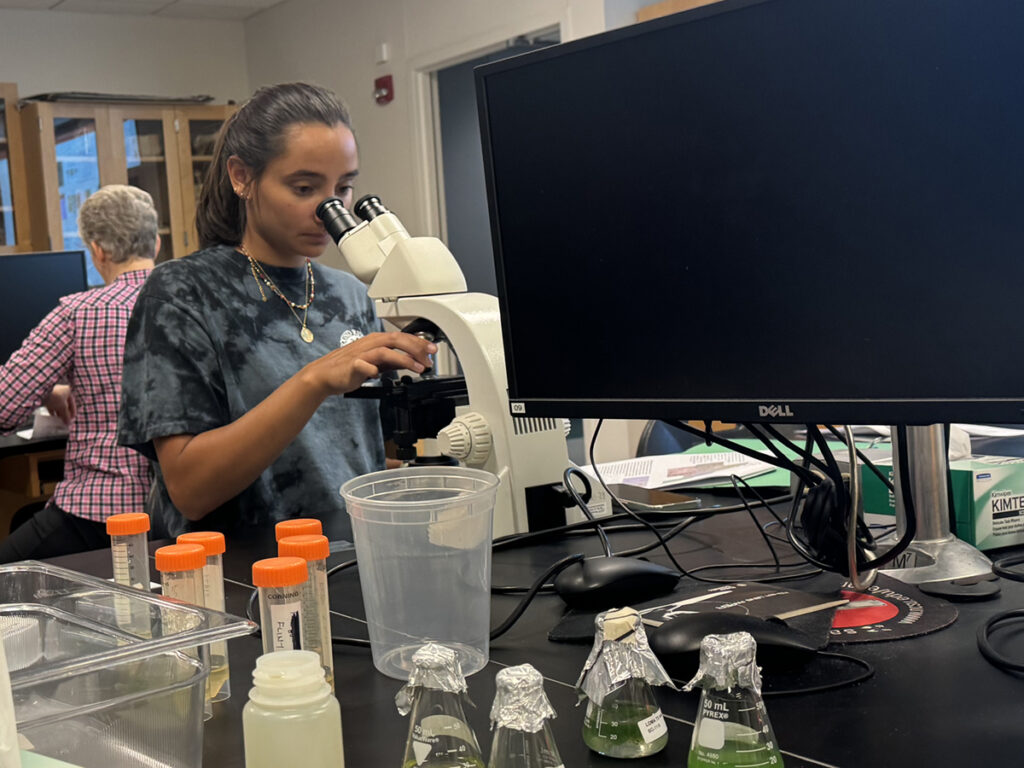
Pamlico-Tar Riverkeeper Katey Zimmerman peers into the microscrope.
Sound Rivers’ water-quality staff was in the lab last week, getting some hands-on cyanobacteria identification training at North Carolina State University.
Dr. JoAnn Burkholder, director of NCSU’s Center for Applied Aquatic Ecology, and Elle Allen, Research Operations Manager, hosted a private training for Neuse Riverkeeper Samantha Krop, Pamlico-Tar Riverkeeper Katey Zimmerman and Water Quality Specialist Taylor Register, consisting of educational presentations, microscopy work and “tons of stories relating to harmful algal blooms,” Taylor said.

“By the end of the day, we had a pretty solid grasp on identifying cyanobacteria under the microscope,” she said.
The training represents one avenue for Sound Rivers to be proactive regarding harmful algal blooms.
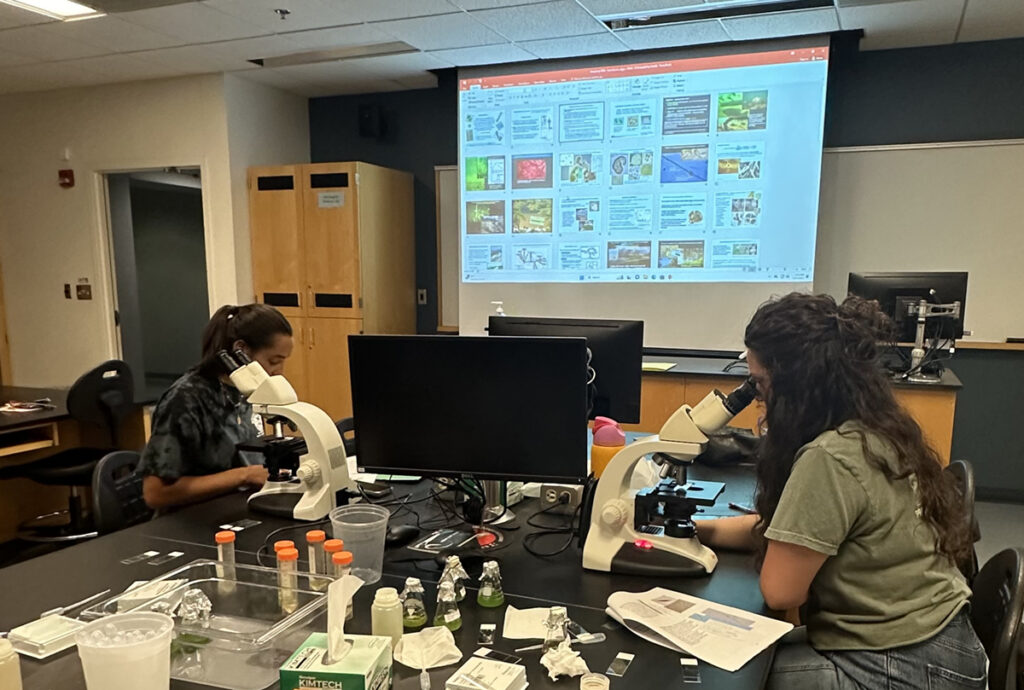
“This training helped to familiarize us with some common cyanobacteria species that we might encounter in our watersheds, which is really important since we are seeing more and more algal blooms each year,” Taylor said. “Moving forward, we’ll also be able to collect algal samples to send to Dr. Burkholder and her lab, so they can analyze them and determine if cyanobacteria is present, as well as the toxin concentrations.”
Like the work your Riverkeepers are doing to keep the Neuse and Tar-Pamlico healthy? Donate to support their work today!

Related News

OYSTER ROAST 2026: Everything you need to know!
September 2nd 2026
Vote!
October 15th 2026
Industrial park threatens nearly 30 acres of wetlands
October 15th 2026
Riverkeeper gives recap of Neuse fish kill
October 15th 2026
NC Land and Water Fund comes through with two new grants
October 15th 2026
Staff, Cummins volunteers return for rain garden rehab
October 15th 2026
Photo of the Week: Sampling Run
October 15th 2026
Pamlico-Tar Riverkeeper visit Cypress Landing
October 15th 2026
CONSTRUCTION ALERT: A head’s up for Neuse paddlers in Wake County
October 15th 2026