News
Sound Rivers assists in hosting first-of-its-kind Water Summit
Advocacy, Environmental, Neuse River Watershed, Sound Rivers, Tar-Pamlico Watershed, Water Quality
Posted on October 22nd, 2026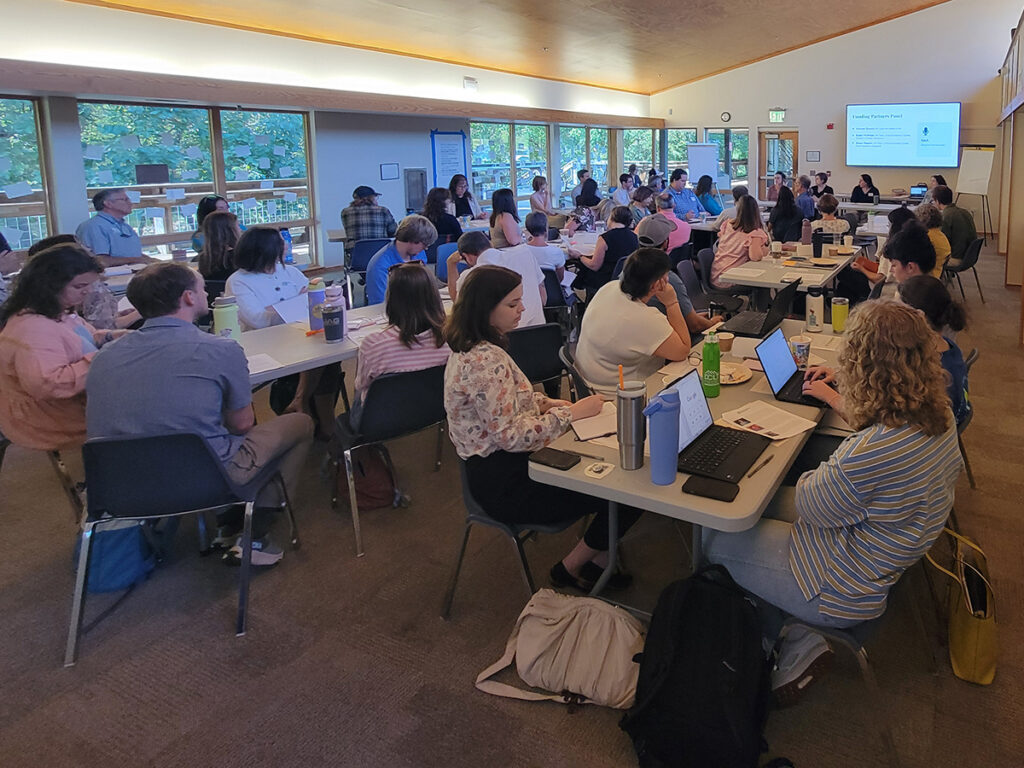
Waterkeepers and staff from regional Councils of Government met to network and share resources.
Waterkeepers from across North and South Carolina descended upon the Walnut Creek Wetland Center in Raleigh last week for a two-day meeting.
Sound Rivers Executive Director Heather Deck, Neuse Riverkeeper Samantha Krop and Pamlico-Tar Riverkeeper Katey Zimmerman met with North Carolina Waterkeepers on Day 1 to share knowledge and advocacy efforts on key issues such as data centers’ water use, loss of wetland and stream protections and bacteria pollution of the state’s waterways — among other issues, according to Heather.
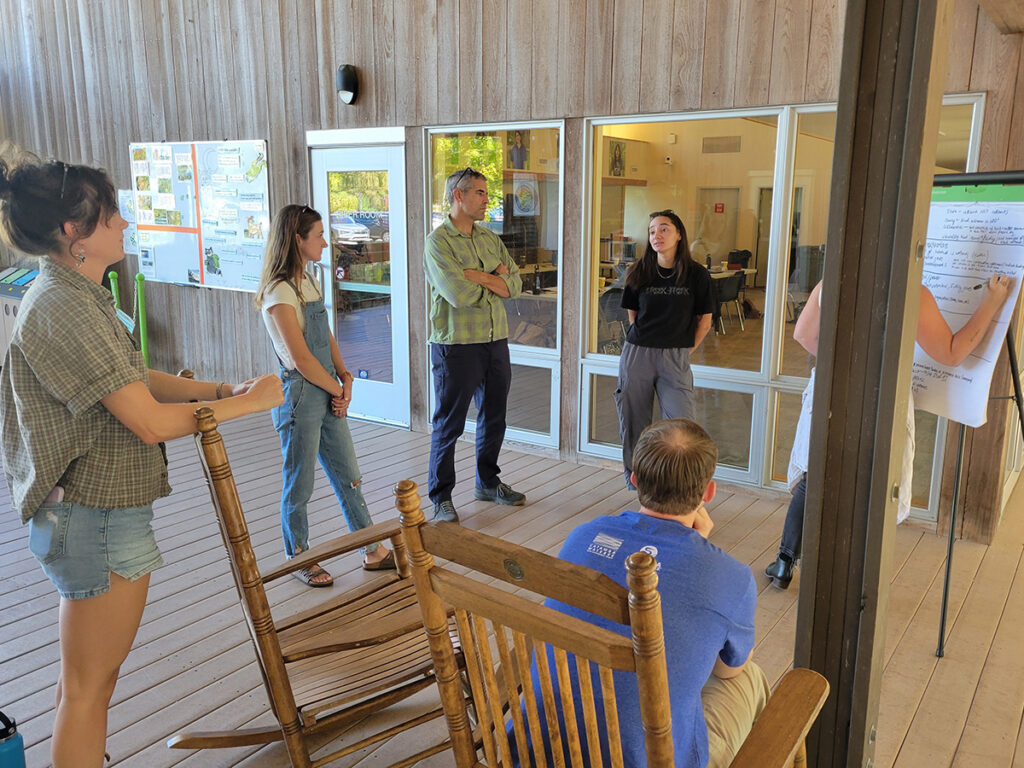
Day 2 featured a first-of-its-kind meeting between Waterkeeper organizations and staff and representatives from 14 of the 16 Councils of Government across the state. Sound Rivers took a lead role in organizing the summit, drawing on the organization’s previous experience working with the Mid-East Commission on several watershed restoration plans and the ongoing Mid-East Region Wastewater Improvement Plan, an effort to identify known problems in a five-county region and recommend paths to local governments to move forward with improvements.
“Our current partnerships with our region’s COGs have been to help plan and solve our towns’ and counties’ critical water issues,” Heather said. “Both Waterkeepers and COGs value clean water, healthy rivers and communities, and now we’re looking for more ways to collaborate, to plan for, and access funding for critical projects that will protect our rivers. I was super-ecstatic about the turnout.”
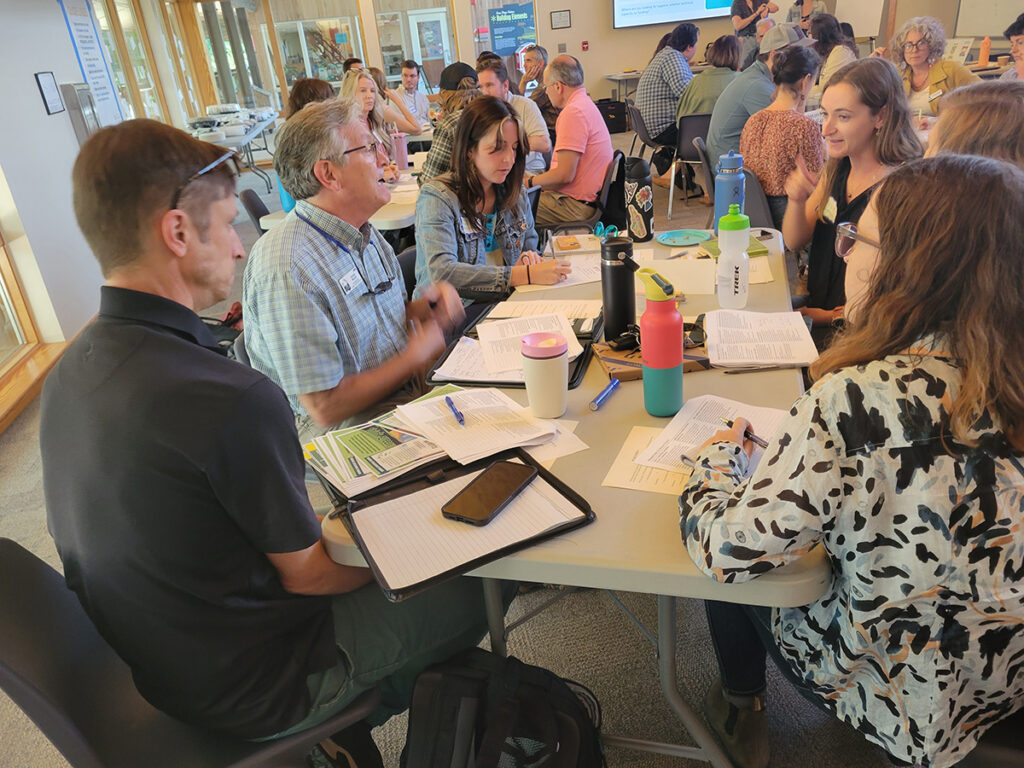
The summit was borne out of Waterkeepers Carolina grant from the Mosaic Company Foundation to train Waterkeepers to build knowledge and resources for the purpose of accessing federal grant funding. Facilitated by MDC, Inc.— a nonprofit that provides facilitation and leadership services for nonprofits in the South — the meeting started with information from state funders such as the North Carolina Land and Water Fund and North Carolina Department of Environmental Quality’s funding programs, and led to groups meeting according to region to facilitate networking and sharing of information on key water and environmental needs for communities across the state.
“We really wanted everyone to get into a room to network and talk about what skills, what connections they have in the regions where they work with the hope of facilitating more access to funds and projects,” Heather said.
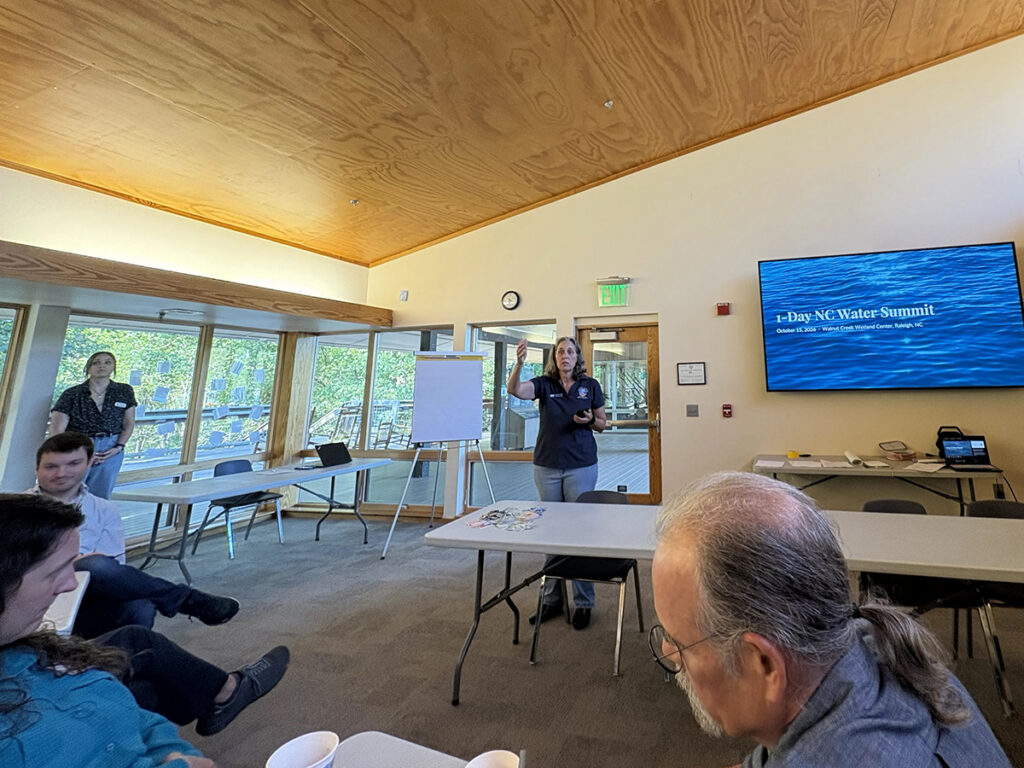
“I thought it was a fantastic opportunity for collaboration, for visioning and relationship-building between Councils of Government and Waterkeepers,” Samantha said. “They have amazing resources with planning tools and huge reach, while Waterkeepers have the ability to do sampling and know the landscape. COGs can provide us with land-use data and mapping, and we can use our field work to gather meaningful data that they can then use to identify where projects are needed and basically make those projects happen.”
The Water Summit was made possible in part by the Water Foundation and the Z. Smith Reynolds Foundation.
Like the work Sound Rivers is doing to connect Waterkeepers across the state to more resources? We do! Donate today to help them keep us this critical work!
Related News
OYSTER ROAST 2026: Everything you need to know!
September 2nd 2026
Riverkeeper encounters drought effect on paddling trip
November 12th 2026
Kinston creek litter-free thanks to volunteers
November 12th 2026
Water Watch goes next level
November 12th 2026
No new action taken on Brices Creek sediment pollution
November 12th 2026
Litter-Free Rivers update: Jack's Creek, Washington
November 12th 2026

Riverkeeper, councilman urge residents to speak up for Rocky Mount’s water
November 5th 2026
Slocum sampling in the home stretch
November 5th 2026
Blounts Creek baseline data collection continues
November 5th 2026