News
Riverkeeper, specialist investigate Bridgeton fish kill
Algal Blooms, Environmental, Fish Kills, Neuse River Watershed, Sound Rivers, Water Quality
Posted on September 24th, 2026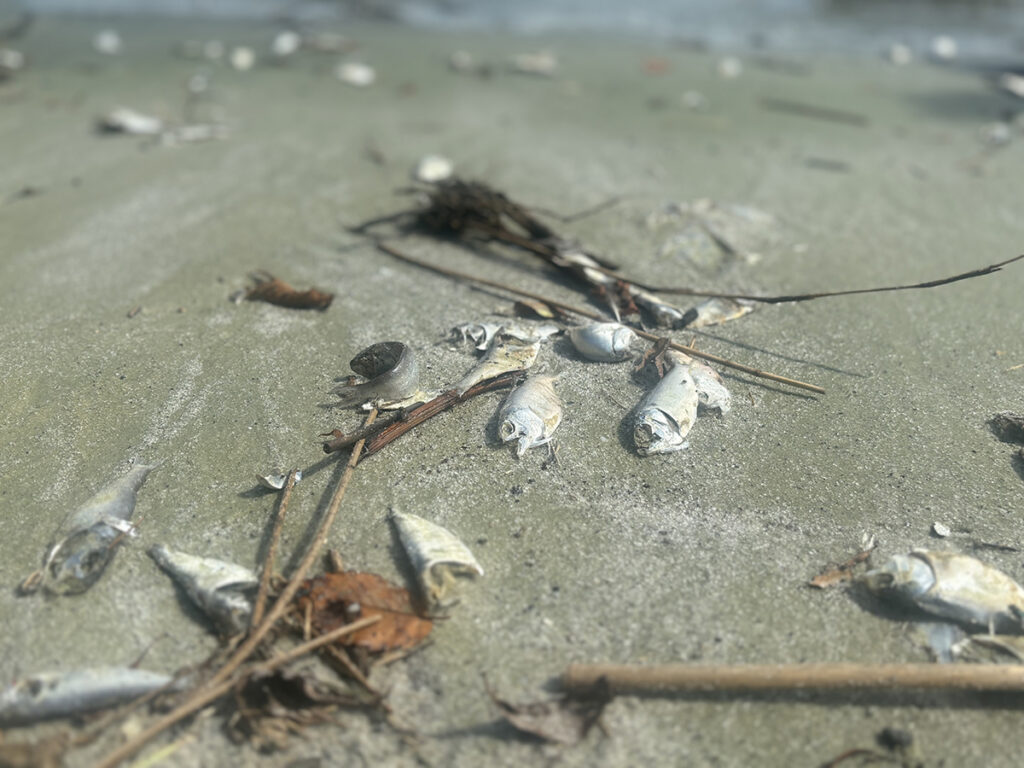
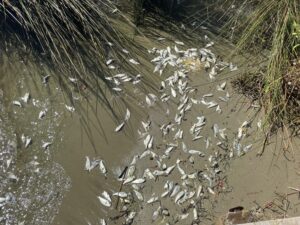
Juvenile menhaden that washed ashore at Bridgeton this week were likely from the fish kill on the Neuse last week.
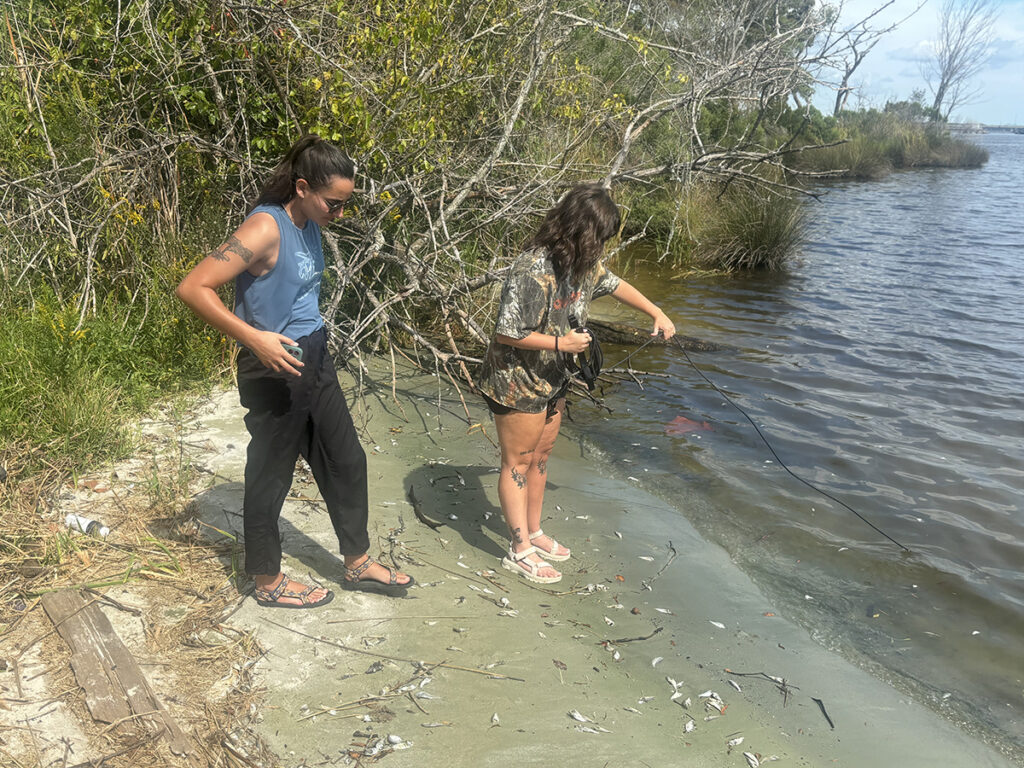
Pamlico-Tar Riverkeeper Katey Zimmerman and Water Quality Specialist Taylor Seijo were in the field again this week, checking out ongoing reports of fish kills.
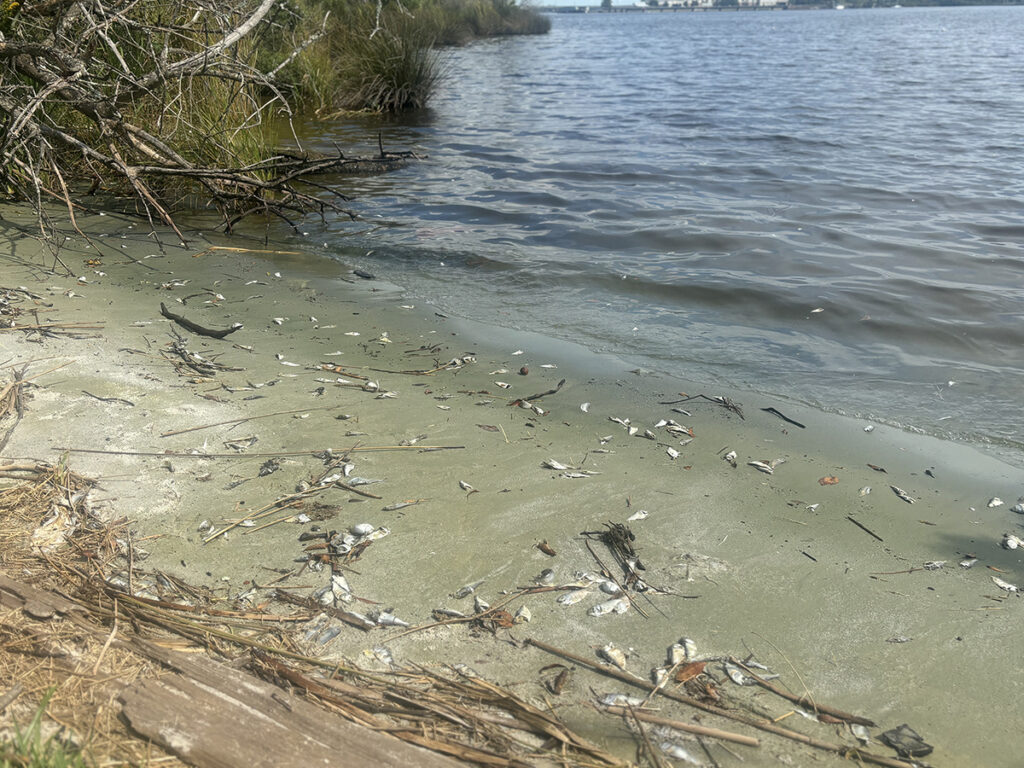
“We’re still seeing lingering effects of last week’s fish kill,” Taylor said. “Katey and I have been out in the field a ton this week to take readings around the current hotspots and assess affected species and time of death. Since we’ve had no rain or substantial winds, we’re starting to see the bulk of this kill wash inshore and collect around the banks in the New Bern and Bridgeton area.”
The primary victims are juvenile menhaden, small, silver fish measuring three to four inches.
Taylor has been collaborating with the North Carolina Department of Environmental Quality and University of North Carolina’s Institute of Marine Sciences to determine the most likely cause of the fish kill.
“Based on all of our findings, there has been no ‘fish-killing’ dinoflagellates in high enough numbers to be linked to the kill, and bottom water conditions in the lower estuary have been extremely salty and anoxic,” Taylor said. “So, our thinking from last week remains the same, which is that this was a sudden and extreme low-oxygen turnover event that unfortunately created the perfect scenario for a bulk kill of juvenile menhaden that were in high numbers in the lower Neuse.”
According to NCDEQ, both the lower Neuse and the Pamlico rivers are experiencing hypoxic (low oxygen saturation) and anoxic (no oxygen saturation) bottom water conditions. That means more fish kills may be on the way, according to Taylor.

“If we get any sort of moderate to severe weather changes, that is going to cause another turnover event, which will also likely lead to more widespread fish kills,” she said.
She encourages anyone who happens to see a fish kill out on the water to report it to Sound Rivers.
“We’re continuing to monitor the current situation to try to determine if there are any separate kills happening,” Taylor said. “If those submitting reports can take plenty of pictures — particularly with close up shots of affected fish so we can determine species and approximate time of death — we’d really appreciate it.”

The primary cause of hypoxia in eastern North Carolina waterways is nutrient pollution, specifically nitrogen and phosphorous, which fuels algal blooms. The decomposition process of algae uses massive amounts of dissolved oxygen, leaving water in a hypoxic or anoxic state, which then leads to fish kills.
Like the work your Riverkeeping team is doing to monitor and protect your waterways? We love it! Donate today to support their work!
Related News

OYSTER ROAST 2026: Everything you need to know!
September 2nd 2026

Vote!
October 15th 2026
Industrial park threatens nearly 30 acres of wetlands
October 15th 2026
Riverkeeper gives recap of Neuse fish kill
October 15th 2026
NC Land and Water Fund comes through with two new grants
October 15th 2026
Staff, Cummins volunteers return for rain garden rehab
October 15th 2026
Photo of the Week: Sampling Run
October 15th 2026
Pamlico-Tar Riverkeeper visit Cypress Landing
October 15th 2026
CONSTRUCTION ALERT: A head’s up for Neuse paddlers in Wake County
October 15th 2026