News
Riverkeeper, program director ‘Growing More than Rain Gardens’
Education, Environmental, Neuse River Watershed, Sound Rivers, Stormwater Restoration Projects, Tar-Pamlico Watershed, Water Quality
Posted on July 10th, 2025
Program Director Clay Barber spent Wednesday at Southeast Raleigh Magnet High School learning about a program that teaches green stormwater infrastructure construction, inspection and maintenance to teachers to share with students.
Neuse Riverkeeper Samantha Krop and Sound Rivers’ Program Director Clay Barber were workshopping in Wake County this week, thanks to Raleigh Stormwater and Urban Sustainability Solutions.
The two were sitting in on a “Growing More than Rain Gardens” workshop held at the Southeast Raleigh Magnet High School, but created for all Orange and Wake County teachers and students. Its goal — to develop a workforce that can design and install resilient and sustainable stormwater solutions for communities throughout North Carolina.
“This program really bridges the worlds of education and green stormwater infrastructure by connecting students with trainings and resources and real-world skills around installing and maintaining stormwater infrastructure,” Samantha said.
The two-day workshop allows teachers to earn their rain garden certification with N.C. State Extension Area Specialized Agent Mitch Woodward. A second day focuses on curriculum and resources for teachers to take back to their respective schools to launch in- or afterschool programs for students ages 14 to 21.

“These teachers are themselves taught and given materials to take back to their school to start apprenticeships, internships, groups, that can learn about stormwater control measure construction, inspection and maintenance,” Clay said. “It seems like every school has the same problem, a lack of education and workforce and funding, and it’s just replicated everywhere. This program seeks to address those problems.”
The stormwater curriculum taken back to schools by participating teachers was coauthored in 2013 by Urban Sustainability Solutions with the North Carolina School of Science & Mathematics. According to the USS website, it was specifically designed for Title 1 schools — public schools with a high percentage of students from low-income families. The curriculum was also designed with students underperforming in science and mathematics in mind.
“It’s great to see youth being connected to job skills training in green stormwater infrastructure, which in such a forward-thinking way,” Samantha said. “It is a really cool program, though, and the teachers who were there were pretty inspiring.”
“It was nice to be in the company of clearly passionate educators — though we were talking about building rain gardens, and how to deal with administrators and how much things cost, it always comes back to what’s just good for the kids, especially those with learning difficulties, or those on a Career and Technical Education path,” Clay said.
Currently the program only exists in Wake and Orange counties, but USS’s goal is to expand to neighboring counties.
“The hands-on curriculum, based on our experience, leads to improved student performance in traditional STEM curricula, and improves environmental literacy and stewardship,” reads the USS website.
Like green stormwater infrastructure and program like this? So do we! In fact, have a Campus Stormwater Program responsible for constructing rain gardens, cisterns, constructed wetlands and more across the Neuse and Tar-Pamlico watersheds! Donate today to support Campus Stormwater!
Related News

OYSTER ROAST 2026: Everything you need to know!
September 2nd 2026

Vote!
October 15th 2026
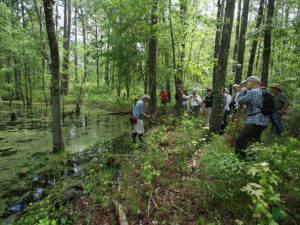
Industrial park threatens nearly 30 acres of wetlands
October 15th 2026
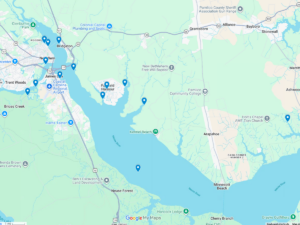
Riverkeeper gives recap of Neuse fish kill
October 15th 2026
NC Land and Water Fund comes through with two new grants
October 15th 2026
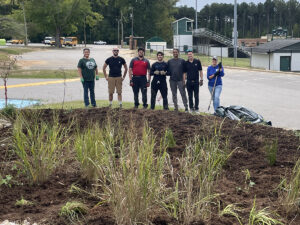
Staff, Cummins volunteers return for rain garden rehab
October 15th 2026
Photo of the Week: Sampling Run
October 15th 2026
Pamlico-Tar Riverkeeper visit Cypress Landing
October 15th 2026
CONSTRUCTION ALERT: A head’s up for Neuse paddlers in Wake County
October 15th 2026