News
Riverkeeper gives recap of Neuse fish kill
Fish Kills, Neuse River Watershed, Sound Rivers
Posted on October 15th, 2026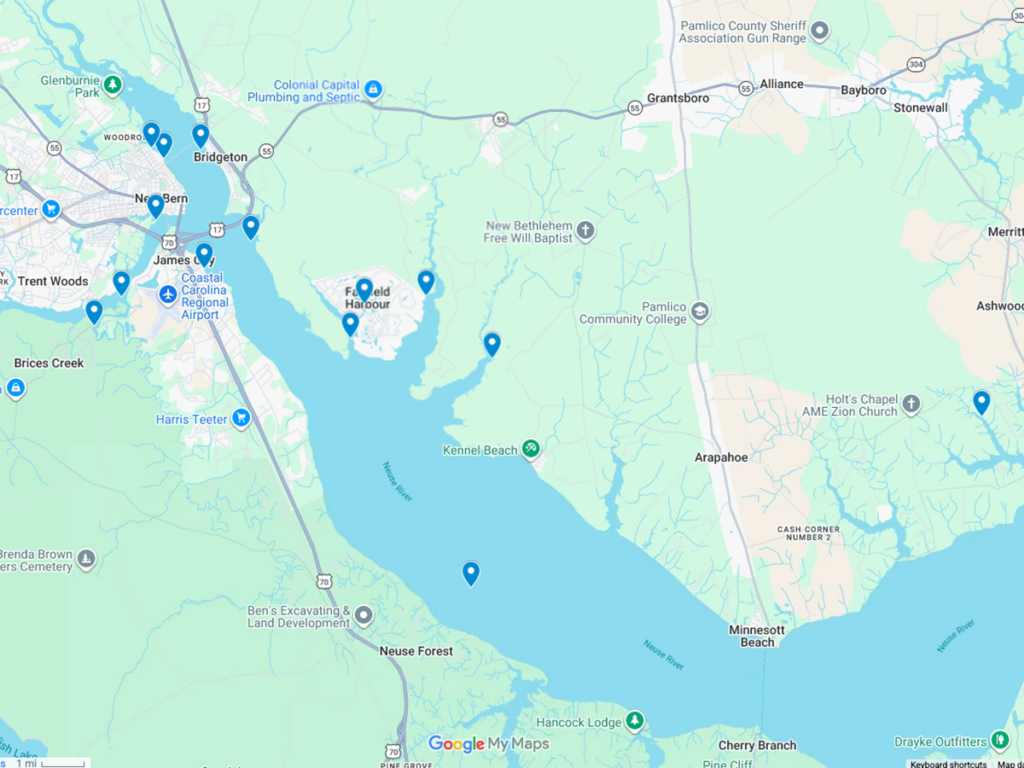
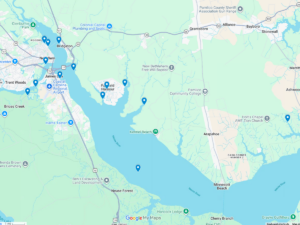
Pins mark the spots where callers reported fish kills from Sept. 11 to Oct. 6, 2026.
*Update: another report of a fish kill on the Neuse came in after this was posted and the Oct. 15 eNews was sent out.
Neuse Riverkeeper Samantha Krop summed up the monthlong fish kill on the Neuse River as a “low-oxygen event.”
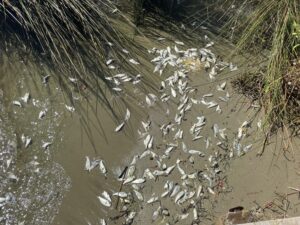
From the week of Sept. 11 to Oct. 6, Sound Rivers received many reports of the fish kill — from Bridgeton to Brices Creek to Oriental.
“First, we want to let folks know that we appreciate all of the calls we received letting us know where the kill was happening and sending pictures,” Samantha said. “We tracked it for weeks.”
While certainly not natural, fish kills do occur on the Neuse and Tar-Pamlico, but not for nearly as long as this one lasted.
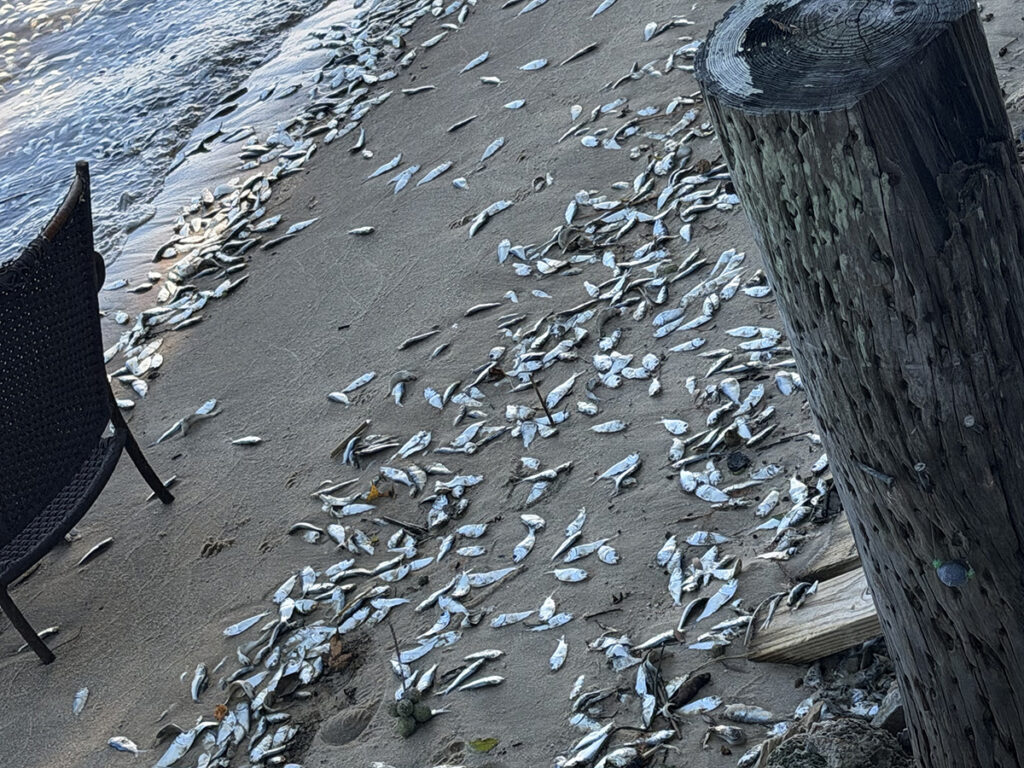
According to Samantha, the duration of the fish kill had to do with changing temperatures.
“From what we could tell, this was a low-oxygen event,” Samantha said. “Drought conditions through much of the year, led to low-flow conditions in the river. This caused significant stratification, where low-oxygen water sits at the bottom, and high-oxygen water on top. During these fall evenings, it’s cooler, which can cause what’s called ‘turnover’ — when the cooler air comes in, all that cold and oxygen-less water at the bottom of the river is brought right up to the surface. This causes a rapid shift in dissolved oxygen levels, which is the most common cause of fish kills. Because turnover is a sudden and relatively short-lived event, we usually only see very sensitive species of fish affected, such as juvenile menhaden.”
Fish kills can also be caused by factors aside from the weather, such as increased nutrient pollution or contaminant runoff, high levels of algal bloom activity or the presence of other toxic microorganisms in the water.
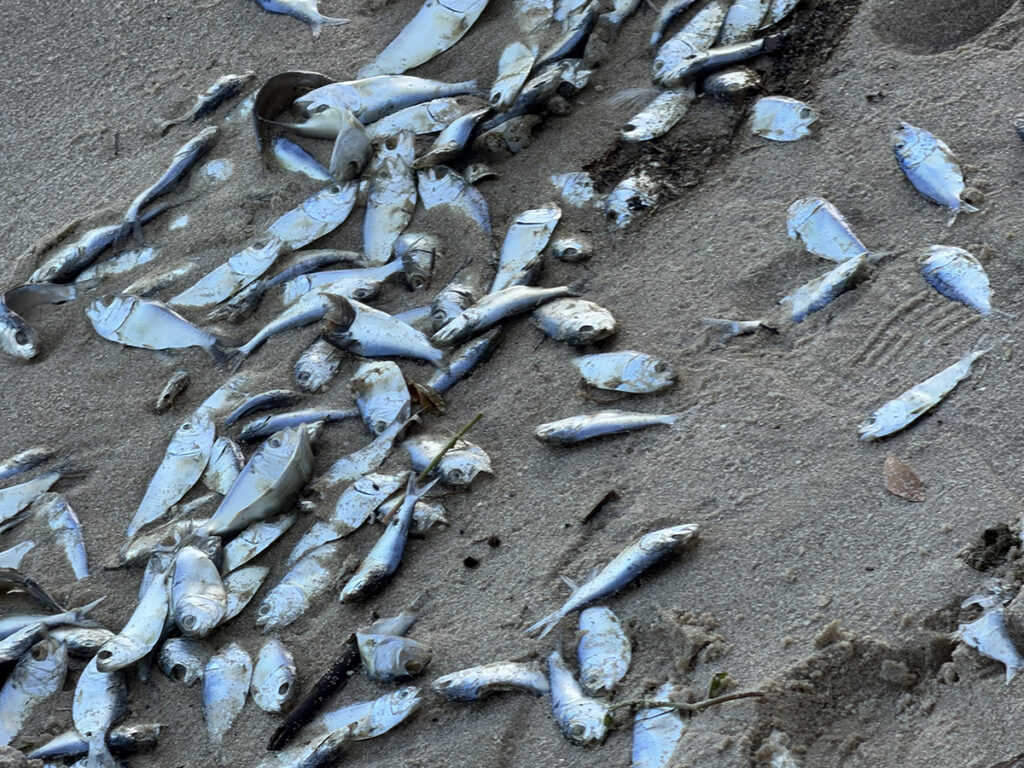
“In the more severe situations, we’ll start to see additional species affected, such as Atlantic croaker, flounder and blue crabs,” Samantha said. “This is why it’s important for us to be alerted to any reports of a potential fish kill, so we can determine the scope, severity and most likely cause.”
Like the work your Riverkeeping team is doing to monitor your waterways? We love it! Donate today to support their work!
Related News

OYSTER ROAST 2026: Everything you need to know!
September 2nd 2026

Vote!
October 15th 2026
Industrial park threatens nearly 30 acres of wetlands
October 15th 2026
Riverkeeper gives recap of Neuse fish kill
October 15th 2026
NC Land and Water Fund comes through with two new grants
October 15th 2026
Staff, Cummins volunteers return for rain garden rehab
October 15th 2026
Photo of the Week: Sampling Run
October 15th 2026
Pamlico-Tar Riverkeeper visit Cypress Landing
October 15th 2026
CONSTRUCTION ALERT: A head’s up for Neuse paddlers in Wake County
October 15th 2026