
News
Riverkeeper does flyover of Hyde Co. CAFO hit by avian flu
Environmental, Sound Rivers, Tar-Pamlico Watershed, Water Quality
Posted on March 19th, 2026
Rose Acre Farms in Pantego exhibits a massive cleanup from avian flu.
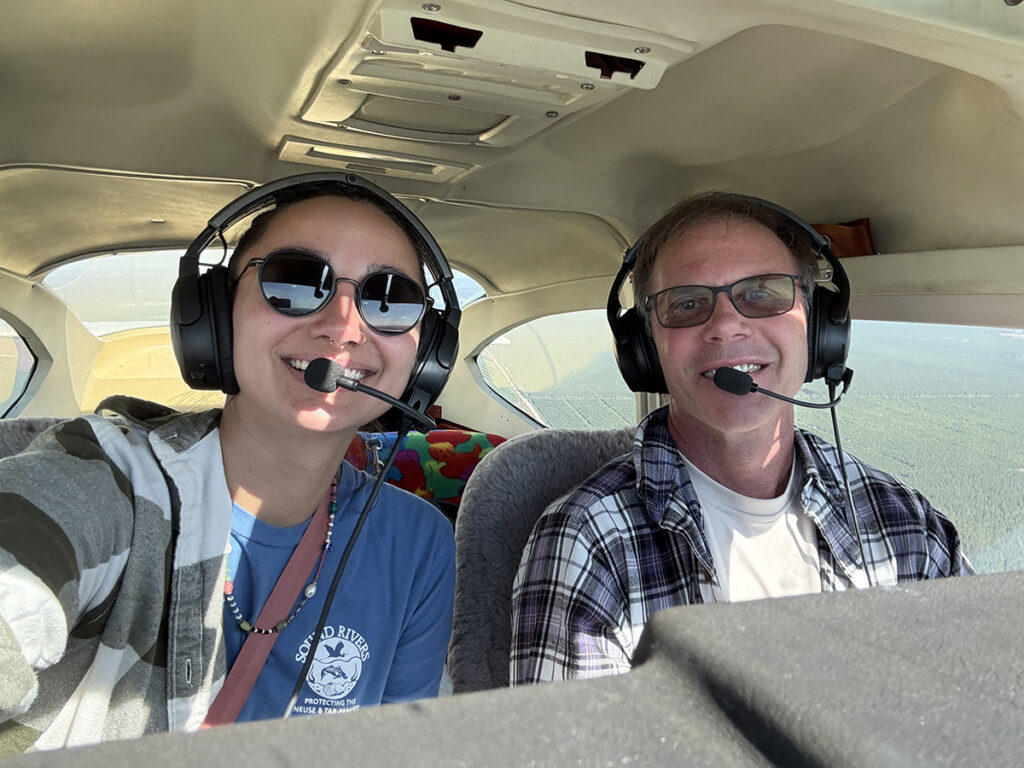
Pamlico-Tar Riverkeeper Katey Zimmerman took to the air last week to get an aerial view of the post-avian flu cleanup process at a confined animal feeding operation in Pantego.
Last week, the North Carolina Department of Agriculture confirmed an avian flu outbreak at a commercial egg-laying facility in Hyde County that affected more than 3 million birds. Though the agency is not required to say which facility it was, the only facility of that size in Hyde County is Rose Acre Farms.
What Katey saw from the air confirmed the location, she said.
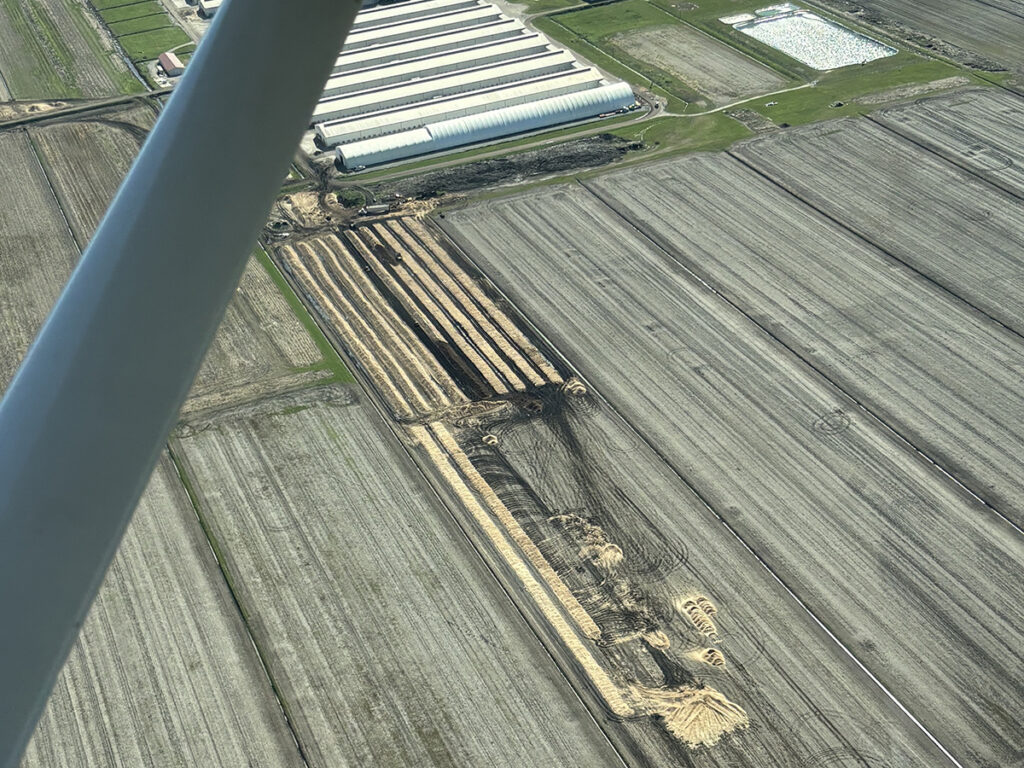
“We flew over Rose Acre Farms, and there were a ton of long litter piles. There is one barn at the facility where it looks like they’re doing indoor composting for all the deceased birds. There’s one longer, darker pile that may be a mass grave,” Katey said. “It seems like adequate proof that the Ag Department was referencing Rose Acre.”
Katey said the response to her queries to the Ag Department about the requirements for cleanup and contamination has been to refer her to department’s website.
“I’m unsure about what the process is for disposal and decontamination, and it seems like website is pretty opaque,” she said. “What I do know is there are regulations about how long you can leave litter piles uncovered — after 15 days, that can constitute a violation.”
Litter piles are typically made up of chicken excrement and barn substrate material. However, when an avian flu outbreak occurs, operators cut off ventilation to the facility’s barns, suffocating the animals and the subsequent outdoor litter piles can contain poultry carcasses. Disposal, such as improper on-site burial or dumping, can lead to leachate running off into surface waters, introducing high levels of nutrients (which can cause algal blooms) and pathogens (which can infect other wildlife) into the water.
Katey said she’ll be following up with another flyover.
Like the work your Riverkeeper is doing to keep an eye on potential pollution? We do! Donate today to support her work!
Related News
Litter-Free Rivers expands to Smithfield with newest trash trap
March 19th 2026

Riverkeeper does flyover of Hyde Co. CAFO hit by avian flu
March 19th 2026
Volunteer coordinator welcomes New Bern newcomers
March 19th 2026
Waterkeepers Carolina Spring Conference
March 19th 2026

Trash trap cleanout an alternative spring break choice
March 19th 2026

Riverkeeper attends first Edgecombe Co. data-center advisory group meeting
March 19th 2026
ENC facility hit with avian flu
March 12th 2026
Latest results show ongoing pollution of Nahunta Swamp
March 12th 2026
