News
Riverkeeper advises environmental advisory board
Environmental, Neuse River Watershed, Sound Rivers, Stormwater Issues, Water Quality
Posted on February 6th, 2025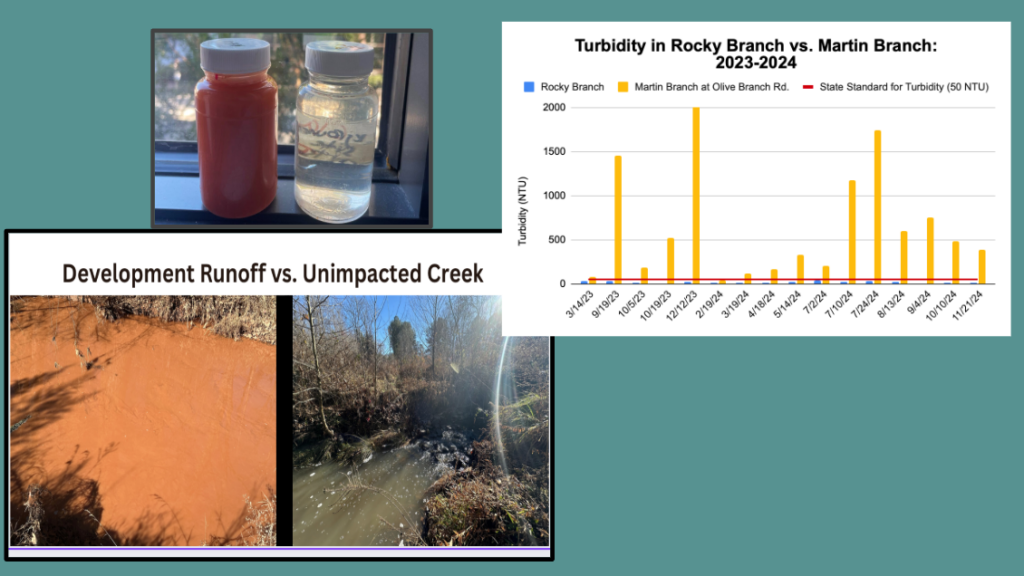
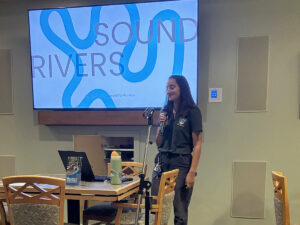
Neuse Riverkeeper Samantha Krop talked sediment pollution, gold standards and best approaches to rezoning at the invitation of Durham’s Environmental Advisory Board this week.
The Environmental Advisory Board advises Durham’s city council about environmental and environmental justice issues, which gives the board the ability to influence rezoning requests and Durham’s Unified Development Ordinance — a tool that regulates how development looks, feels, and sounds like in the city and county that is currently being revised.
Previously, a public hearing identified environmental concerns as one the top priorities for Durham residents.
“There’s a lot going on right now,” Samantha said. “There has been a flurry of new interest in Durham’s rezoning and land uses because of some bad rezonings that were brought to city council this week.”
The city council, which has previously greenlighted most rezoning requests proposed by developers, unanimously voted against a rezoning of Moriah Ridge and tabled until March a decision about the rezoning of land on Pickett Road for apartments.
“Each of the rezoning proposals brought about 50 people to the meeting,” Samantha said. “People are angry — there’s a lot of talk on Reddit about weighing in on city meetings. I’m glad to see people organizing.”
Samantha’s presentation to Durham’s Environmental Advisory Board addressed impacts of sediment pollution from rampant development in the Lick Creek watershed, focusing on the recent approval by council of Howard’s Place, a housing development adjacent to construction already in the works: a new charter school on one side and another housing development across Lick Creek, a waterway already greatly impaired by sediment pollution.
“It was really about the ongoing sediment crisis in Durham and the gold standard UDO recommendations we’ve come up with, which include protecting natural resources, trees and vegetation, improving riparian buffer protections and stormwater practices and requiring developers to do surveys for endangered species and water-quality monitoring to ensure they are not adding to Durham’s growing sediment crisis,” Samantha said.
Like the work your Riverkeeping team is doing to protect natural resources and water quality? We do! Donate today to support their work!
Related News

OYSTER ROAST 2026: Everything you need to know!
September 2nd 2026
Vote!
October 15th 2026
Industrial park threatens nearly 30 acres of wetlands
October 15th 2026
Riverkeeper gives recap of Neuse fish kill
October 15th 2026
NC Land and Water Fund comes through with two new grants
October 15th 2026
Staff, Cummins volunteers return for rain garden rehab
October 15th 2026
Photo of the Week: Sampling Run
October 15th 2026
Pamlico-Tar Riverkeeper visit Cypress Landing
October 15th 2026
CONSTRUCTION ALERT: A head’s up for Neuse paddlers in Wake County
October 15th 2026