News
Program director scouts potential projects at Rocky Mount High School
Sound Rivers, Stormwater Restoration Projects, Tar-Pamlico Watershed, Water Quality
Posted on February 5th, 2026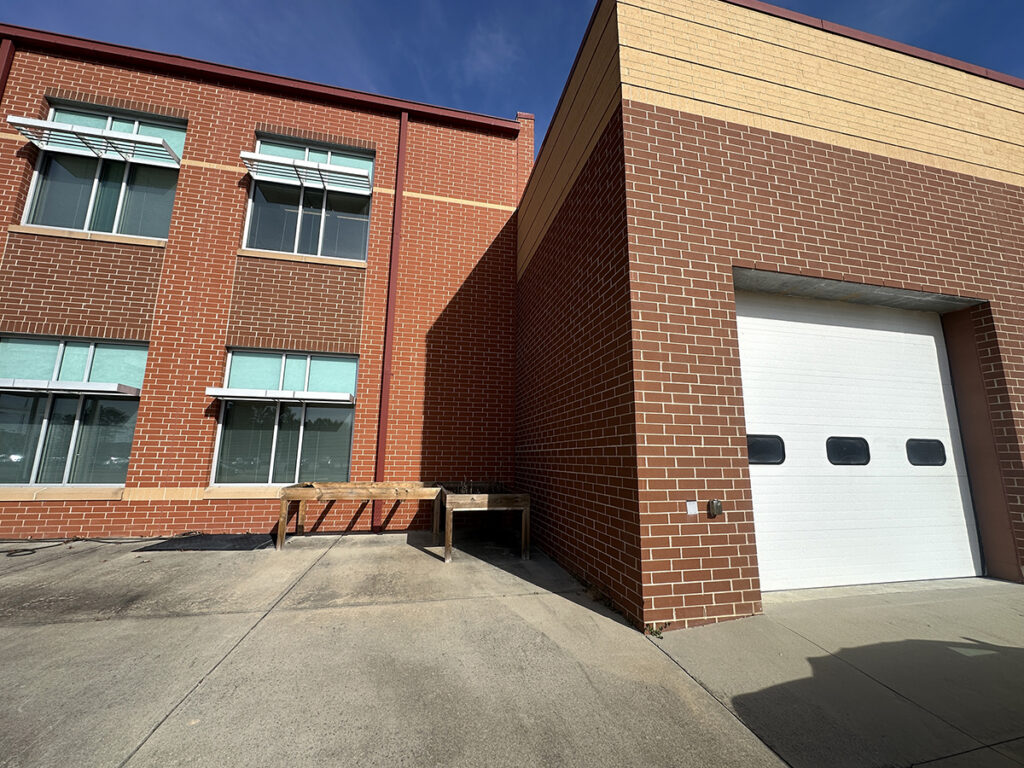
A corner containing raised beds, next to the auto shop, appears to be an ideal place for a rainwater harvesting cistern.
Program Director Clay Barber paid a visit to Rocky Mount High School last week, a next step in getting stormwater control measures on/in the ground.
Since the gymnasium roof was one of the sites he was eying, Clay’s tour was led by Coach Michael Gainey, Rocky Mount High School’s athletic director.
“It was a good meeting with Coach Gainey and, as I understand it, he has been working for Nash County Public Schools for many years, since before this new campus was built,” Clay said.
A stormwater assessment by Kris Bass Engineering determined a rainwater harvesting cistern would be an ideal project for Rocky Mount High School: downspouts from the enormous gym roof leading to a rainwater harvesting cistern, which could potentially be used for irrigation of athletic fields.
“I asked Coach Gainey to walk me to the different irrigation system hubs for the football and baseball fields, hoping we can put roof runoff on athletic field grass,” Clay said. “The football field is too far away, but the baseball field and the practice field are right at the end of the gym, so they’re more feasible. Apparently, they’ve had some issues keeping irrigation systems running, so having a backup would be a good thing, which would also be beneficial because all that runoff we would capture — right now, it just goes into a network of pipes and likely comes gushing out into a stormwater retention pond.”

While on the tour, Clay also checked another location for where second rainwater harvesting cistern was suggested: a corner outside of the auto shop, where a few raised beds sit on cement slab.
“I don’t know how this area is currently used — somebody may be growing something,” Clay said. “Where those raised beds are sitting are already on a slab, we could just bump those beds out and put a 2,300-gallon tank in that corner, hook it up to hose and water what’s being grown on one side and rinse vehicles in the auto shop on the other side.”
The goal of these projects is to not only reuse rainwater, but to prevent flooding, erosion and pollution on the ground from being washed into waterways via stormwater. Finding ways to allow stormwater to spread out, soak in and be filtered naturally is at the heart of the Campus Stormwater Program.
Clay said his next step is to track down the school’s most recent horticulture teacher and touch base with project engineers to get confirmation on project feasibility.
Like how Sound Rivers’ Campus Stormwater Program is tackling stormwater, one school, one project at a time? We love it! Donate today to support Campus Stormwater!
Related News

Durham’s planning process comes to a screeching halt
February 26th 2026
Riverkeeper taps into emerging issues
February 26th 2026

Riverkeeper: rezoning for more housing in floodplain a bad idea
February 26th 2026

Windy, cold field day for sample-collecting specialist
February 26th 2026

Sound Rivers responds to EPA killing landmark climate change finding
February 19th 2026

Riverkeeper talks data centers with Edgecombe County commissioners
February 19th 2026
Water Watch hits milestone
February 19th 2026
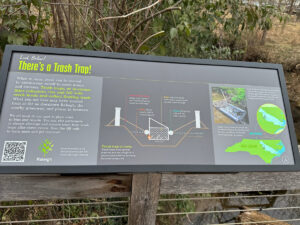
Trash trap sign educates Wetland Center visitors
February 19th 2026