Campus Stormwater Program
Landscaping for Water Quality
When rain falls in a natural setting, it’s naturally filtered — through soils and groundwater or soaked up by vegetation. When land is developed, however, impervious surfaces (roads, rooftops, driveways, parking lots) prevent that filtering, which can lead to erosion in some places, flooding in others, and does lead to rainwater full of pollutants — suspended solids, nutrients (nitrogen and phosphorus), heavy metals, toxic organic pollutants and petroleum compounds — running directly into your waterways.
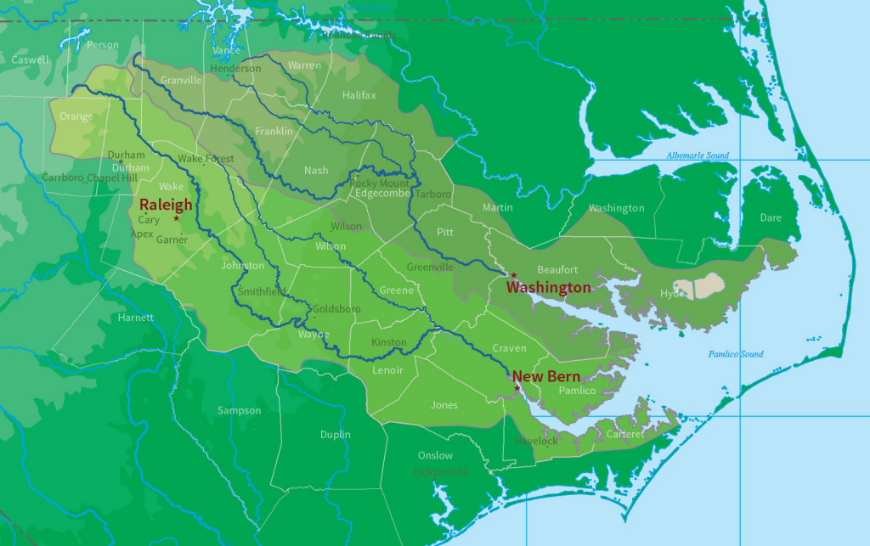
To deal with the increased problems from polluted stormwater runoff, Sound Rivers began a restoration program of on-the-ground projects to restore water quality in 2010. Since — courtesy of the state Environmental Enhancement Grant Program — we’ve partnered with many grade schools and community colleges across the Neuse and Tar-Pamlico watersheds to resolve their stormwater runoff issues in a variety of ways.
Rain Gardens
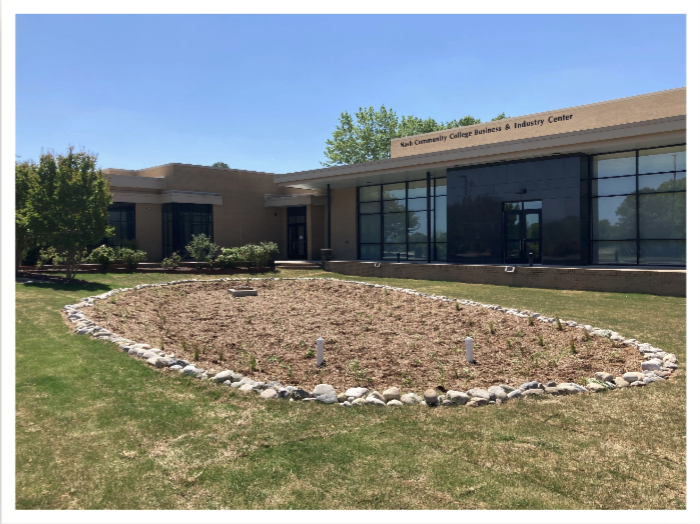
Rain gardens are landscaped depressions that collect stormwater runoff, then allow the runoff to slowly infiltrate to the ground-water table. A rain garden cuts down on localized flooding and allows nature to remove some of the pollutants otherwise affecting downstream water quality. During infiltration, plants use excess nutrients for growth, sediment is trapped in the garden and biological and physical processes remove pollution. Rain gardens also create important habitat for bees, butterflies, birds and other wildlife.
Constructed Wetlands
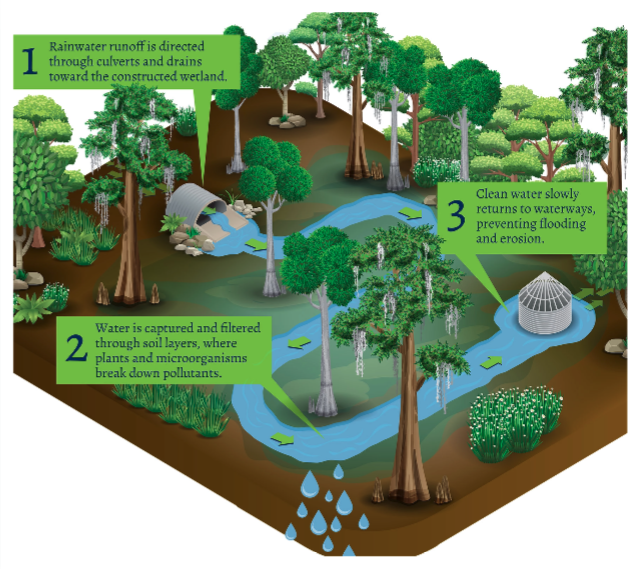
A constructed wetland is exactly what it sounds like: a manmade wetland that mimics the processes of the natural kind. Constructed wetlands collect and temporarily store stormwater runoff, reducing and stabilizing flow to adjacent natural wetlands and streams.
The bonus is — just like with natural wetlands — sediment settles and multiple pollutants are taken up and transformed by wetland plants and microbes, which reduces the number of pollutants entering your groundwater and waterways.
Rainwater Harvesting Cisterns
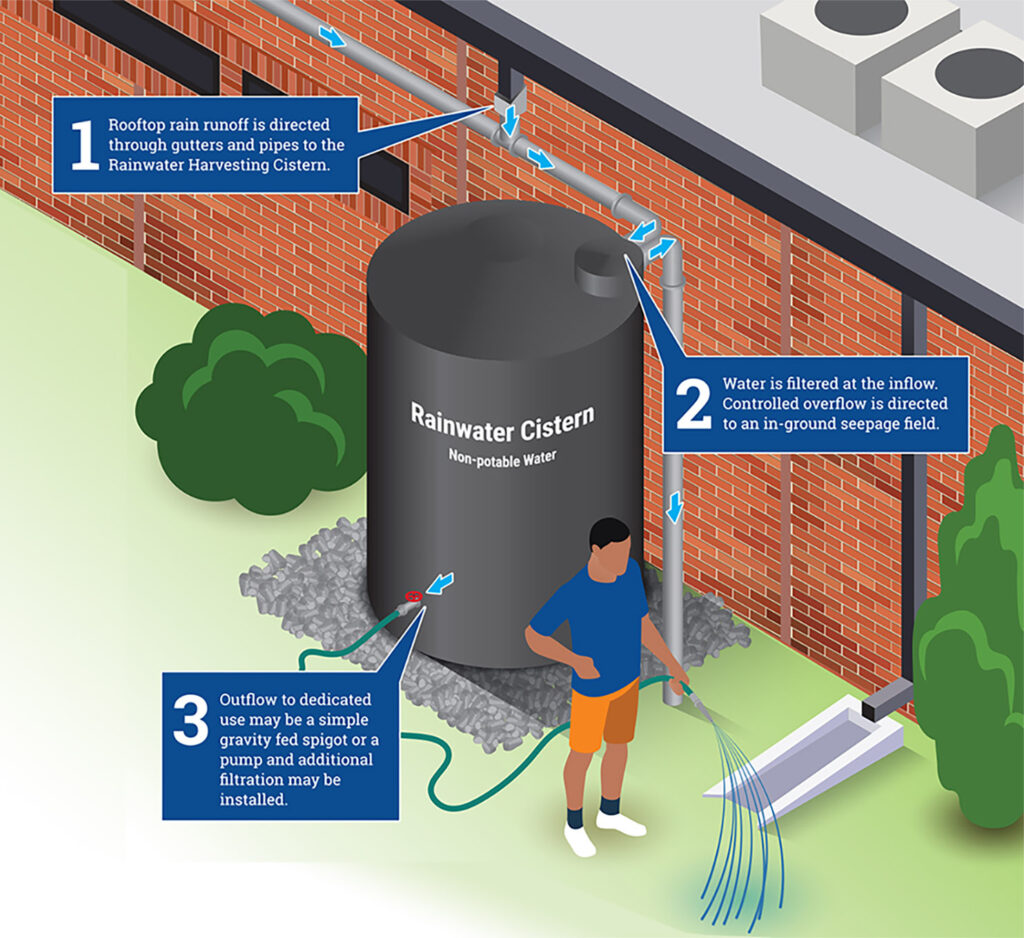
A rainwater harvesting cistern is a fancy name for “a tank collecting rain from a rooftop.” One of the impervious surfaces we don’t often think of is, quite literally, above our heads. During a hard rain, rooftops can sluice off tens of thousands of gallons of water, but a rainwater harvester collects that runoff which then becomes a non-potable water source to be used for a variety of purposes, including irrigation of vegetables in raised beds (West Craven High School) and watering a football field (Epiphany School).
Latest News
Program director scouts potential projects at Rocky Mount High School
February 5th 2026

New, innovative stormwater project doing its job
January 29th 2026

Sound Rivers: 2025 recap!
December 23rd 2025

Sound Rivers breaks ground on innovative stormwater solution
November 20th 2025

Middle school gets double rainwater harvesters
September 25th 2025

Sound Rivers says goodbye to program assistant
August 28th 2025

Riverkeeper, program director ‘Growing More than Rain Gardens’
July 10th 2025

Southern Nash gets stormwater signage
June 12th 2025