News
Neuse River Fish Kill Continues
Algal Blooms, Environmental, Fish Kills, Neuse River Watershed, Sound Rivers, Water Quality
Posted on October 8th, 2026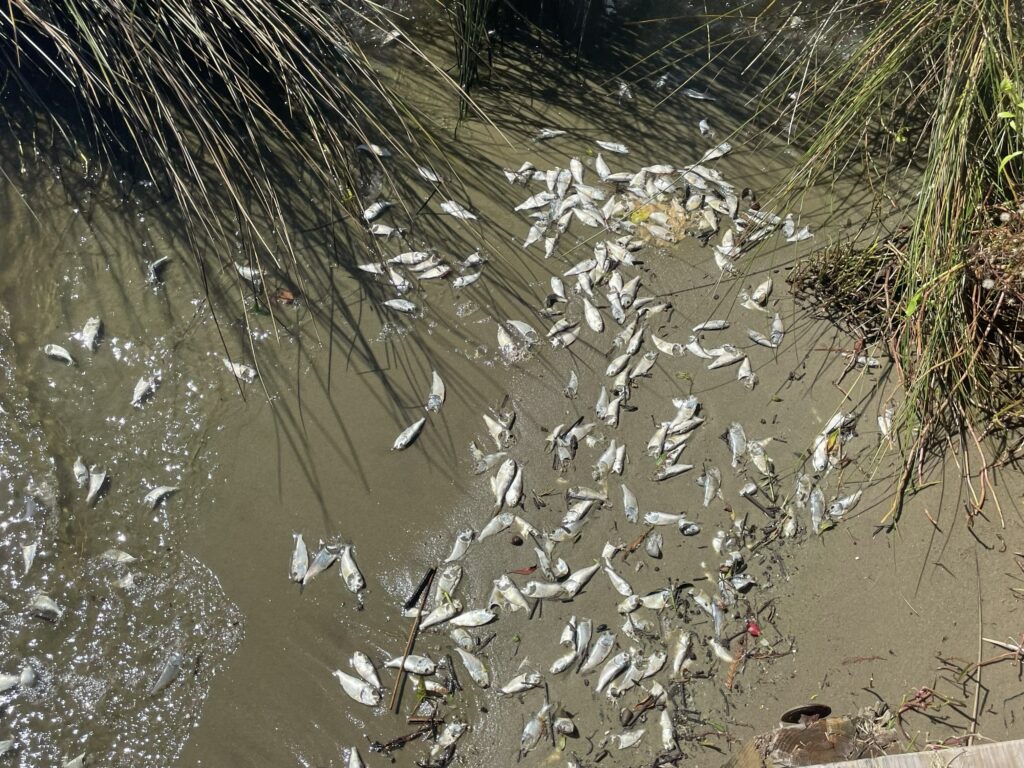
Dead juvenile menhaden on the banks of the Neuse River at Vernon Blades Park, Bridgeton, NC (contributed photo).
Craven County residents continue to submit fish kill reports for the third week in a row for the Neuse River, Trent River and Brices Creek.
Sound Rivers Water Quality Specialist, Taylor Seijo, investigated Brices Creek this week and found bottom waters to be void of oxygen. Current readings do not suggest a widespread algal bloom. Ongoing drought conditions have resulted in higher salinity levels in the river, causing water layers to stratify; this limits mixing of the water column and results in low oxygen levels in bottom waters. However, on windy days, the river will mix and oxygen-less water at the bottom of the river is brought right up to the surface. This causes a rapid shift in dissolved oxygen levels, which is the most common cause of fish kills. Because turnover is a sudden and relatively short-lived event, we usually only see very sensitive species of fish affected, such as juvenile menhaden.
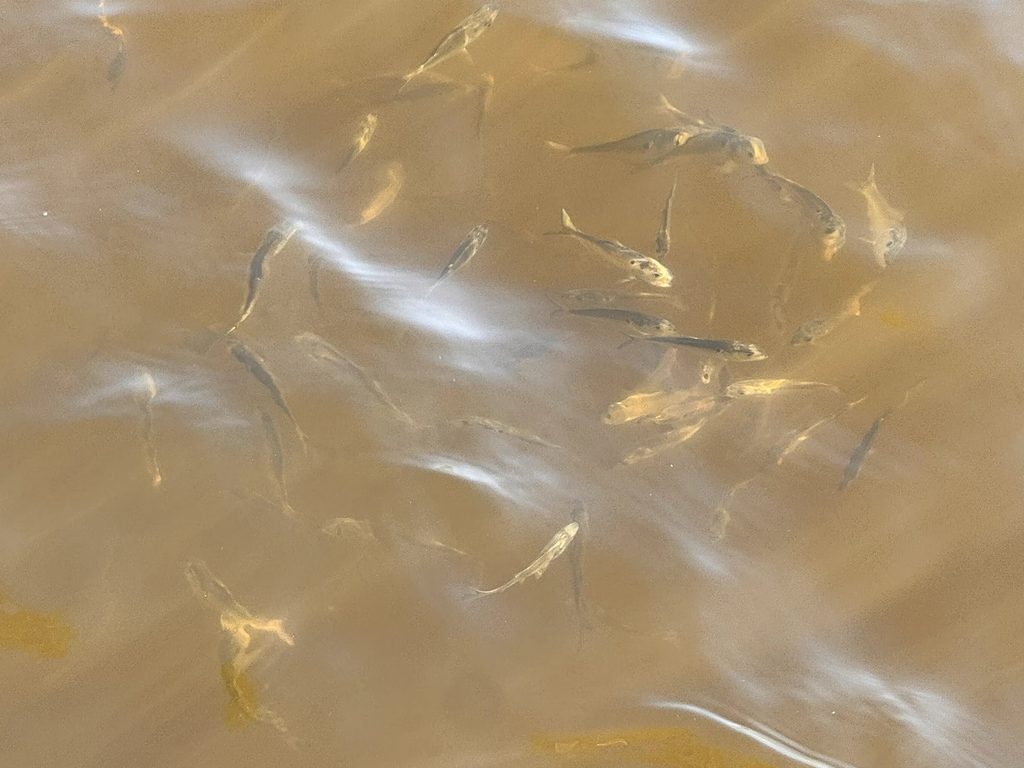
But fish kills can also be caused by factors aside from the weather, such as by increased nutrient pollution or contaminant runoff, high levels of algal bloom activity, or the presence of other toxic microorganisms in the water. Taylor notes that, “in these more severe situations, we’ll start to see additional species affected, such as Atlantic croaker, flounder and blue crabs. This is why it’s important for us to be alerted to any reports of a potential fish kill- that way we can determine the scope, severity and most likely cause.”
Additional information provided by our friends at the UNC Institute of Marine Sciences noted in their monthly communication:
“The cause of the mortality event is unclear. It seems unlikely that Karlodinium veneficum was responsible because cell densities were only about 1000 cells/mL which is an order of magnitude less than what is usually associated with fish kills. If upwelling exposed menhaden to the bottom waters, the combination of low oxygen and toxic hydrogen sulfide could have caused the fish kill.”
Like the work your Riverkeeping team is doing to monitor and protect your waterways? We love it! Donate today to support their work!
Related News

2026 Oyster Roast Ticket Sales
September 2nd 2026
OYSTER ROAST 2026: Everything you need to know!
September 2nd 2026
Neuse River Fish Kill Continues
October 8th 2026

Data Center Moratoriums Advance
October 8th 2026
Speak Up Against the EPA's Disastrous Rollback of Wetland Protections
September 30th 2026
Swim Guide Survey
September 30th 2026
Specialist, Riverkeeper return to Slocum Creek
September 30th 2026

"No Water, No Beer"
September 30th 2026
Riverkeeper, specialist investigate Bridgeton fish kill
September 24th 2026

Cummins, Sound Rivers partner in schools’ cleanup
September 24th 2026