
News
NCDEQ issues Blounts Creek permit, again
Advocacy, Sound Rivers, Tar-Pamlico Watershed, Water Quality
Posted on December 18th, 2025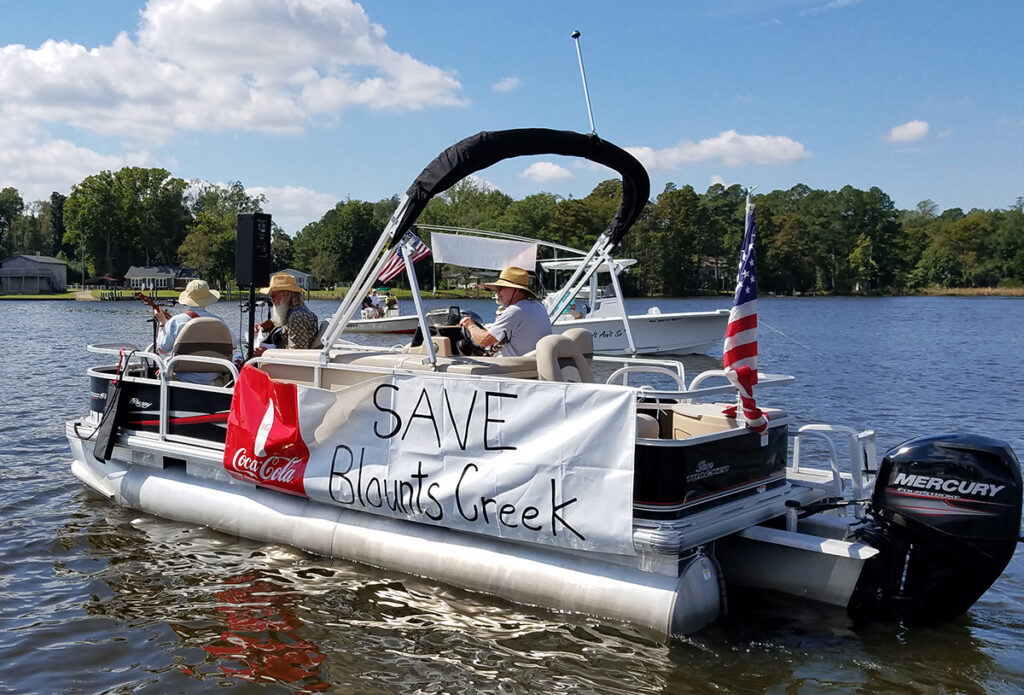
North Carolina Department of Environmental Quality has given the go-ahead for a mining company to discharge up to 12 million gallons of wastewater per day into Blounts Creek.
This week, NCDEQ issued a wastewater permit for Martin Marietta Materials’ limestone mine in Vanceboro, 15 years after Sound Rivers and Blounts Creek residents embarked on a legal battle to save the beloved creek.
Read the Sound Rivers/Blounts Creek history here or listen to Sound Rivers’ podcast “The Story of Blounts Creek.”
NCDEQ previously approved a National Pollutant Discharge Elimination System (NPDES) permit in February 2025 following a public hearing held Nov. 19, 2024, in Washington, where Sound Rivers and Blounts Creek supporters turned out en masse to object to the permit being issued.
DEQ rescinded the February 2025 permit based on a U.S. Supreme Court decision, and released a revised permit for public comment in September. Again, Sound Rivers and Blounts Creek supporters weighed in on changes needed to protect the creek.
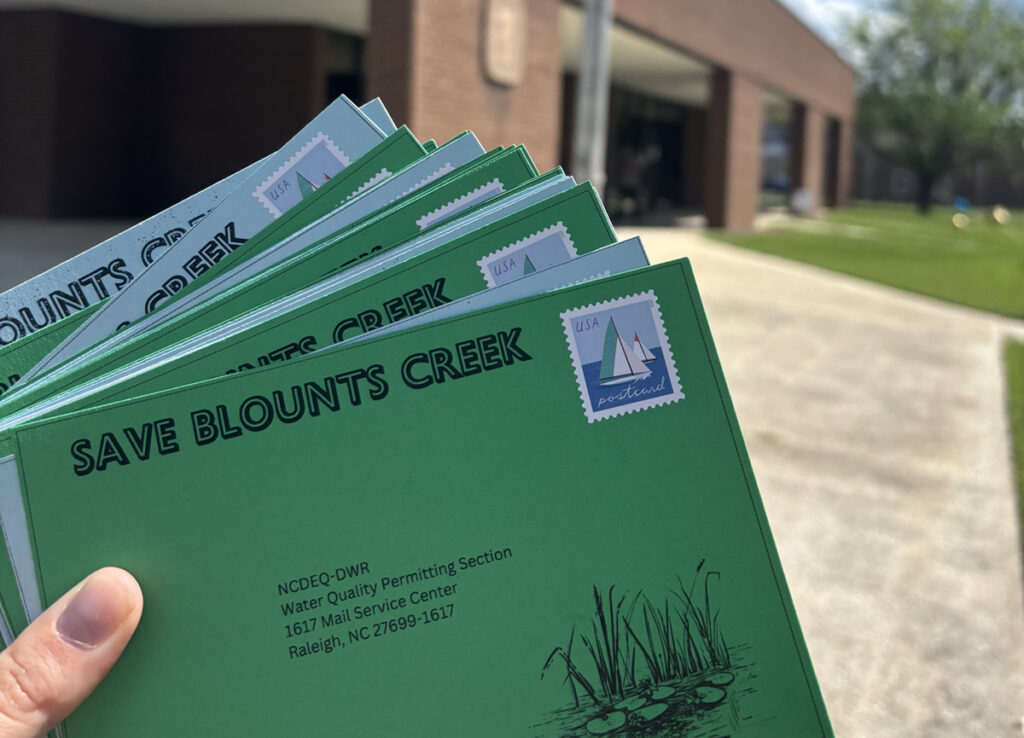
“We’re really disappointed that there were no changes made between the draft issued in September and this permit,” said Pamlico-Tar Riverkeeper Katey Zimmerman. “DEQ has the right to write in those protections, and they chose not to.”
One issue Katey sees as problematic is the revised permit lacks monitoring requirements that accurately show how discharge from Martin Marietta Materials’ 649-acre limestone mine is impacting the creek.
According to a press release from NCDEQ, “The new, revised final permit regulates the discharge of 12 million gallons per day of mine dewatering (pumped groundwater and stormwater from the mine pit) and stormwater discharge from two outfalls to unnamed tributaries of Blounts Creek, which is classified as a Class C, Swamp, Nutrient Sensitive Waterbody in the Tar-Pamlico River Basin.
“Class C waterways are protected for uses including survival of aquatic life and maintenance of fish and wildlife, agricultural and secondary contact recreation, such as wading or boating.
The revised permit requires an assessment of biological integrity, or the condition of the organisms such as fish and insects in a waterway, once every two years through sampling for benthos, or small aquatic organisms that live in water, with the first sampling event to occur between Feb. 1 through March 15, after the discharge begins.
“The permit includes a requirement to monitor monthly for pH levels, total suspended solids (TSS) and turbidity – a measure of suspended material – in the discharge, or effluent, from the mine.”

“It makes no sense to us that they are going to start baseline monitoring after the mining and discharge start,” Katey said. “And, though it does say NCDEQ has the right to review the permit if there are significant impacts to the creek, the permit doesn’t state any kind of threshold for those impacts. There’re no environmental actions attached to it and no explanation of what they’re going to be doing with the data being collected. If nothing’s being done with the data, it’s meaningless.”
Sound Rivers, and Katey, will be monitoring Blounts Creek, ensuring stakeholders know about impacts as they occur.
Like how your Riverkeeper is fighting for Blounts Creek? We certainly do. Donate today to support the continuing battle to Save Blounts Creek.
Related News
Walnut Creek trash trap install ‘a breeze’
January 22nd 2026

Riverkeeper: southeast Durham watershed improvement plan lacking key data
January 22nd 2026
Specialist kicks off grant field work with Slocum Creek sampling
January 22nd 2026

Data center subject of Riverkeeper, county manager meeting
January 15th 2026

New tool determines best projects to minimize flood risk
January 15th 2026
Sound Rivers set for newest trash trap install
January 15th 2026
2nd trash trap gets chainsaw treatment
January 15th 2026

Great Blue Heron award recipients
January 15th 2026
