News
Low oxygen levels cause of New Bern fish kills
Algal Blooms, Fish Kills, Neuse River Watershed, Sound Rivers, Water Quality
Posted on September 17th, 2026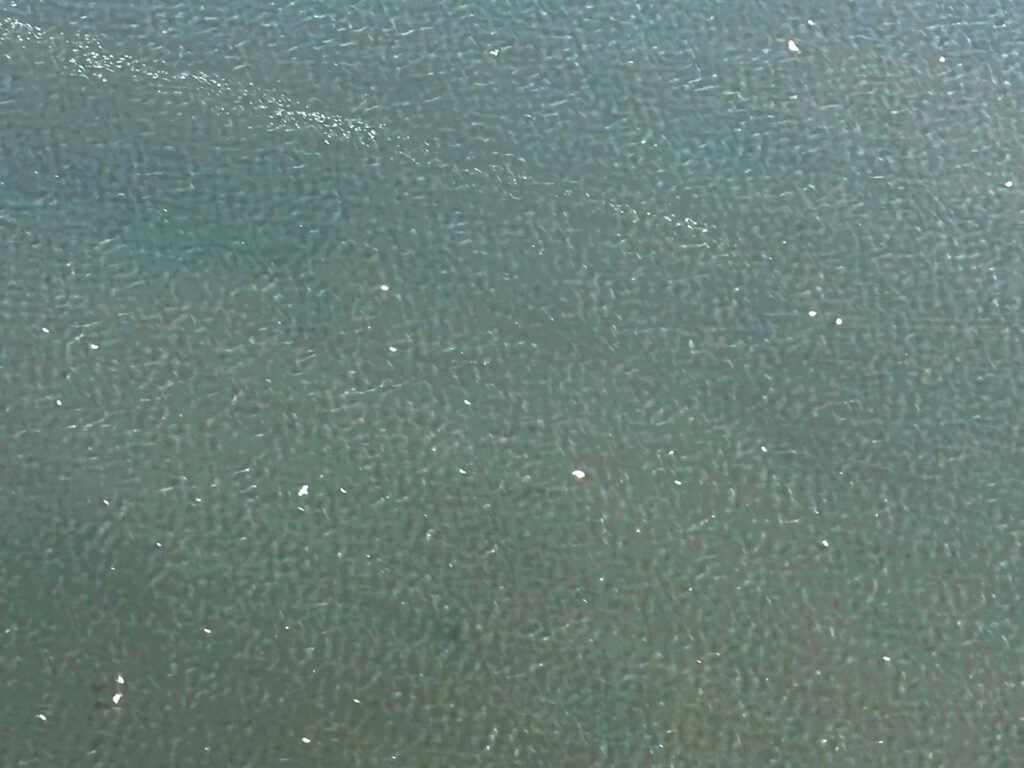
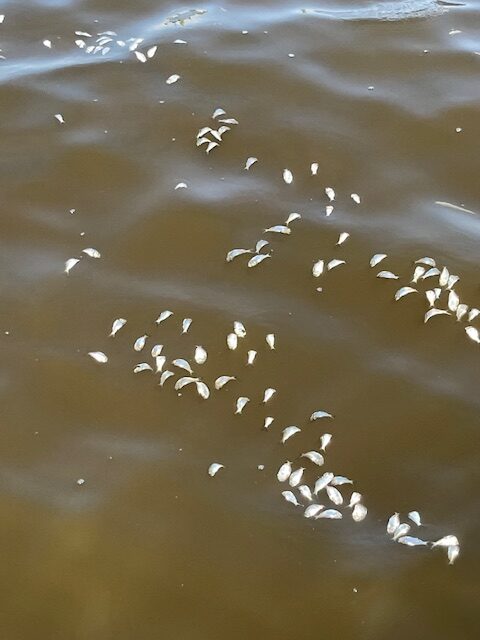
Even from hundreds of feet above the Neuse River near New Bern, dead juvenile menhaden could be seen floating on the surface.
Neuse Riverkeeper Samantha Krop and Water Quality Specialist Taylor Seijo were in the field this week, tracking down reports of fish kills on the Neuse.
“We received several reports for the fish kill in the New Bern area at the end of last week, and reports have since slowed down. However, with this week’s cold front and significantly cooler nighttime temps having the potential to cause thermal turnover in the water, I foresee a good chance of another kill near the end of this week and into the weekend,” Taylor said.
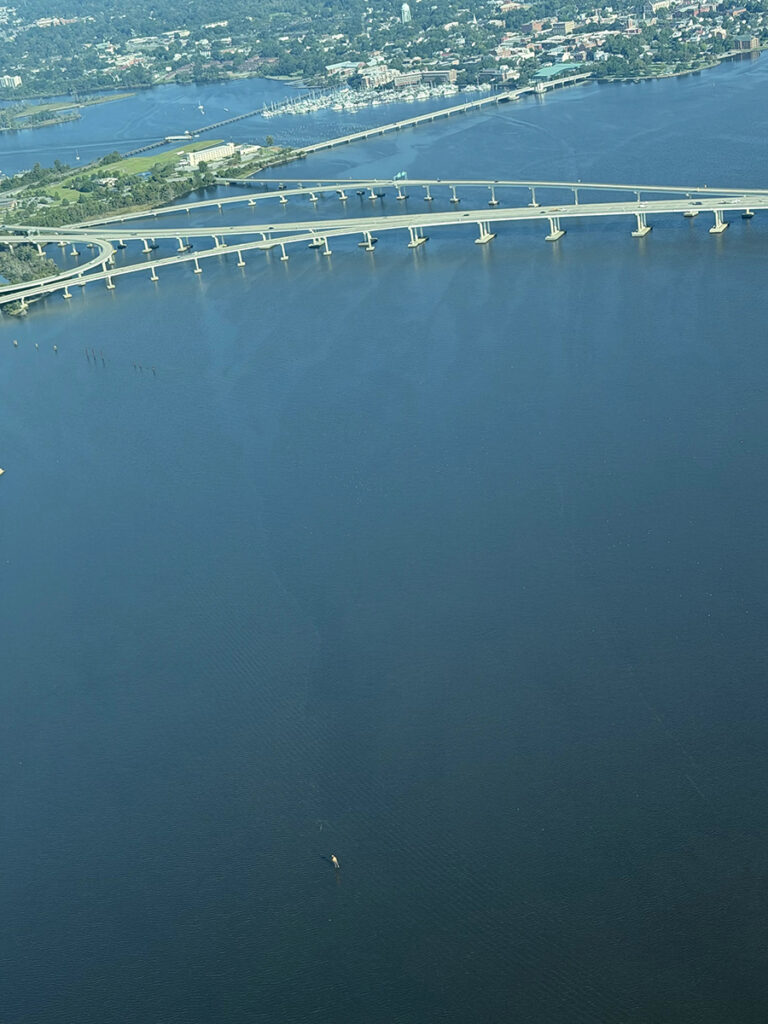
Samantha combined two investigations — the fish kills and Brices Creek sediment pollution — in one flight on Monday morning, heading out with SouthWings pilot Rolf Wallin to have an aerial look at both.
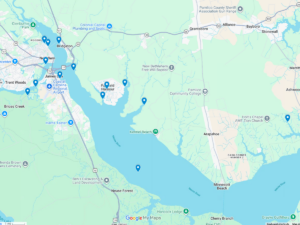
“I could see a fish kill from above, and they were all juvenile menhaden between close to the Highway 17 bridge that goes into New Bern to several miles downstream,” Samantha said. “There had been some reports of fish kills like this on the Neuse River for a couple of weeks, and with data shared by ModMon, from what we can tell, it’s caused by hypoxia: really low dissolved oxygen at the bottom, with high levels of dissolved oxygen closer to the surface. There’s a lot of algae in the area, and they determined it’s not toxic, but it consumes oxygen at night, which, with the cooler temps mixing the water, is causing an oxygen deficiency.”
ModMon also shared there was a “host” of juvenile menhaden in the area.
While Samantha said the fish kill was not a huge concern, because of its size and that it appeared to be contained to one species, she said she’ll continue to track conditions on the Neuse.
“It might be a small fish kill, and the cause may be a lack of oxygen, but that algae is fed by nutrients. This is not natural — it’s due to pollutants, nutrients running into our waterways.”
Taylor said she’ll be watching for more fish kill reports.
“We encourage anyone on the water to keep a lookout and send us any sightings of any additional fish kills, especially if they are high in quantity or appear to be affecting multiple species,” Taylor said.
Like the work your Riverkeeping team is doing to protect your waterways … and the species they support? We do! Donate today to keep the Riverkeeping team in the air and in the water!
Related News

OYSTER ROAST 2026: Everything you need to know!
September 2nd 2026

Annual Auction goes live Oct. 30!
October 22nd 2026
Sound Rivers assists in hosting first-of-its-kind Water Summit
October 22nd 2026
Riverkeeper weighs in on Raleigh land-use planning
October 22nd 2026

Water Watch, Fall 2026 quarterly meeting
October 22nd 2026
Blounts Creek Update
October 22nd 2026

Vote!
October 15th 2026
Industrial park threatens nearly 30 acres of wetlands
October 15th 2026
Riverkeeper gives recap of Neuse fish kill
October 15th 2026