
From individual trash traps to a much larger concept — Litter-Free Rivers.
Sound Rivers officially launched its Litter-Free Rivers program in 2023, a year after installing the first trash trap on Jack’s Creek in Washington.
“Litter-Free Rivers was named for one simple reason: to relay the goal we have for the Neuse and Tar-Pamlico rivers when it comes to trash and plastic pollution,” said Sound Rivers Executive Director Heather Deck. “Research has evolved so much in recent years, and we are now getting a pretty good glimpse into the harmful impacts trash has on our waterways — not only from a public health standpoint, but also a water-recreation safety standpoint. Our rivers should be fishable, swimmable and drinkable, and we can’t achieve that without addressing our litter pollution problem.”
In less than two years, Sound Rivers has grown the Litter-Free Rivers fleet to 12 trash traps on urban waterways across the Neuse and Tar-Pamlico watersheds. Each year, Sound Rivers staff, with the help of hundreds of volunteers, remove tons of trash from these traps — and your waterways.

How Trash Traps Work
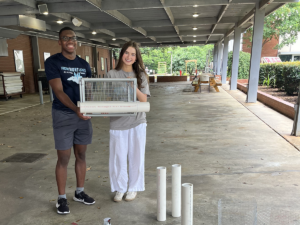
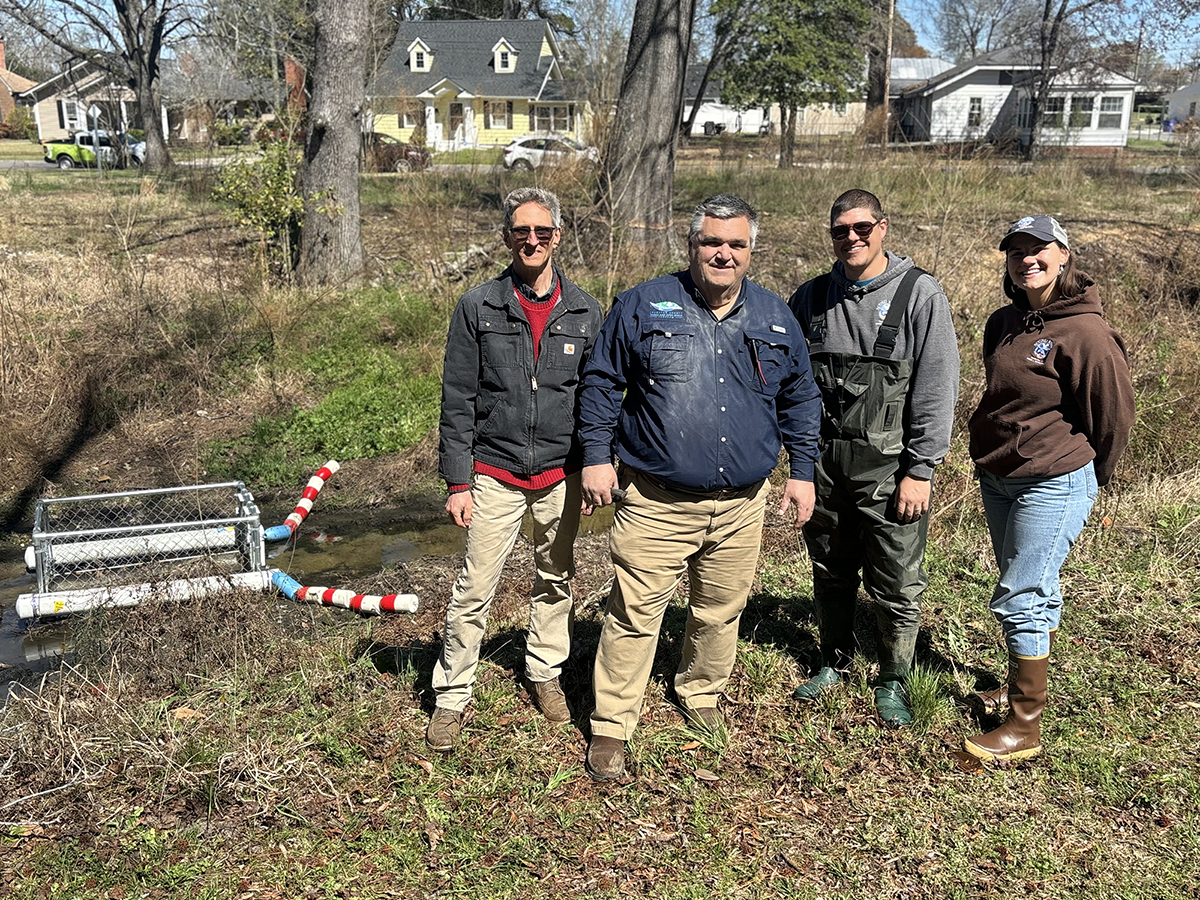
Trash traps are passive litter-collection devices that are anchored to the banks of small, urban waterways. Buoy-lined anchor wires direct trash floating downstream into the mouth of the trap, where it remains until staff and/or volunteers pull it out to dispose of it in its proper place: a landfill.
Locations for trash traps are carefully scouted because not all waterways are good fits. The depth of water, how fast the water flows, accessibility to the site and how much trash is funneled into that waterway are just a few considerations when picking the ideal location for a trash trap.
The Spring Branch Trash Trap
In June of 2025, Neuse Riverkeeper Samantha Krop met up with Johnston County Parks and Open Spaces Coordinator Austin Cross and Town of Smithfield employees to start the process of finding a location for a trash trap.
They found one in Spring Branch, adjacent to a community garden in downtown Smithfield. Spring Branch had previously undergone restoration projects courtesy of a North Carolina Land and Water Fund grant, so a trash trap seemed like a natural addition. The plan was presented to Smithfield’s town council, and in July 2025, the council unanimously approved the installation.
Smithfield’s trash trap was installed In March 2026 and immediately began working to help the Neuse River stay litter-free. Watch Spectrum’s feature on Litter-Free Rivers and the Smithfield trash trap here!
Since Sound Rivers launched the Litter-Free Rivers program in 2023, nearly six tons of trash have been removed from urban waterways by more than 800 volunteers.
Other Litter-Free Rivers trash traps are located on Jack’s Creek and an unnamed tributary of Jack’s Creek in Washington, Duffyfield Canal in New Bern, Little Rock Creek, Marsh Creek(2) and Walnut Creek in Raleigh, Adkin Branch in Kinston, Greens Mill Run in Greenville, East Tarboro Canal in Tarboro and Little Creek in Clayton.

Litter-Free Volunteering
Trash trap cleanouts are hosted monthly across the Neuse and Tar-Pamlico watersheds, and we’re always looking for a few good volunteers to don some waders and climb in the creeks to retrieve trash the traps have collected!
Sometimes there’s not a whole lot of trash; other times, especially after a big rain, a single trap can net up to 150 pounds of garbage. While the most common finds are plastic bottles and Styrofoam pieces, there’s always something rather uncommon that makes its way into the trap: shoes, Christmas ornaments, toys, athletic gear and more — if it can be carried by stormwater, it can end up in the water!
Adopt A Trash Trap
Sound Rivers also launched the Adopt A Trash Trap program in 2024, giving groups the opportunity to participate in keeping their waterways litter-free by signing up for a month of monitoring a trap, organizing clean-outs and reporting how much trash is removed. Groups aren’t defined in any way: it could be a student group, a civic group or even a group of friends.
Sound Rivers supplies everything you need to do the job, provides up to five T-shirts for your group and shares your good work via social media.

Litter-Free Partners
Litter-Free Rivers provides an opportunity to see just how much trash ends up in even small waterways, and for those concerned about it to do something by volunteering to monitor and/or clean out the traps.
“The program has been extremely successful to date. We hope to expand to other urban areas over the next five years by finding key partnerships, which will allow us to build connections with local communities, both with community-led groups and municipal partnerships,” Heather said.
Some of those partnerships include The Great Raleigh Cleanup, the Walnut Creek Wetland Community Partnership, Mother Earth Brewing and Lincoln City Rising.
“Sound Rivers can’t do this work alone, and building bridges into communities with partnerships results in an ever-expanding network of clean-water advocates, or activists,” Heather said.
Grady-White Boats and the Winston Family Foundation are sponsors of Sound Rivers’ Litter-Free Rivers program.
If you’re interested in sponsoring or supporting Litter-Free Rivers, we’d love to have your help! Email Development Coordinator Jay Potter at jay@soundrivers.org.
Scouting group goes on environmental adventure
September 24th 2026
Inaugural Spruce up the Neuse a huge success
September 17th 2026
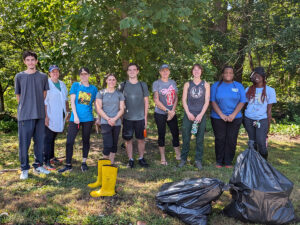
Carolina Wetlands Association goes litter-free
August 27th 2026
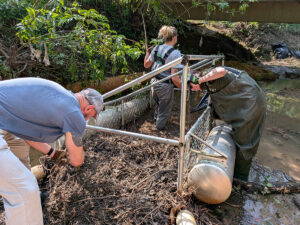
Cleanouts net 60+ lbs of trash
August 6th 2026
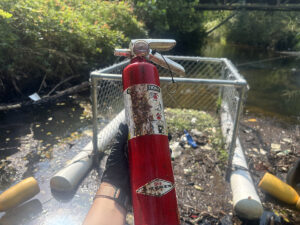
You won’t believe what we find in trash traps …
July 30th 2026

Rain leads to trash trap maintenance tour
July 23rd 2026
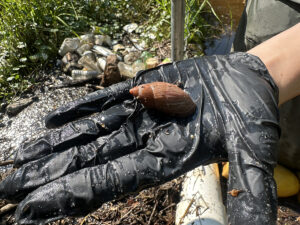
Recent rains mean full trash traps
July 16th 2026
20 pounds trapped, removed from Raleigh trash trap
July 9th 2026