News
Heavy rains lead to sky-high turbidity on Lick Creek
Environmental, Neuse River Watershed, Stormwater Runoff, Water Quality
Posted on July 25th, 2024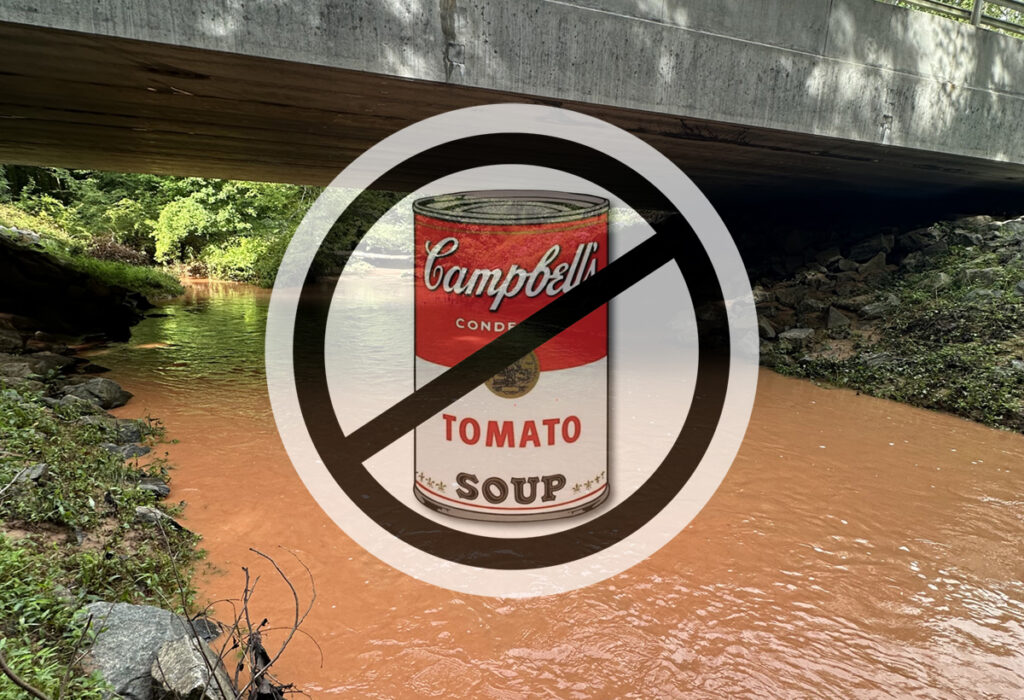
The main stem of Lick Creek in southeast Durham this week.
Neuse Riverkeeper Samantha Krop reports that turbidity in Lick Creek hit an all-time high on Wednesday.
“I didn’t think it could get worse, but I measured the highest turbidity I ever have on the main stem of Lick Creek in two years of testing,” Samantha said. “It was more than 1,000 NTU in Lick Creek, downstream of where Martin Branch joins it. Upstream of Martin Branch, Lick Creek was 550 NTU — and that’s still really high — but Martin Branch essentially doubled the turbidity levels of Lick Creek. It’s amazing how one dirty creek can contribute to the overall turbidity in a larger creek system.”

Turbidity is a measurement of clarity, or how much light penetrates through a water column. North Carolina’s state standard for turbidity is 50 NTU.
By comparison, Rocky Branch, another tributary measured under 35 NTU on Wednesday.
“Rocky Branch was flowing really rapidly — clearly, just like all the other creeks, it was impacted by the storms,” Samantha said. “It’s also clearly healthy because it flows through forested land, and hasn’t been impacted by development.”
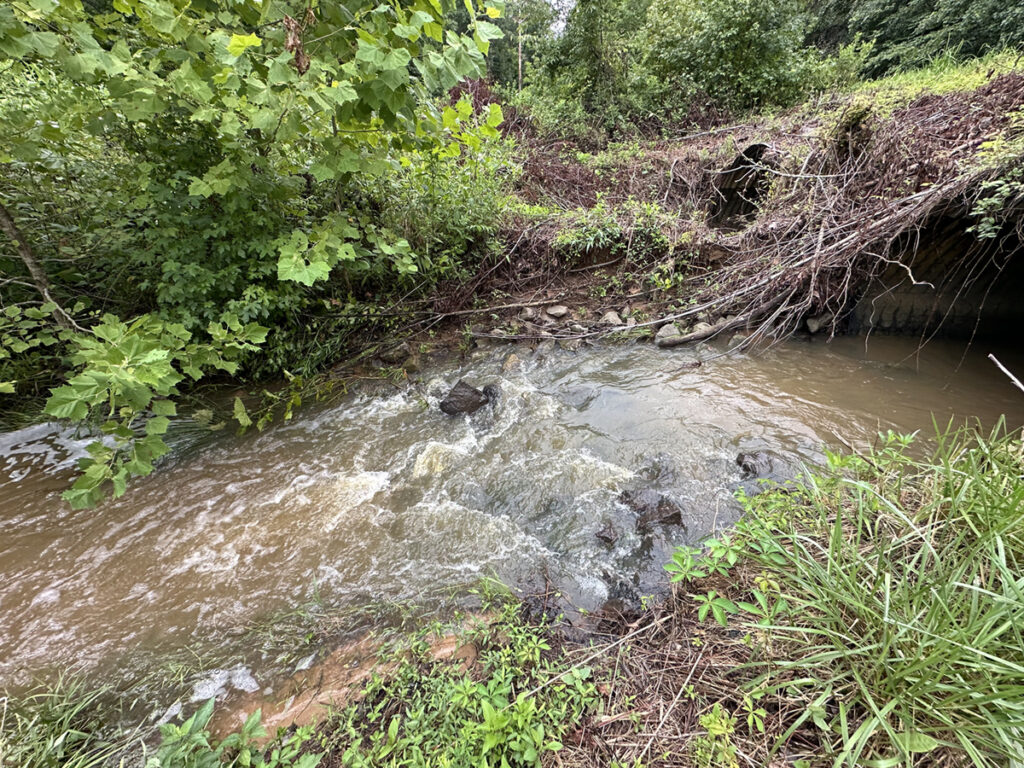
Since 2022, Samantha has been tracking sediment pollution in the Lick Creek watershed in southeast Durham. The extreme turbidity she has documented is tied to hundreds of acres of the watershed’s forested land being clear-cut to make way for new housing developments. Failure to control the erosion and sedimentation of Martin Branch from one development led to the Southern Environmental Law Center, on behalf of Sound Rivers, to file a lawsuit against a Durham developer in September of 2023.
“This pollution is ongoing,” Samantha said. “Basically, Durham’s regulators have accepted this as the inevitable outcome of construction, and we believe that that’s not only irresponsible, but it’s a violation of the Clean Water Act.”
Do you appreciate your Riverkeeper’s work to protect Durham’s waterways? Support her work with a donation today!
Related News

Sound Rivers welcomes first Water Watch intern
September 3rd 2026

2026 Oyster Roast Ticket Sales
September 2nd 2026
OYSTER ROAST 2026: Everything you need to know!
September 2nd 2026
Riverkeeper: Durham County passes “problematic” moratorium
August 27th 2026
Water Watch expands with next-level data collection
August 27th 2026
BIOX racks up fines, Nahunta Swamp at risk
August 27th 2026
Carolina Wetlands Association goes litter-free
August 27th 2026
Specialist completes 8th round of Slocum sampling
August 27th 2026