
News
Durham agrees to more transparency on developer ‘loophole’
Posted on February 12th, 2026
This image shows how the Howard's Place property overlaps with the Lick Creek bottomlands, a Natural Heritage site. Developers have submitted an NPAA to waive buffer rules for nearly 3 acres of stream banks.
Durham City Council agrees: more transparency is required of developers using the No Practical Alternative Application that allows them to skirt around environmental regulations.
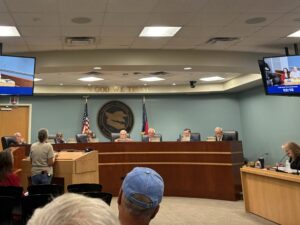
Neuse Riverkeeper Samantha Krop was present for the council’s Feb. 5 work session, in which Durham Planning Department staff gave a briefing on how the NPAA works, and how, until now, the process has lacked transparency.
“It’s a really straightforward issue with a straightforward solution,” Samantha said. “The ask was clear: to create a transparent process so the public can see when NPAA’s are applied for and approved.”
NPAA’s have been referred to as a “loophole” for developers whose projects are approved based on proposals and the protections they include for streams, Riparian buffers and other natural resources, only use the NPAA process later to impact those streams, Riparian buffers and other natural resources that protect water quality. Since the planning department processes the NPAAs, elected officials are often unaware that these changes to proposals, and environmental impacts, are happening.
Samantha shared the need for transparency during the public comment period, as did several others.
“There were several Council members who spoke up in support for transparency — Nate Baker, Chelsea Cook, Carl Rist and Matt Kopac — each of them supported the idea of the city finding a way to make that information public,” Samantha said. “There was discussion about how NPAAs are issued, how often they’re issued, and concern expressed about the order of operations: why so many of these applications come in after Council has approved a project because the developer has promised to protect water quality, but then applies for an NPAA several months later, saying they have no choice but to impact the environment.”
Samantha said the Council also discussed the need for more open dialogue with developers during the approval process, and ask preemptively whether the contractor plans to apply for an NPAA.
“I was pleased with the discussion. Durham planning staff agreed to pursue solutions for the transparency issue,” she said.
Like the work your Riverkeeper is doing to protect the Neuse River? We love it! Donate today to support her work!
Related News

2026 Oyster Roast Ticket Sales
September 2nd 2026
OYSTER ROAST 2026: Everything you need to know!
September 2nd 2026
Neuse River Fish Kill Continues
October 8th 2026
Data Center Moratoriums Advance
October 8th 2026
Speak Up Against the EPA's Disastrous Rollback of Wetland Protections
September 30th 2026
Swim Guide Survey
September 30th 2026
Specialist, Riverkeeper return to Slocum Creek
September 30th 2026

"No Water, No Beer"
September 30th 2026
Riverkeeper, specialist investigate Bridgeton fish kill
September 24th 2026
Cummins, Sound Rivers partner in schools’ cleanup
September 24th 2026