News
Creating connections: Riverkeeper responds to water-quality concerns
CAFOs, Environmental, Sound Rivers, Tar-Pamlico Watershed, Water Quality
Posted on April 17th, 2025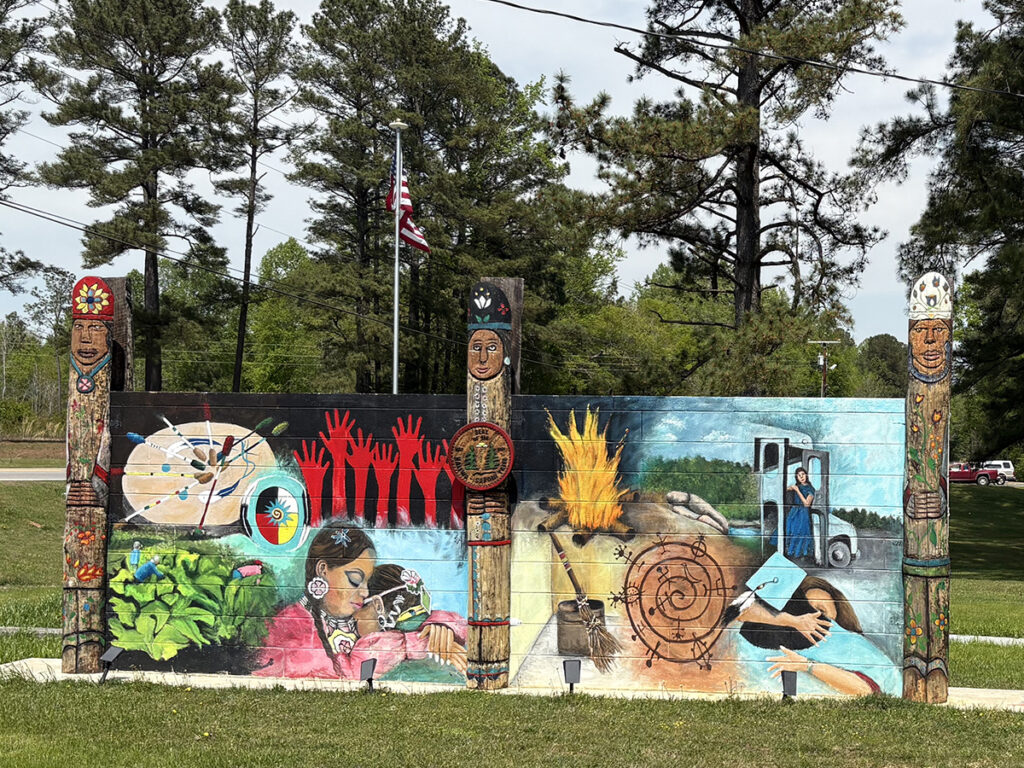
A mural outside the Haliwa-Saponi tribal council office in Hollister.
Pamlico-Tar Riverkeeper Katey Zimmerman was on the road and in the field this week, responding to an upper Tar River resident’s concerns about the area’s pollution legacy.
“This is an area that the North Carolina Department of Environmental Quality doesn’t check up on very often, and there’s not a lot of data that speaks to the water quality there,” Katey said.
The area is Fishing Creek, which runs from close to the headwaters of the Tar River to the Tar River near Louisburg, and neighbored a dumping site years ago.
Armed with a YSI meter and some water-sampling bottles, Katey met up with Tyler Richardson, a tribal councilman for the Haliwa-Saponi tribe, in Hollister.
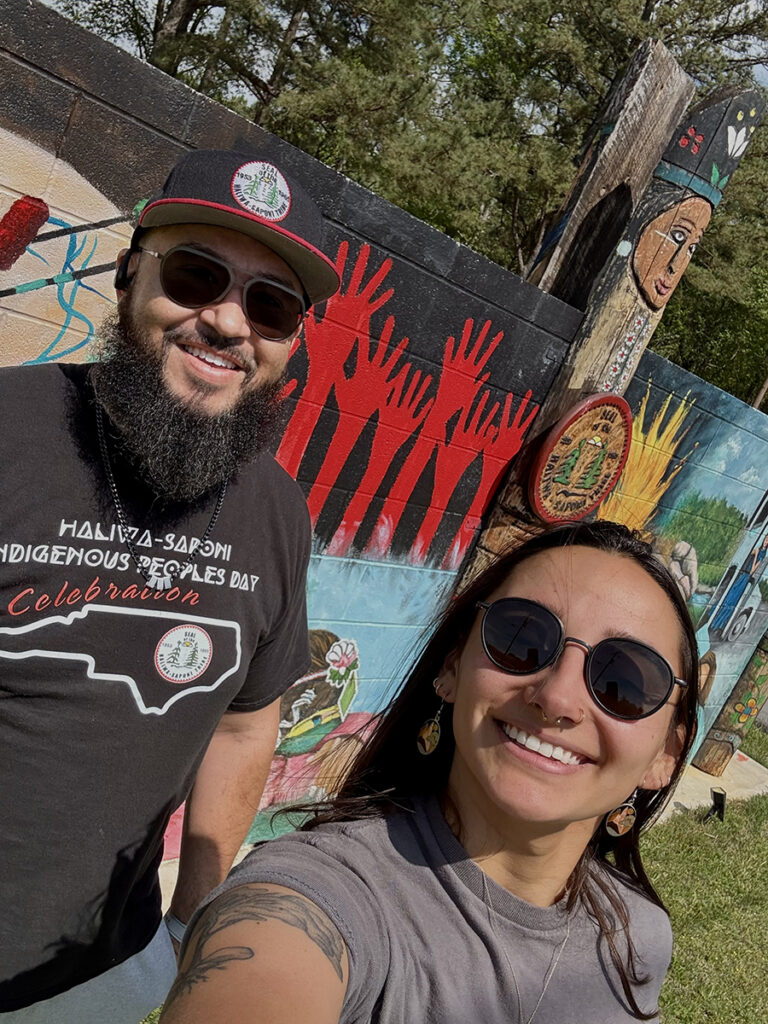
“He reached out a few weeks ago because he had some general concerns about water quality in Fishing Creek and its tributary, Little Fishing Creek,” Katey said, adding that the connection came through the Tar-Pamlico Flood Resilience Blueprint advisory board, of which they are both members.
From the tribal council office, the two set off on a water-quality tour of Fishing Creek, Little Fishing Creek and other tributaries, including one running adjacent to a past industrial hog facility.

“The good news is that all my YSI readings were within normal ranges and bacteria results were below the state standard,” Katey said, though concerns remain about the potential of PCBs in the soil.
PCBs, or polychlorinated biphenyls, are a group of man-made chemicals that have been banned due to their harmful effects on human and environmental health.

Katey views such field work as an opportunity to create diverse connections in the upper watershed.
“It’s great to meet people and talk about other things we can work on in the future,” she said.
Like the work your Riverkeepers are doing? Support their work by donating today!
Related News

OYSTER ROAST 2026: Everything you need to know!
September 2nd 2026

Vote!
October 15th 2026
Industrial park threatens nearly 30 acres of wetlands
October 15th 2026
Riverkeeper gives recap of Neuse fish kill
October 15th 2026
NC Land and Water Fund comes through with two new grants
October 15th 2026
Staff, Cummins volunteers return for rain garden rehab
October 15th 2026
Photo of the Week: Sampling Run
October 15th 2026
Pamlico-Tar Riverkeeper visit Cypress Landing
October 15th 2026
CONSTRUCTION ALERT: A head’s up for Neuse paddlers in Wake County
October 15th 2026