News
Animal Map Improves Transparency - Public Right to Know
Posted on July 8th, 2016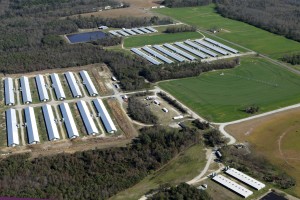
New Animal Waste Map Improves Transparency
In a big win for transparency, NC Riverkeepers, Waterkeeper Alliance and the Environmental Working Group 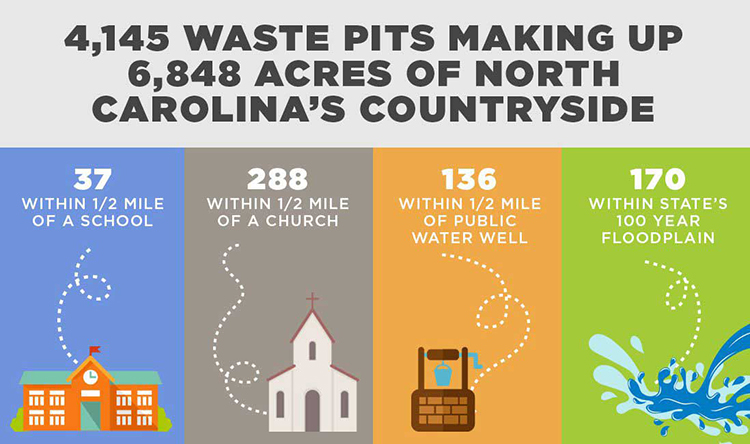 released a map in late June that for the first time allows the public to see where all industrial animal operations and waste pits are located. Animal agriculture operations are one of the leading sources of water and air pollution in the country and are making people sick.
Over two decades alone, North Carolina’s swine population nearly doubled from 5.1 million in 1992 to 9.5 million by 2012, according to the USDA Census of Agriculture. During the same period, the state’s broiler chicken production increased by 60 million, to 148 million animals.
The maps were created to fill in yawning gaps in the North Carolina state agricultural regulatory system and to enable citizens, lawmakers and policymakers to visualize and interpret the state’s swine, poultry and cattle operations by zooming in on selected areas.
In 2015, the United States Geological Survey published a study showing that hog CAFOs have significant impacts on waterways, particularly in eastern North Carolina, where these facilities are concentrated within communities of color. However, the USGS study specifically noted that no information about poultry facilities was publicly available.
Related News
New Podcast! Data Driven, Part 1
August 13th 2026
Sound Rivers gets a Litter-Free Rivers assist
August 13th 2026
Duckweed, Alligator weed or algal bloom?
August 13th 2026
Riverkeeper, specialist launch Phase 2 of failing infrastructure investigation
August 13th 2026
Cleanouts net 60+ lbs of trash
August 6th 2026
Edgecombe Co. passes 2-year data center moratorium
August 6th 2026

Riverkeeping team goes ‘Rollin’ on the River’
August 6th 2026
Riverkeeper makes Blounts Creek sampling run
August 6th 2026