News
Updated: Algal bloom spotted on Runyon Creek pond
Algal Blooms, Tar-Pamlico Watershed, Water Quality
Posted on November 13th, 2025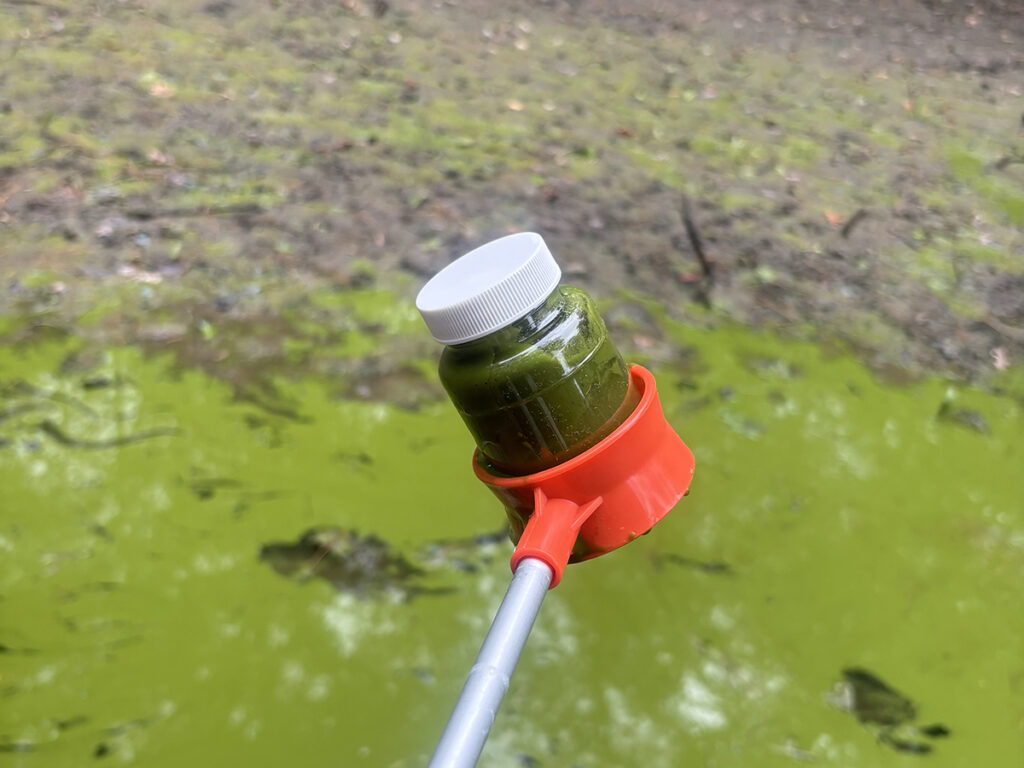
Pamlico-Tar Riverkeeper Katey Zimmerman’s Nov. 13 update regarding the Runyon Creek algal bloom:
Pamlico Tar Riverkeeper Katey Zimmerman investigated a potentially toxic algal bloom in Runyon Creek on Oct. 27 with Jill Paxson from the North Carolina Department of Environmental Quality (DEQ). Samples were sent to Raleigh for ID and toxin analysis. The algal sample was identified as a decaying Woronchinia bloom. This is a microcystin producing species of cyanobacteria, meaning that this bloom was releasing toxins in the water and potentially air. The toxin analysis showed that 910 ug/L were present in the sample. This is considered to be a high level of toxins.
The nearby landowners have let us know that the bloom has started to dissipate after a brief period of rain. Even after the bloom begins to decay/dispatch, though, it is likely that toxins are still being released as the cells begin to decompose. So, it is best to keep yourself and your pets out of water wherever algal blooms are present to avoid health impacts. Over time, these algal blooms will go away on their own, due to cooler temperatures or by being dissipated by wind and water. The N.C. Department of Health and Human Services (DHHS) algal bloom website states “when in doubt, stay out”. Visit these resources from NCDEQ and DHHS with guidance on staying safe around algal blooms.
Original post:
Pamlico-Tar Riverkeeper Katey Zimmerman returned to the field this week, this time to investigate a report of an algal bloom in a pond off Runyon Creek in Washington.
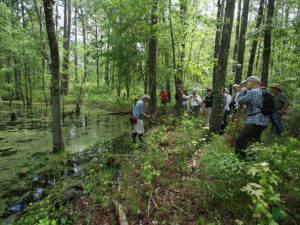
Neighbors of the pond noticed the problem when Katey, Water Quality Specialist Taylor Register and Volunteer Coordinator Emily Fritz were on their Piedmont to Pamlico Paddle, a 175-mile kayaking trip on the Tar River from Oxford to Washington. On Katey’s return to dry land, she headed out to take samples.
“It looked to be a blue-green algae,” Katey said. “We’ll get the results back in a few days, so we don’t know yet if it’s toxic or not. If it comes back and it turns out that it is toxic, the only thing you can do is stay away from it and keep your pets out of it. It will eventually go away on its own.”
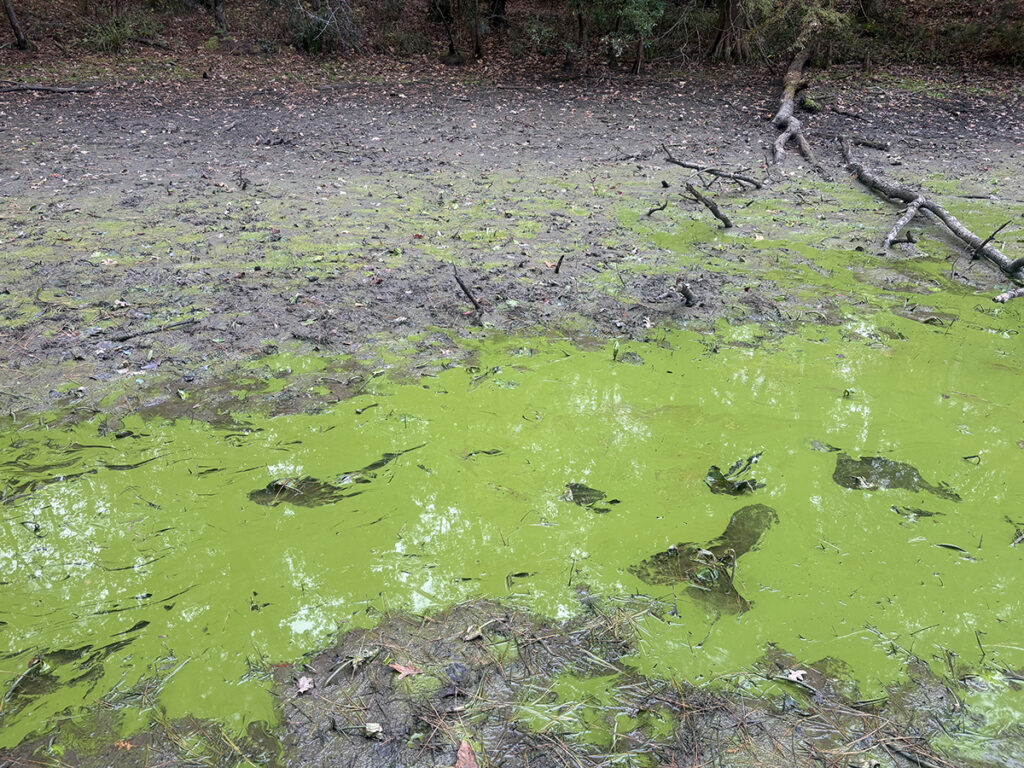
Causes of the algal bloom could be related to weather changes — the algal bloom first became apparent during the mini-heat wave a couple of weeks ago — and really low water levels could have added to the problem.
Katey said she appreciates getting calls when people see issues on the water
“We want to be viewed and used as a resource for water-quality issues like this, so we can stay informed about what’s going on on the Neuse and Tar-Pamlico and share our information with the relevant state agencies,” Katey said. “We appreciate Jill Paxson (Division of Water Resources) for working with us to get us more answers.”
Like the work your Riverkeeper is doing? So do we! Donate today to support her work!
Related News

OYSTER ROAST 2026: Everything you need to know!
September 2nd 2026

Vote!
October 15th 2026
Industrial park threatens nearly 30 acres of wetlands
October 15th 2026
Riverkeeper gives recap of Neuse fish kill
October 15th 2026
NC Land and Water Fund comes through with two new grants
October 15th 2026

Staff, Cummins volunteers return for rain garden rehab
October 15th 2026

Photo of the Week: Sampling Run
October 15th 2026
Pamlico-Tar Riverkeeper visit Cypress Landing
October 15th 2026

CONSTRUCTION ALERT: A head’s up for Neuse paddlers in Wake County
October 15th 2026