News
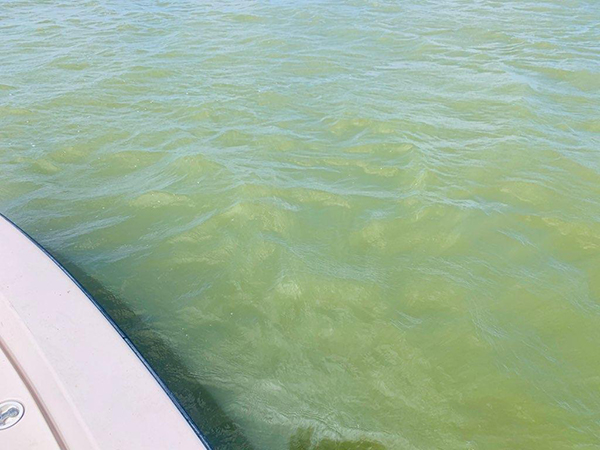
 Summer means hot days, backyard barbecues and days spent on the river. For us at Sound Rivers, though, it can mean algal blooms. Drought conditions across eastern North Carolina through much of winter and spring can mean higher concentration of nutrients enter the waterways through runoff when it does rain. Algal blooms result from too many nutrients in the water, and the heat doesn’t help.
N.C. Department of Health and Human Services, Division of Public Health (DPH) routinely encourages the public to avoid contact with large accumulations of algae and to prevent children and pets from swimming or ingesting water in an algal bloom.
DPH suggests the following steps to safeguard against algal blooms:
- Keep children and pets away from water that appears bright green, blue, discolored, or scummy.
- Do not handle or touch large mats of algae.
- Avoid handling, cooking, or eating dead fish that may be present.
- If you come into contact with an algal bloom, wash thoroughly.
- Use clean water to rinse off pets that may have come into contact with an algal bloom.
- If your child appears ill after being in waters containing an algal bloom, seek medical care immediately.
- If your pet appears to stumble, stagger, or collapse after being in a pond, lake, or river, seek veterinary care immediately.
Not all algal blooms produce toxins, and those types of blooms are rare on wide bodies of moving water like the the Neuse and Tar-Pamlico. But it’s best just to steer clear of them altogether!
What can you do to prevent algal blooms? Everyone can participate in small ways, and the cumulative effort matters. Basic measures include picking up your pets’ waste (to avoid it becoming part of run-off into waterways) and avoiding applying excess fertilizer/pesticides on yards bordering those waterways.
If you see what could be an algal bloom, use our Report A Problem link or take a photo and messenger it through Facebook or email to info@soundrivers.org – we’ll check it out for you!
Related News

2026 Oyster Roast Ticket Sales
September 2nd 2026
OYSTER ROAST 2026: Everything you need to know!
September 2nd 2026
Riverkeeper, specialist investigate Bridgeton fish kill
September 24th 2026
Cummins, Sound Rivers partner in schools’ cleanup
September 24th 2026
Scouting group goes on environmental adventure
September 24th 2026
Flyover reveals Brices Creek sediment pollution sources
September 17th 2026

Low oxygen levels cause of New Bern fish kills
September 17th 2026
Inaugural Spruce up the Neuse a huge success
September 17th 2026
Boat day doubles as algal bloom surveillance
September 17th 2026

Controversial dock expansion prompts Riverkeeper response
September 10th 2026